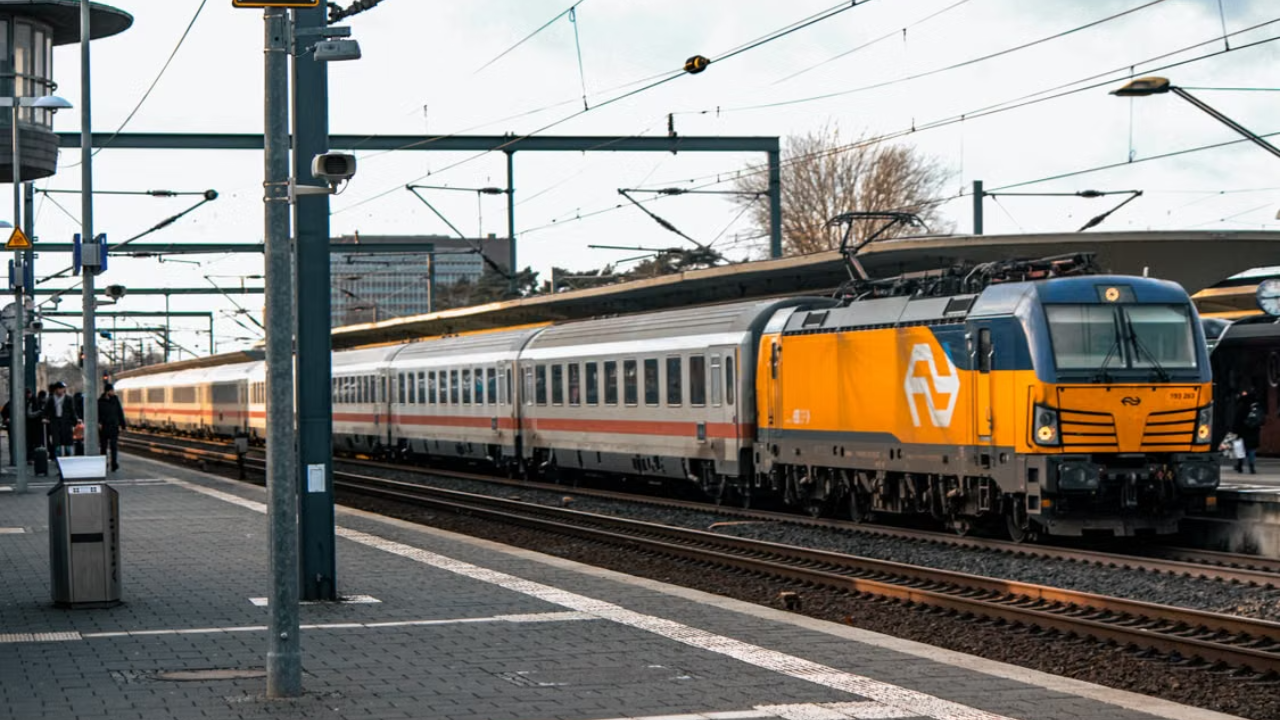
Two men are facing felony charges after the Arizona train robbery they allegedly took part in unraveled in a rather dramatic way. How did it all come to a halt? With a suspect diving headfirst into the Colorado River to escape, naturally. Deputies say they recovered close to half a million dollars in cargo that had been stolen from a passing freight train. The river plunge didn’t get the suspect far, however. A sheriff’s boat crew was waiting for him and pulled him out of the water.
It started on the morning of June 25 along Interstate 40 near Yucca, in Mohave County, according to FOX 10 Phoenix. Deputies were called out to help BNSF Railway Police check on a suspicious vehicle parked near the tracks. What they found was a box truck stashed deep in a ravine with its doors hanging open. Scattered across the desert nearby were dozens of shipping boxes, freshly ransacked from a container on a passing train and worth around $194,000.
The case started small but grew quickly, soon involving Homeland Security, BNSF police, and nearby sheriff’s offices. But a big break in the case came further south, when La Paz County deputies spotted and stopped a second box truck on Highway 95. During the traffic stop, a passenger jumped out and bolted, seemingly normal actions for someone who wants to get away. But then he decided to dive straight into the Colorado River. A law enforcement boat unit caught up with him in the water and then brought him into custody.
The driver of that truck, deputies said, was carrying the title to the abandoned box truck from the ravine. A search of the second truck turned up more stolen cargo matching the train haul, though. This time the total damages were around $296,000. The two men involved were identified as 22-year-old Gabriel Coronel-Guerrero of Mexico and 21-year-old Angel Ochoa of Mesa. Both were booked into the Mohave County jail on burglary, theft, and trafficking charges.
Arizona’s Train Heists Are Becoming a Pattern
This was not a one-off. Authorities say it was the second major train robbery in Arizona in a single month, and the two together account for close to a million dollars in recovered goods. Organized crews have been hitting freight trains as they move through the state’s remote stretches, especially along the rail line that follows Interstate 40. The isolation that makes those routes efficient for railroads also makes them tempting for thieves.
The goods themselves tend to be high-value and easy to flip. Past Arizona heists have hauled off electronics, clothing, and even unreleased sneakers worth hundreds of thousands of dollars. Investigators believe much of the stolen merchandise eventually leaves the state, often headed to California to be resold online or at swap meets. It adds up to a serious, organized operation hiding behind what sounds like an old-fashioned train robbery.
How a Train Heist Actually Works
These robberies are more coordinated than they look. Crews often scout valuable shipments ahead of time, sometimes tipped off by someone with inside knowledge of what a train is carrying and when it will slow down. Thieves board or follow a train as it crawls through a stop or a track change, break into a container, and start tossing cargo to vehicles waiting nearby. From there, it is a race to load up and disappear before anyone notices.
Stopping it has taken an equally coordinated effort. This case alone drew in county deputies, railroad police, a state helicopter, federal agents, and a sheriff’s boat crew before it was over. The payoff was nearly all the stolen cargo recovered and two suspects in custody, without anyone getting hurt. For all the drama of a man swimming for it in the Colorado River, the loot still ended up right back where it started.