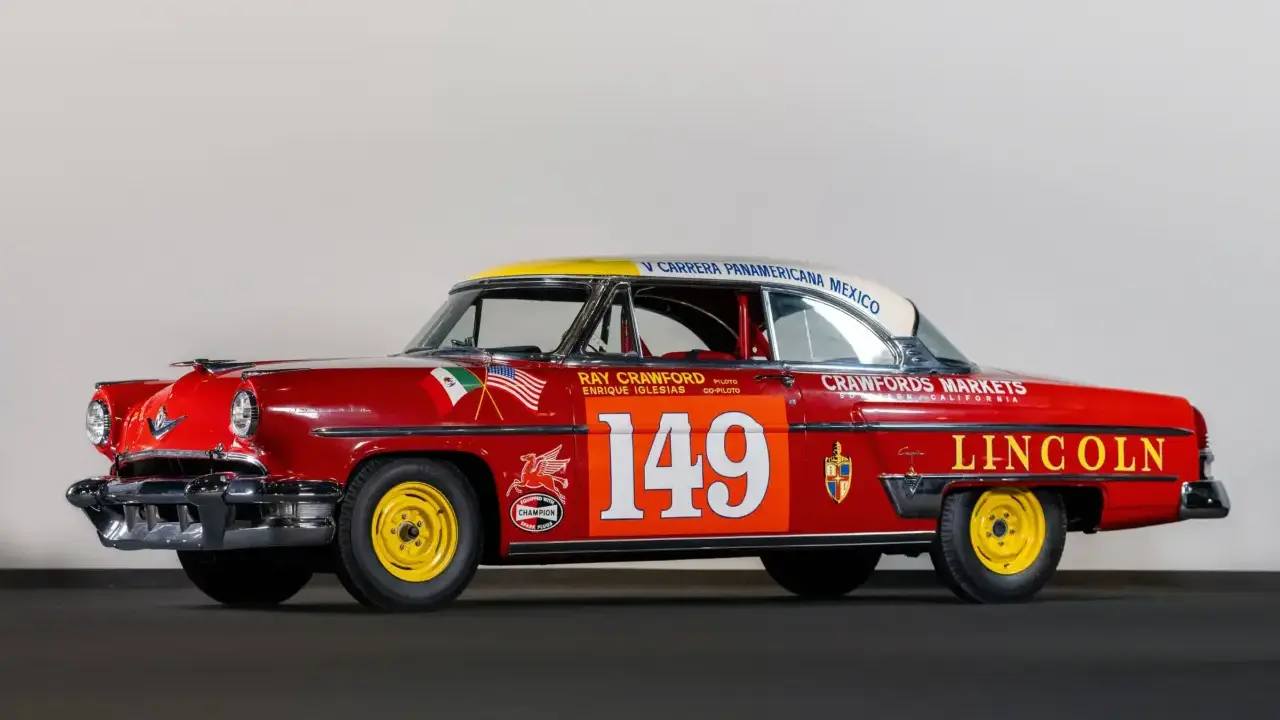
Lincoln is rarely mentioned in the same breath as endurance racing legends. The brand is better known for luxury cruisers, presidential limousines, and plush highway comfort than brutal open-road competition. Yet during the early 1950s, Lincoln built a surprising reputation in one of the most dangerous races on earth.
Now, one of the final surviving pieces of that forgotten racing history is heading to auction. A 1954 Lincoln Capri Coupe that competed in the legendary Carrera Panamericana will cross the block at Bonhams’ National Automobile Museum Auction in Reno on June 13, carrying an estimated value between $150,000 and $250,000.
What makes the car especially important is its rarity. According to Bonhams, this is the only known surviving member of Lincoln’s 1954 Carrera Panamericana team. Even more remarkably, it was restored decades ago by the very same Holman & Moody-Stroppe shop that originally prepared the factory race cars in period.
For motorsport historians, that makes this massive American coupe a surviving artifact from one of the wildest eras in international endurance racing.
Lincoln Once Dominated Mexico’s Deadliest Road Race
The Carrera Panamericana remains one of the most infamous races ever held. Running nearly 2,000 miles across Mexico from border to border, the event combined dangerous mountain roads, desert straights, unpredictable weather, wandering livestock, and astonishingly high speeds.
Manufacturers treated the race as a global proving ground. Ferrari, Mercedes-Benz, Porsche, Cadillac, Alfa Romeo, and other major brands entered factory-backed teams in hopes of proving durability and performance under brutal conditions. Lincoln emerged as one of the race’s unexpected stars.
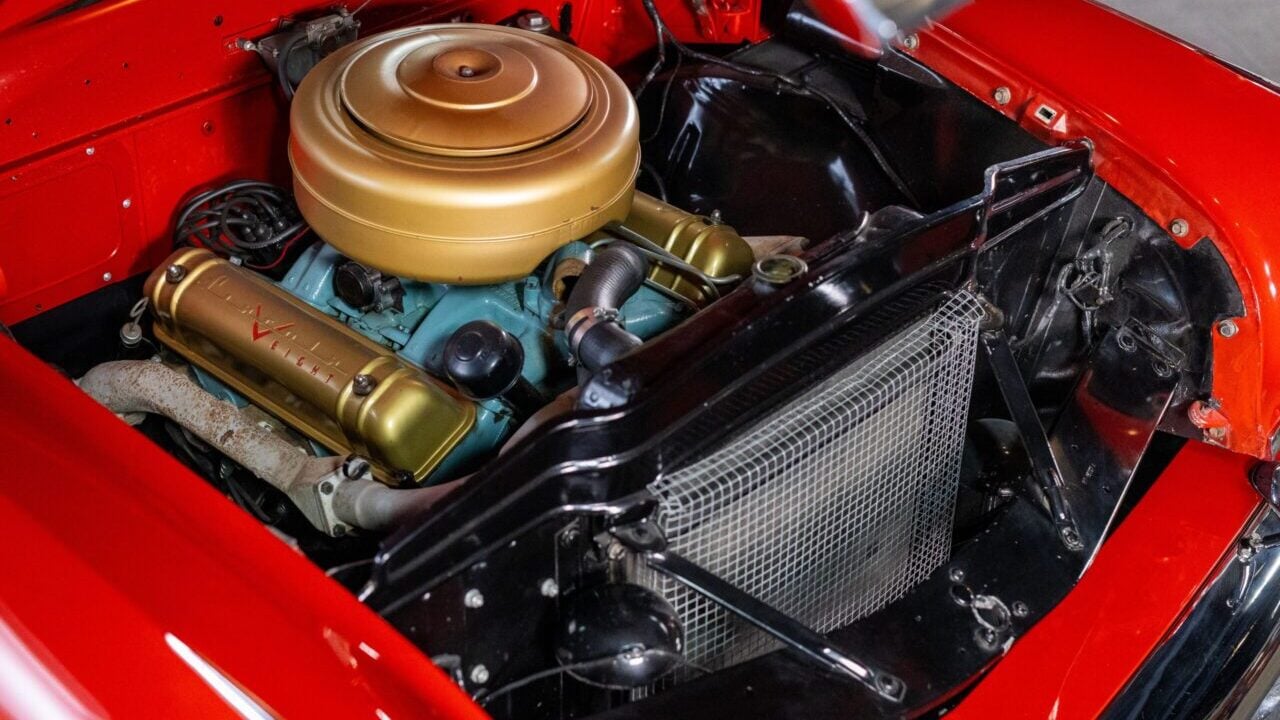
Beginning in 1952, the company used heavily prepared Capri coupes powered by Ford’s 317-cubic-inch overhead-valve V8. Working alongside legendary builder Bill Stroppe and renowned engine tuner Clay Smith, Lincoln transformed its large luxury coupe into a surprisingly effective endurance weapon.
The strategy worked. Lincoln dominated its class for multiple years, regularly finishing ahead of Cadillac while proving its big American sedans could survive punishing conditions that destroyed lighter and supposedly more agile competitors.
The 1954 Race Became Lincoln Lore
The 1954 Carrera Panamericana proved especially dramatic. Lincoln entered several heavily supported factory cars driven by accomplished racers, including Walt Faulkner, Johnny Mantz, Chuck Stevenson, and Bill Vukovich. Early disaster nearly wiped out the entire team.
Crashes and mechanical failures devastated Lincoln’s factory effort during the opening stages of the race, leaving privateer Ray Crawford as one of the brand’s final hopes. Crawford, a California grocery-store owner who had personally funded his own Capri and paid Stroppe to prepare it, suddenly found himself battling Ferraris, Cadillacs, and Porsches across Mexico.
Against enormous odds, Crawford ultimately won the large touring class and finished impressively high overall. The victory became one of Lincoln’s greatest motorsport stories.
According to Bonhams, Lincoln later bought back Crawford’s race car and repainted the remaining team cars to match the winning livery before sending them to dealerships around North America as promotional displays.
Over time, the identities of the original cars became blurred, and nearly all eventually disappeared.
The Only Known Survivor
This particular Capri survived thanks largely to the famous Harrah’s Automobile Collection in Reno, Nevada, where it spent decades preserved as part of one of America’s greatest automotive museums.
Its authenticity reportedly comes from several unique modifications specific to the Carrera Panamericana cars. Most notably, the trunk floor contains distinctive holes used for brake-cooling fans installed by Stroppe’s team before Mexican race officials forced their removal during scrutineering. Those holes remain one of the main indicators that the car genuinely belonged to the original 1954 Lincoln racing effort.
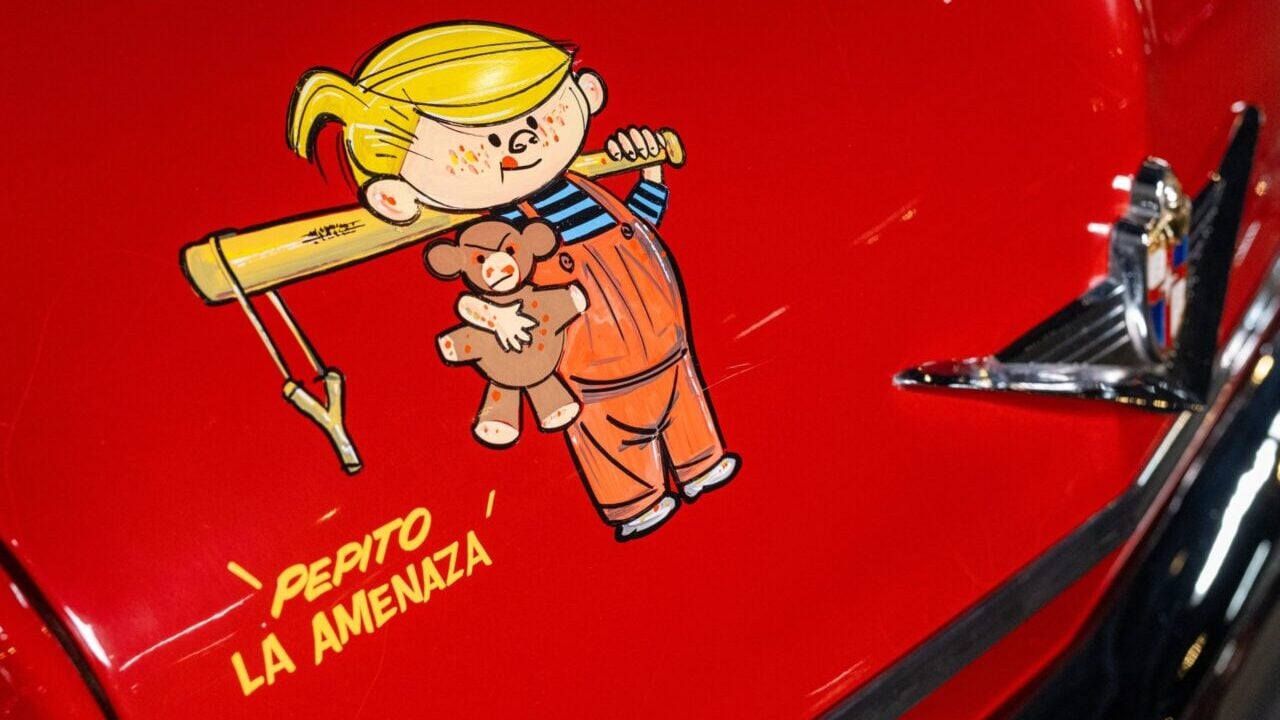
The car also carries fascinating period details, including a hand-painted Dennis the Menace graphic referencing Ray Crawford’s underdog status during the event.
Power comes from a 317.5-cubic-inch V8 producing 205 horsepower paired with a Hydra-Matic automatic transmission. The race-prepped Capri also features a roll bar and an enormous 55-gallon auxiliary fuel tank mounted inside the rear seating area to survive the marathon event.
A Forgotten Piece Of American Racing History
While the car may not actually be Crawford’s winning chassis itself, historians believe it remains one of the closest surviving links to Lincoln’s improbable dominance in the Carrera Panamericana.
The car underwent a comprehensive restoration beginning in 1967 at Holman & Moody-Stroppe, the same shop responsible for preparing the original race cars more than a decade earlier. Remarkably, much of that restoration still survives today, including paintwork now approaching sixty years old itself.
The result is something far more historically significant than a perfectly modernized restoration. This Lincoln still feels tied to the era that created it.
Today, Lincoln focuses almost entirely on luxury SUVs and comfort-focused vehicles. Seeing one associated with brutal endurance racing against Ferraris and Porsches feels almost surreal by modern standards.
Yet in the early 1950s, Lincoln was one of the toughest names in international motorsport. This surviving Capri stands as proof that the brand once conquered one of the world’s most punishing races with a giant American V8 coupe built to survive nearly anything Mexico could throw at it.