Chinese automakers are already effectively locked out of the American new-car market thanks to tariffs, trade restrictions, and growing political pressure. Now, lawmakers in Michigan want to go even further by preventing many Chinese-connected vehicles from entering the United States at all, even temporarily from Canada or Mexico.
A newly proposed bill called the Protecting America from Chinese Cars Act would prohibit certain connected vehicles linked to China and other adversarial nations from crossing into the U.S. The legislation specifically targets vehicles capable of collecting and transmitting data, a category that now includes most modern cars.
The proposal reflects a dramatic change in how Washington views Chinese automakers. The debate is no longer focused solely on cheap labor, subsidies, or pricing pressure. Increasingly, lawmakers are framing connected vehicles as potential national-security risks because of the enormous amount of data modern cars can collect.
Supporters of the bill argue that today’s vehicles function as rolling data-gathering platforms capable of tracking location, recording video, mapping infrastructure, and transmitting sensitive information back to manufacturers or governments.
The Bill Targets More Than Imports

The proposed legislation was introduced by Representative Haley Stevens and Senator Elissa Slotkin, both Democrats from Michigan, a state deeply tied to the American auto industry.
If passed, the bill would block connected vehicles manufactured or designed in China from entering the United States, including vehicles arriving through neighboring countries. That means someone driving a Chinese-branded vehicle in Canada or Mexico could potentially be prohibited from crossing the border into the U.S., even for a short visit.
The language reportedly extends beyond vehicles physically built in China. It would also apply to vehicles produced by companies in which Chinese firms hold more than a 15% ownership stake.
Manufacturers would still have the ability to seek exemptions through a formal authorization process involving federal oversight and transparency requirements. However, lawmakers made clear they intend the restrictions to be aggressive.
Speaking at the Mackinac Policy Conference in Michigan, Stevens said the issue involves both economic protection and national security concerns. She argued the U.S. should “close our border to Chinese vehicles and Chinese technology in the vehicles, even for day trips.”
Lawmakers Say Connected Cars Create Security Risks
The central concern involves data collection. Modern connected vehicles constantly gather information through cameras, GPS systems, microphones, sensors, and internet-connected software platforms.
Lawmakers backing the proposal argue those systems could theoretically be used to collect intelligence on American infrastructure, military facilities, or individual citizens if the data is accessible by foreign governments.
Senator Slotkin described connected vehicles as “surveillance packages on wheels,” warning they are capable of geolocating drivers, collecting video, and mapping sensitive infrastructure.
The issue has become especially politically charged because Chinese national-security laws can require domestic companies to cooperate with government intelligence requests. Critics argue that creates an unacceptable risk when vehicles continuously gather enormous amounts of real-world data.
The proposal also builds on previous U.S. actions targeting Chinese-connected vehicle technology. Earlier regulations already restricted imports of certain connected vehicles manufactured by companies tied to China beginning in 2027.
Chinese Automakers Are Expanding Rapidly Nearby
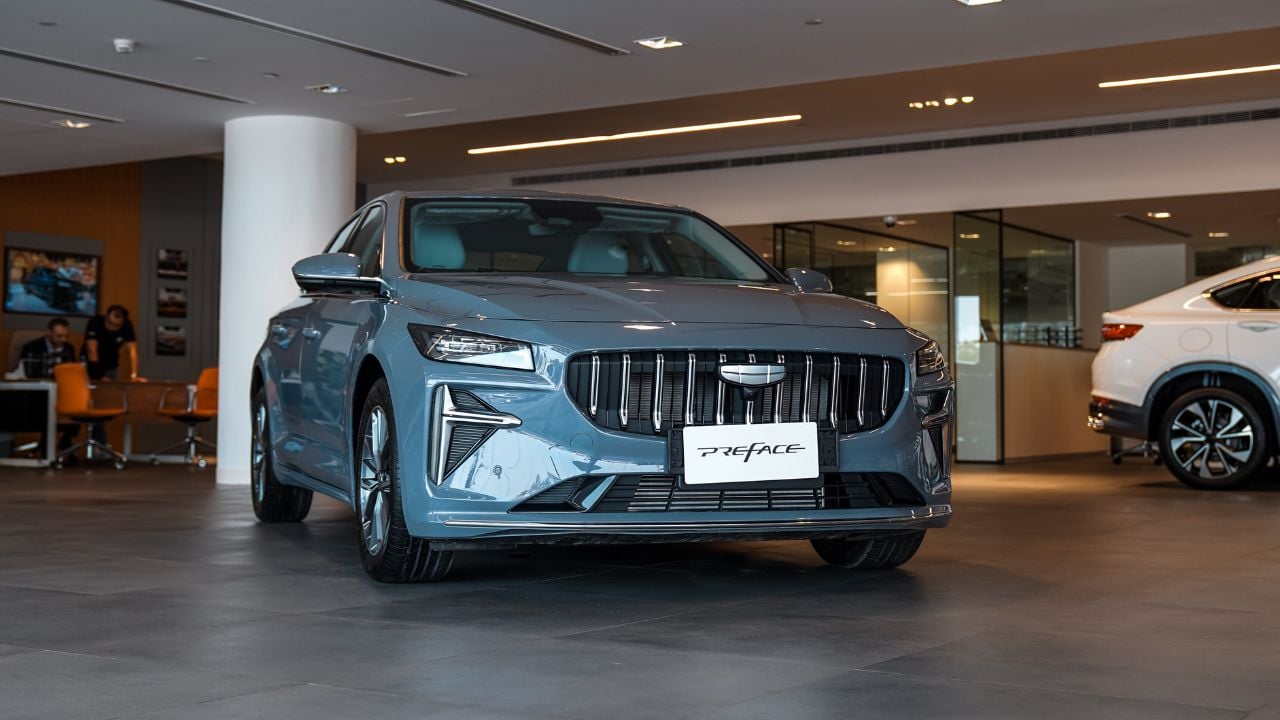
Part of the urgency behind the proposal stems from how quickly Chinese brands have expanded in nearby markets.
According to lawmakers supporting the bill, Chinese automakers now account for roughly 15% of Mexico’s automotive market. Canada has also moved toward reducing tariffs on some Chinese vehicles through recent trade agreements, potentially making Chinese EVs and connected cars more common across North America.
That raises fears among American policymakers that Chinese vehicles could eventually gain indirect access to the U.S. through neighboring countries even if direct sales remain heavily restricted.
Meanwhile, Chinese manufacturers continue growing globally at an extraordinary pace. Brands such as BYD, Geely, Chery, MG, and Zeekr have aggressively expanded into Europe, South America, Southeast Asia, and parts of the Middle East by offering highly competitive pricing and advanced technology.
Many American automakers and lawmakers increasingly view that expansion as both an industrial threat and a geopolitical concern.
The Debate Around Cars Is Changing
The proposed legislation highlights how dramatically the automotive conversation has evolved over the past several years. Vehicles are no longer viewed simply as transportation products or manufacturing exports.
Today’s cars function more like rolling computers connected to cloud systems, mobile networks, and constantly updating software ecosystems. That transformation has created entirely new concerns involving cybersecurity, privacy, and data ownership.
Governments worldwide are beginning to react. China itself previously restricted Tesla vehicles from entering some military-related areas before Tesla agreed to comply with local data-storage requirements. More recently, countries including the United Kingdom and Poland have reportedly introduced restrictions involving Chinese-connected vehicles near sensitive sites.
Whether the Protecting America from Chinese Cars Act ultimately passes remains uncertain. Even so, the proposal signals just how seriously Washington is beginning to treat connected vehicles as part of broader national-security policy.
For the automotive industry, the implications could be enormous. The next major battleground may no longer center solely around tariffs or manufacturing costs, but around software, connectivity, and who controls the data generated every time a car hits the road.