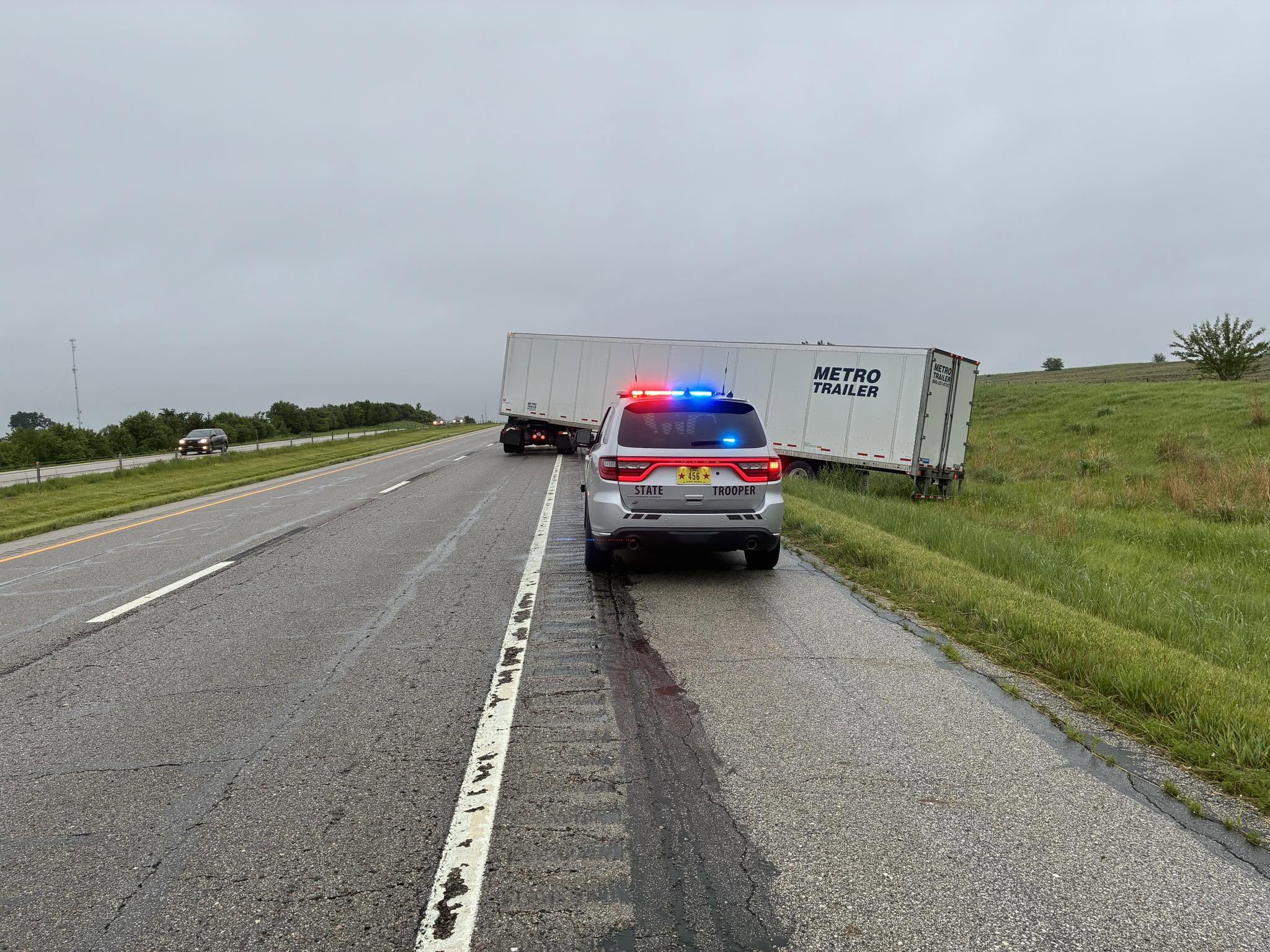
When a trucker dozes off in the sleeper berth, the assumption is generally that the truck stays parked. On a stretch of Interstate 80 in Iowa last week, that assumption turned out to be incorrect by a considerable margin. An Iowa State Patrol trooper responded to a commercial semi truck that had ended up in the ditch, only to find a situation that probably took a moment to fully process: the person behind the wheel had no commercial driver’s license whatsoever and had apparently decided to take over driving duties while the credentialed occupant caught some sleep.
The passenger’s stated reasoning, relayed with admirable brevity by the Iowa State Patrol’s Commercial Motor Vehicle Unit, was that they “just wanted to go home.” It is a sentiment most people can understand. The method chosen to act on it, however, involves operating tens of thousands of pounds of commercial motor vehicle on a federal interstate without any of the training, testing, or licensure that federal law requires. The truck ended up in a ditch, which is one of the more predictable outcomes of that particular plan.
The situation compounded itself when troopers turned their attention to the actual credentialed driver, the one who had been sleeping. A check of that driver’s credentials revealed their CDL had been suspended. In other words, neither person in that truck had any legal business operating it. The Iowa State Patrol’s unit noted with dry efficiency that both parties subsequently did not get home as quickly as originally hoped, which may be the understatement of the week on I-80.
Numerous violations were issued, including out-of-service orders, which under Federal Motor Carrier Safety Administration rules carry their own substantial consequences on top of whatever state charges may follow. The incident is a thorough reminder of just how seriously commercial vehicle enforcement takes the question of who is and who is not authorized to operate a semi truck on public roads.
What a CDL Actually Requires, and Why It Matters
A commercial driver’s license is not a casual upgrade from a regular driver’s license. Earning one in Iowa, as in every other state, requires passing both knowledge tests and a skills examination conducted in a vehicle representative of what the driver intends to operate.
Federal standards under 49 CFR govern the process, and applicants must have clean driving records with no suspended, revoked, or disqualified licenses in Iowa or any other jurisdiction. There are additional medical requirements under Federal Motor Carrier Safety Regulations as well.
The point of all this is not bureaucratic formality. A fully loaded semi truck can weigh up to 80,000 pounds under federal limits. Stopping distances, turning radius, and the physics of managing a vehicle of that size at highway speed are not intuitions a person develops by riding along in the cab.
The CDL testing process exists precisely because experience behind the wheel of a passenger car transfers very little to the task of keeping a large commercial vehicle on the road at 65 miles per hour on an interstate.
Driving on a Suspended CDL Has Its Own Separate Set of Problems
The sleeping driver in this incident was not simply out of the picture legally just because someone else was driving. Operating a commercial motor vehicle with a suspended CDL in Iowa is classified as a major offense, and conviction for two or more major offenses within a three-year period results in a 60-day disqualification, with three offenses in the same window drawing a 120-day disqualification. A first conviction for a serious offense can trigger a CDL suspension of at least one year.
Driving with a suspended, revoked, or disqualified CDL is typically charged as a standard driving without a license violation, though in commercial vehicle contexts the consequences tend to compound quickly. The out-of-service orders issued at the scene also carry federal teeth.
A CDL holder convicted of violating an out-of-service order faces a civil penalty of no less than $3,961 for a first conviction, rising to no less than $7,924 for a second or subsequent conviction. That is before any state-level fines or criminal charges are factored in.
Out-of-Service Orders and What They Mean for a Driver’s Career
An out-of-service designation does not simply mean the truck gets pulled over and ticketed. It means the vehicle or driver cannot move until the underlying violation is resolved. Beyond the immediate downtime, out-of-service violations significantly damage a carrier’s CSA score, which can drive up insurance premiums and affect the carrier’s standing with brokers and customers. For individual drivers, the violations follow their record in ways that make future employment considerably more difficult to secure.
The CDL system is also designed with the understanding that commercial drivers carry a professional responsibility that goes well beyond their own safety. A semi truck in a ditch on I-80 is not a fender bender. It is a potential mass casualty event depending on circumstances, and enforcement agencies treat it accordingly.
Iowa State Patrol’s Commercial Motor Vehicle Unit conducts exactly this kind of roadside verification work specifically to keep underqualified or disqualified operators off the road before something more serious happens.
The Broader Problem of Unauthorized CMV Operation
This incident is unusual in its particulars, but unauthorized operation of commercial motor vehicles is not as rare as one might expect. The category of unlicensed commercial vehicle operation covers a range of situations, including driving while suspended, driving with an expired license, and operating without the proper endorsements for the specific vehicle type.
For someone who has never been issued a CDL at all, operating a commercial motor vehicle is generally classified as a misdemeanor, potentially resulting in up to six months in jail, a fine of up to $1,000, and a bar on operating or even applying to operate a commercial vehicle for up to 120 days.
Put plainly, the passenger’s plan to simply slide into the driver’s seat and get home did not account for any of this. Federal and state commercial vehicle enforcement exists as a layered system, and that system tends to find its way into situations like this one with a thoroughness that neither occupant of that truck was apparently prepared for. The ditch did not help their case, either.