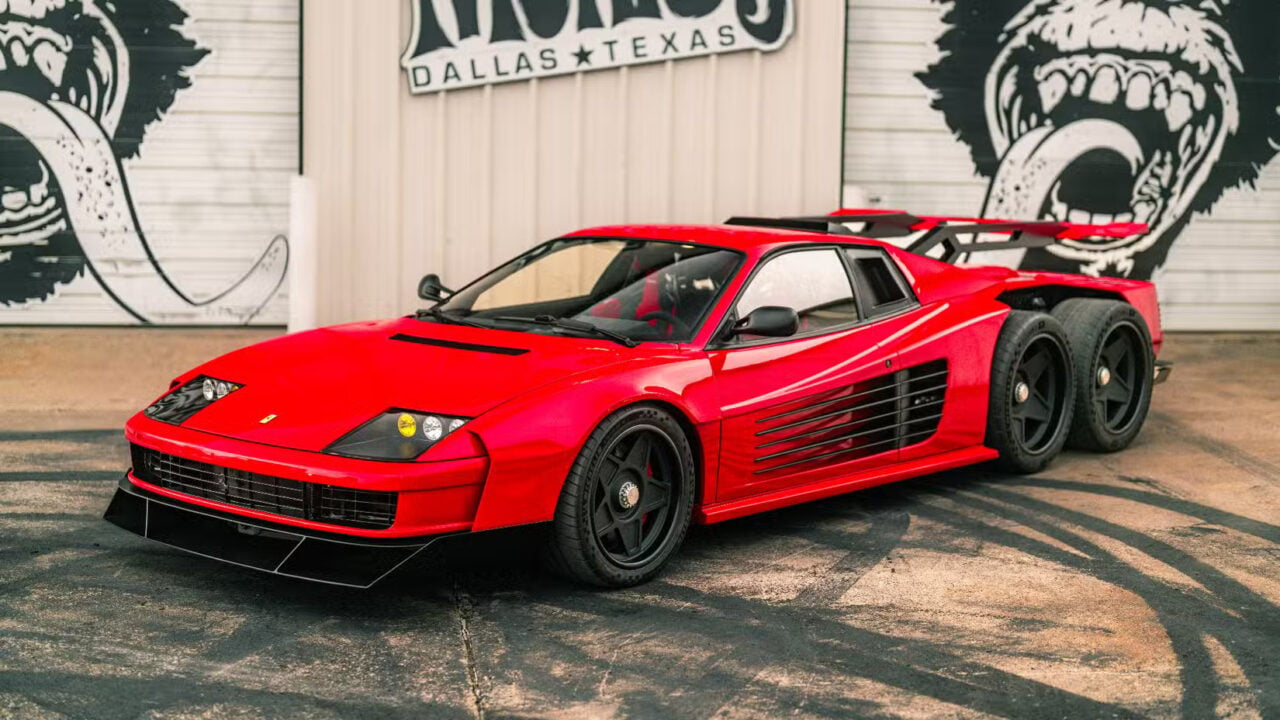
Gas Monkey Garage has finally finished one of its most outrageous builds ever: a six-wheeled Ferrari known as the F6. After more than two years of delays, redesigns, fabrication problems, and late nights, Richard Rawlings and his team have unveiled the completed car.
The build started with a real VIN-bearing Ferrari Testarossa-based project, before being transformed into something completely unrecognizable. Instead of remaining a conventional Italian exotic, it became a six-wheeled, supercharged, American-powered monster with four driven rear wheels.
Rawlings described the finished F6 as one of the craziest projects Gas Monkey Garage has ever completed. For a shop known for loud, expensive, attention-grabbing builds, that says plenty.
The goal was to build something so over-the-top that it was impossible to ignore, and judging by the final result, Gas Monkey absolutely delivered.
The F6 Is A Ferrari Turned Into A Six-Wheel Supercar
The Ferrari F6 is not just a visual stunt. Gas Monkey says the car is fully functional, track-tested, and capable of putting serious power to the ground through its unusual rear-wheel layout.
Power comes from a supercharged GM-based LT4 427-cubic-inch engine, a deliberately wild choice for a Ferrari-based build. That American V8 sends power to all four rear wheels through a custom drivetrain setup, making the F6 far more than a show car with extra wheels bolted on.
The build also received custom suspension geometry, Wilwood brakes, one-off center-lock wheels, and a massive rear wing designed specifically for the car. The interior reportedly takes inspiration from the Ferrari F40, keeping the project tied loosely to Ferrari’s own supercar history.
The First Version Was A Disaster
The F6 did not have an easy path to completion. The project was originally handled by a third-party fabrication shop before the relationship collapsed over missed deadlines and serious build-quality problems.
When the car arrived back at Gas Monkey, the team found major issues. The rear structure was out of square, parts were poorly installed, the body was too wide, and some mechanical components were allegedly unsafe or mismatched.
One of the biggest surprises involved the rear differential setup. The team claimed the wrong gear ratios and rusty components could have caused serious drivetrain failure if the car had been driven hard.
The finish was also nowhere near what Rawlings wanted. Instead of the glossy Rosso Corsa look from the original rendering, the car arrived with matte paint, bedliner, and even glitter, which is probably not what Enzo Ferrari had in mind.
Gas Monkey Essentially Rebuilt The Car
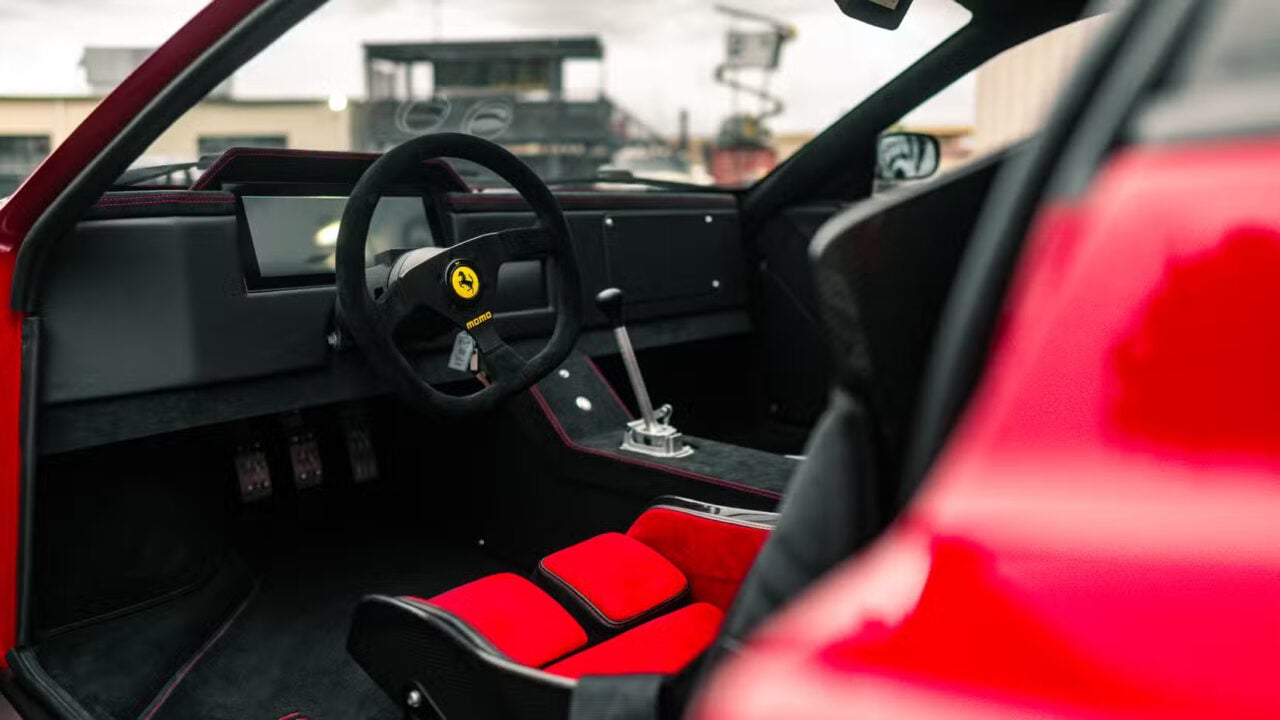
Once Gas Monkey took full control, the project became less of a finishing job and more of a complete rescue mission. The team squared the chassis, narrowed the body, reworked the rear structure, redesigned key components, and rebuilt nearly every major system.
The custom wing became one of the defining features of the finished car. Gas Monkey 3D-scanned the rear of the Ferrari, modeled the wing digitally, cut test pieces, and refined the final shape until it matched the aggressive look Rawlings wanted from the beginning.
That wing also helped visually balance the car’s bizarre proportions. Without it, the six-wheel layout could have looked awkward, but with it, the F6 leans fully into its ridiculous supercar fantasy.
It Actually Works On Track
For all the drama surrounding the build, the most important detail is that the finished F6 reportedly works. Gas Monkey says the car drives, turns, accelerates hard, has air conditioning and a stereo, and even performs four-wheel rear burnouts.
Rawlings and the crew also claim the F6 impressed them during track testing. According to the shop, it was not only fast in a straight line but surprisingly capable through corners, despite having six wheels and an absurdly custom drivetrain.
This project could easily have become a static spectacle. Instead, Gas Monkey wanted the car to function as a real performance machine.
What Happens Next?
Rawlings and business partner John Clay Wolfe have not fully settled what comes next for the F6. They discussed campaigning the car publicly, showing it in major cities, and possibly sending it across an auction block in the future.
Given Gas Monkey’s previous success with wild six-wheel builds, expectations will be high. Their earlier six-wheel Hummer reportedly sold for huge money at Barrett-Jackson, which helped fund the Ferrari project in the first place.
Whether the F6 becomes a million-dollar auction star or remains a rolling Gas Monkey calling card, it has already achieved its main mission. It is loud, excessive, controversial, and impossible to ignore, exactly what a six-wheeled Ferrari from Gas Monkey Garage should be!