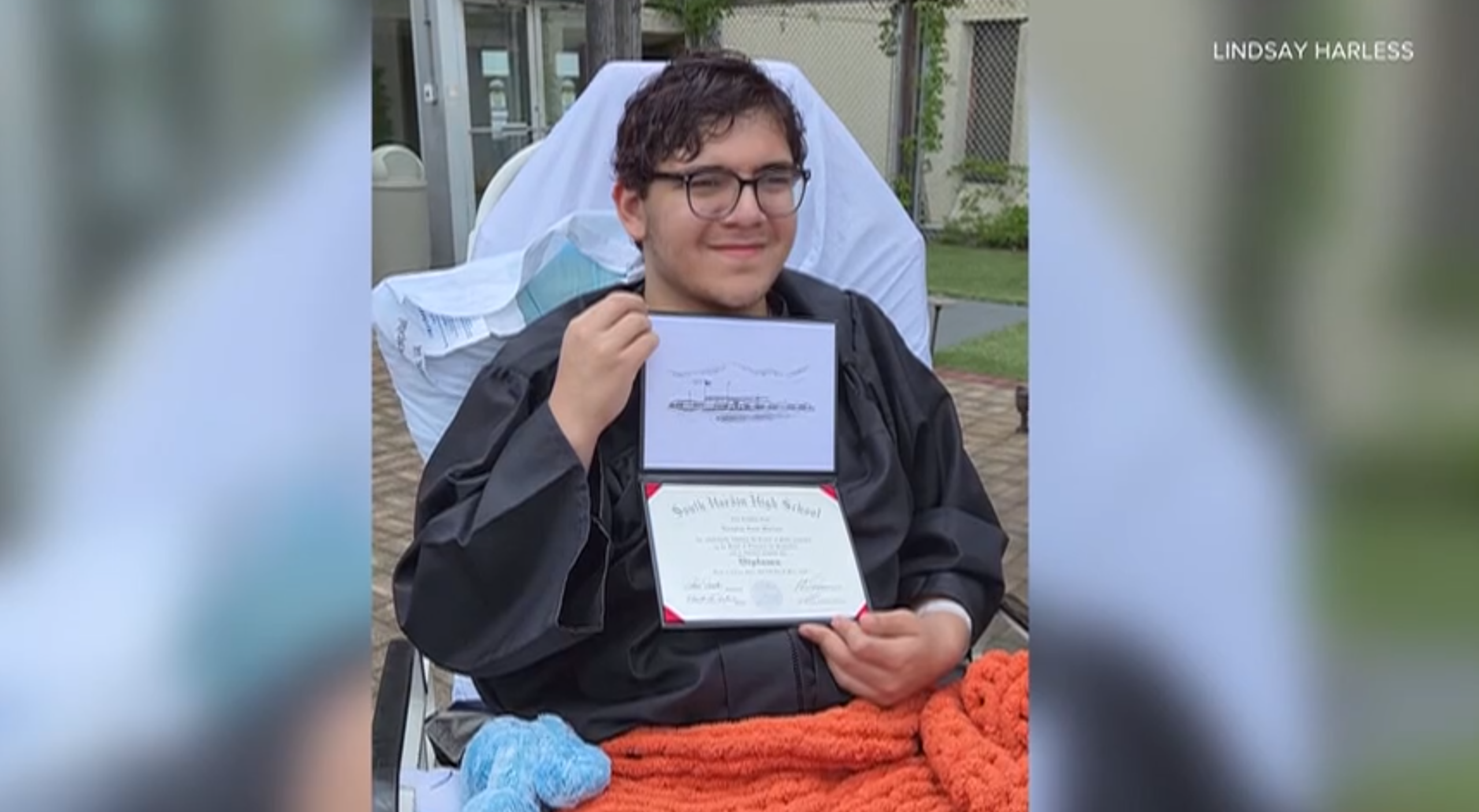
One week. That is all the time that stood between Brayden Harless and the graduation ceremony he had spent 13 years working toward. Then, on May 8, the Iowa high school senior dozed off behind the wheel on his way home, and his car nose-dived straight into a ditch. By the time first responders reached him, his life had been turned completely upside down.
Harless fractured two vertebrae in the crash, his L1 and T12, leaving him paralyzed from the waist down. He spent more than a week in the intensive care unit at MercyOne hospital in Des Moines, facing a reality no 18-year-old should ever have to confront: the possibility that he may never walk on his own again.
What makes this story even more remarkable is what happened in those quiet, terrifying minutes after the crash, before anyone found him. Harless was alone in a ditch, injured, and had to summon every ounce of strength to drag himself to his phone and call 911. He has said he credits something bigger than himself for that decision, describing a moment where he heard a voice telling him he needed to make that call or risk losing the ability to walk at all.
It is the kind of gut-punch opening to a story that easily could have ended in tragedy. But this one, somehow, managed to find a way forward.
Graduation Did Not Wait for the Hospital to Dismiss Him
Missing your own graduation is already the stuff of high school nightmares. Missing it because you are recovering from a spinal injury in an ICU? That is a level of heartbreak most of us cannot fully imagine. Harless acknowledged he had mixed feelings about not being at his school’s in-person ceremony, saying there were parts of him that wished he could have been there, and parts that understood why it was better that he was not.
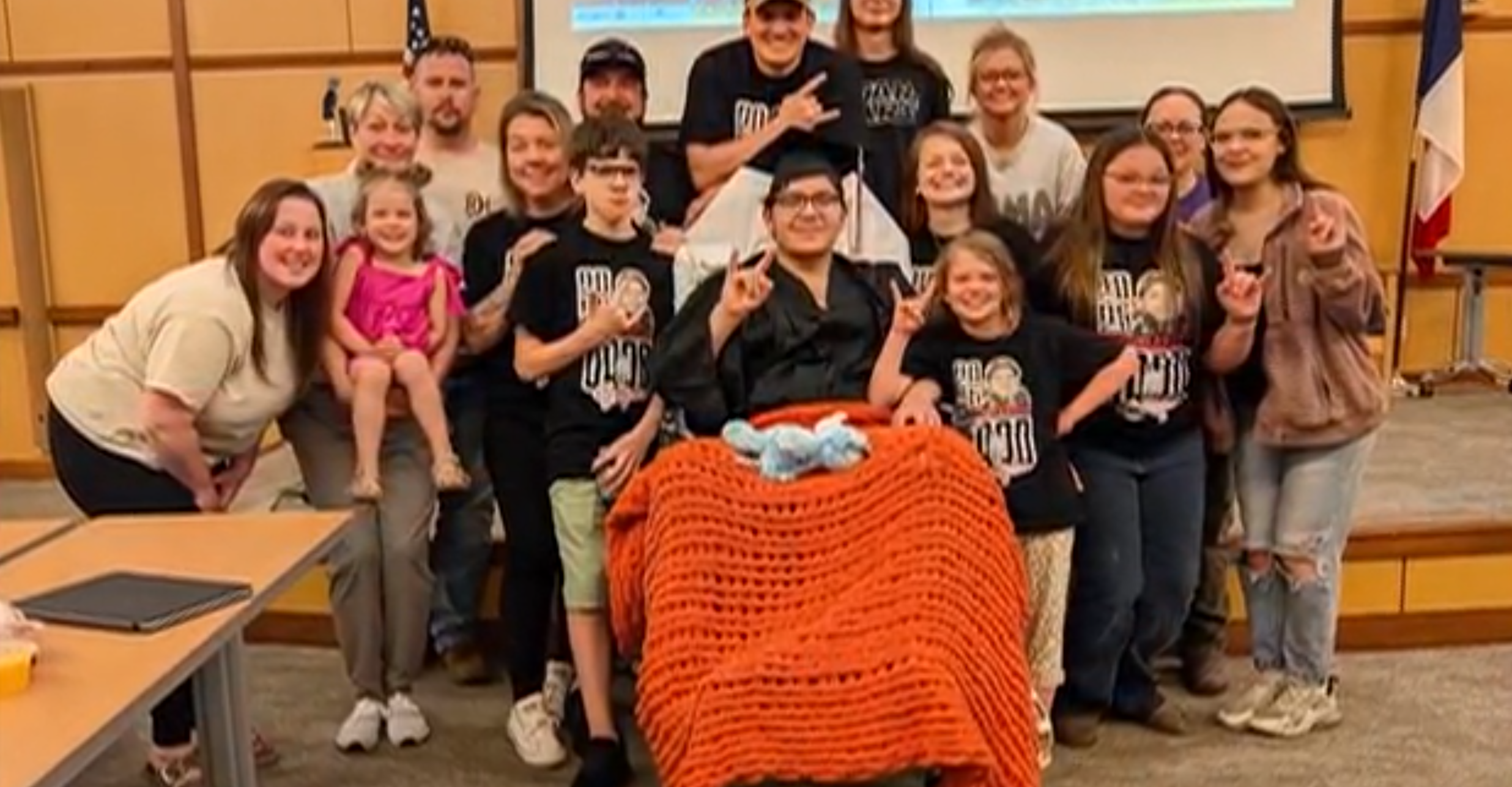
But the staff at MercyOne were not about to let the milestone slip by unacknowledged. Hospital employees, led by public safety leader Diogenes Ayala, quietly coordinated among themselves and with their team to set up a graduation ceremony right there in the hospital. What Harless expected to be a small conference room affair turned into something far more special: a full auditorium projection of the ceremony, complete with his entire family present and his teacher making the trip in person to hand him his diploma.
Harless was floored. He genuinely had not seen it coming, and by the time the moment arrived, there was not a dry eye in the room. For many of his family members, it was also the first time they had laid eyes on him since the accident, which made the emotion run even deeper.
What We Can Learn from Brayden’s Story
Beyond the heartwarming hospital moment, Harless’s crash carries a warning that is worth taking seriously. Drowsy driving is one of the most underestimated dangers on the road. According to the National Highway Traffic Safety Administration, falling asleep at the wheel contributes to tens of thousands of crashes every year in the United States, and young drivers are among the most vulnerable due to irregular sleep schedules and inexperience recognizing the warning signs of fatigue.
The lesson here is not to shame Harless, who is already living with the very real consequences of that morning. The lesson is that most of us have probably pushed through a drive when we were more tired than we should have been. If a teenager’s story of losing the ability to walk one week before graduation is not a reason to pull over and rest, it is hard to know what is. Brayden’s courage in calling for help is admirable. But the better outcome would have been not needing to make that call at all.
What Comes Next for Brayden Harless
Despite everything, Harless is already looking forward. He plans to throw himself into rehabilitation and physical therapy, and his goal is to one day be able to walk with the help of a cane. He also has aspirations of building a career in social work, which, given what he has just been through, sounds like exactly the kind of path someone with his perspective and resilience was made for.
A GoFundMe has been set up to help cover expenses related to his recovery and new chapter ahead, and supporters have already begun contributing toward the goal. It is a small but meaningful way for people who have heard his story to put something behind their well-wishes.
MercyOne, for their part, earned something that no hospital PR team could ever manufacture: genuine, tearful gratitude from a kid who just needed the world to show up for him. And it did.