
A team of engineering students at Brigham Young University has claimed one of the most remarkable fuel-efficiency records of the year after designing a supermileage vehicle capable of traveling 2,145 miles on a single gallon of fuel.
The achievement earned the university top honors at the 2026 Shell Eco-marathon Americas competition, where teams from across North and South America compete to build ultra-efficient vehicles. According to the university, the result was enough to beat the second-place team by 122 mpg and finish nearly 900 mpg ahead of third place.
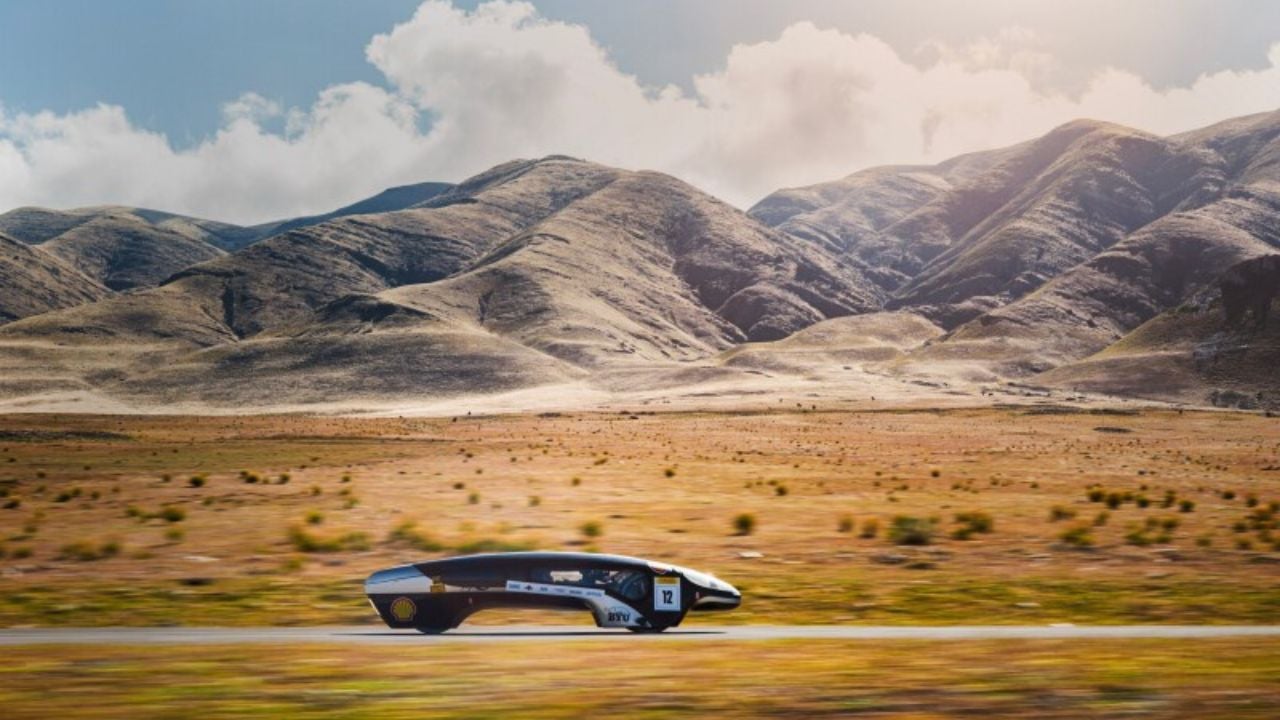
The lightweight prototype was built by BYU’s Supermileage Club, a student-led engineering group focused on maximizing efficiency through aerodynamic design, weight reduction, and mechanical refinement. The vehicle’s fuel economy figure would theoretically allow it to travel from Utah to New York City on a single gallon of fuel.
The win marks the third Shell Eco-marathon title for BYU in the last four years, further cementing the school’s growing reputation in efficiency engineering competitions.
Engineering Focused on Extreme Efficiency
Unlike production vehicles designed for comfort or speed, supermileage cars are built around the purpose of consuming as little fuel as possible. That means every component is scrutinized. BYU’s prototype used an ultra-light body, narrow wheels with minimal rolling resistance, and a highly optimized powertrain. This was designed to extract maximum distance from tiny amounts of fuel.
Faculty mentor Dale Tree said the competition gives students hands-on engineering experience that often changes career paths and professional ambitions. The Shell Eco-marathon has become one of the world’s best-known student engineering competitions because it pushes participants to rethink conventional automotive design.
Teams regularly experiment with advanced aerodynamics, friction reduction, and energy management systems that mirror concepts later explored in commercial transport technologies.
While the car itself is not road legal, the project demonstrates how dramatically fuel consumption can be reduced when efficiency becomes the sole design priority. Many of the engineering lessons learned in such competitions eventually influence broader vehicle development, particularly in hybrid and electric mobility sectors.
Competition Victory Brings Global Recognition

The 2026 event featured nearly 80 teams from countries including Brazil, Canada, Colombia, Mexico, and the United States. BYU not only won its class but also secured the competition’s overall Global Championship award, recognizing the strongest team performance across the event.
The students received two $3,000 prizes and earned an invitation to compete in the 2027 global finals in Qatar. Camille Nobrega, president of the BYU Supermileage Club, described the victory as the result of months of intensive work from students balancing coursework alongside long hours in the workshop. She said the collaborative environment helped keep the team motivated during the final stages of preparation.
Why Supermileage Projects Matter
Although hyper-efficient prototypes are far removed from consumer cars, the engineering principles behind them remain highly relevant as automakers face tighter emissions standards and rising pressure to improve efficiency.
Modern production vehicles already use many concepts first explored in experimental efficiency projects, including lightweight materials, low-drag body shapes, and advanced energy management systems. Electric vehicle manufacturers in particular have intensified their focus on aerodynamic efficiency because reducing drag directly improves driving range.
The BYU project also highlights the growing role universities play in transportation research. Student engineering competitions increasingly function as testing grounds for future automotive technologies. All the while, they provide participants with real-world design and manufacturing experience.
For BYU’s team, the latest result represents more than a headline-grabbing number. It reinforces how far efficiency engineering can go when designers ignore conventional automotive expectations and focus entirely on reducing energy consumption.