Modern automatics have made the old manual-versus-automatic argument much harder. Dual-clutch gearboxes, quick torque-converter automatics, launch control, and smarter shift programming now beat most manual cars when the stopwatch is the only judge.
That makes the exceptions more interesting. Every so often, the manual is not only the more involving version. It is lighter, stronger, better geared, or genuinely quicker than the automatic or automated alternative.
These cars matter because they show that performance was not always improved by taking the shift lever away from the driver. In some cases, the stick-shift model got the better engine, avoided a slow automatic, carried less weight, or simply matched the car’s powerband more effectively.
The seven cars below earned their places for specific reasons. Each manual version either tested quicker, carried more power, delivered a higher top speed, avoided a weaker transmission setup, or preserved the full performance package better than the automatic version.
Where the Stick Shift Still Wins for Real
This selection focuses on cars where the manual transmission has a measurable or clearly documented performance advantage. A car needed more than nostalgia, shift feel, or enthusiast preference to qualify.
The manual had to be quicker in testing, receive more horsepower, weigh less, benefit from better gearing, or avoid an automatic or automated transmission that slowed the car down. Modern dual-clutch and advanced automatic cars were treated carefully because many of them are faster than their manual counterparts.
The list also favors models sold in the U.S. market, so the examples make sense for American readers. Some are modern lightweight sports cars. Others are older cars from eras when automatics were slower, less responsive, or paired with reduced engine output.
Driver engagement still matters, but it does not replace the data. If the manual was only more fun while the automatic was clearly faster, the car stayed off the list.
Mazda MX-5 Miata RF

The Mazda MX-5 Miata RF is one of the cleanest modern examples because the manual version suits the car’s power, weight, and purpose better. In Car and Driver testing of two 2019 Miata RF models, the manual-transmission RF reached 60 mph in 5.8 seconds, while the automatic version needed 6.5 seconds.
The automatic also weighed roughly 50 pounds more. In a small roadster with modest power, that extra weight and slower response matter more than they would in a high-horsepower car.
The Miata is built around response, not brute force. The manual lets the driver keep the engine in its best range, choose the right gear before a corner, and use one of the best shift actions still available in a new car.
This is not only a case where the stick feels better. It is the quicker version by test data, and it gives the RF the alert character that makes the MX-5 work.
Subaru BRZ

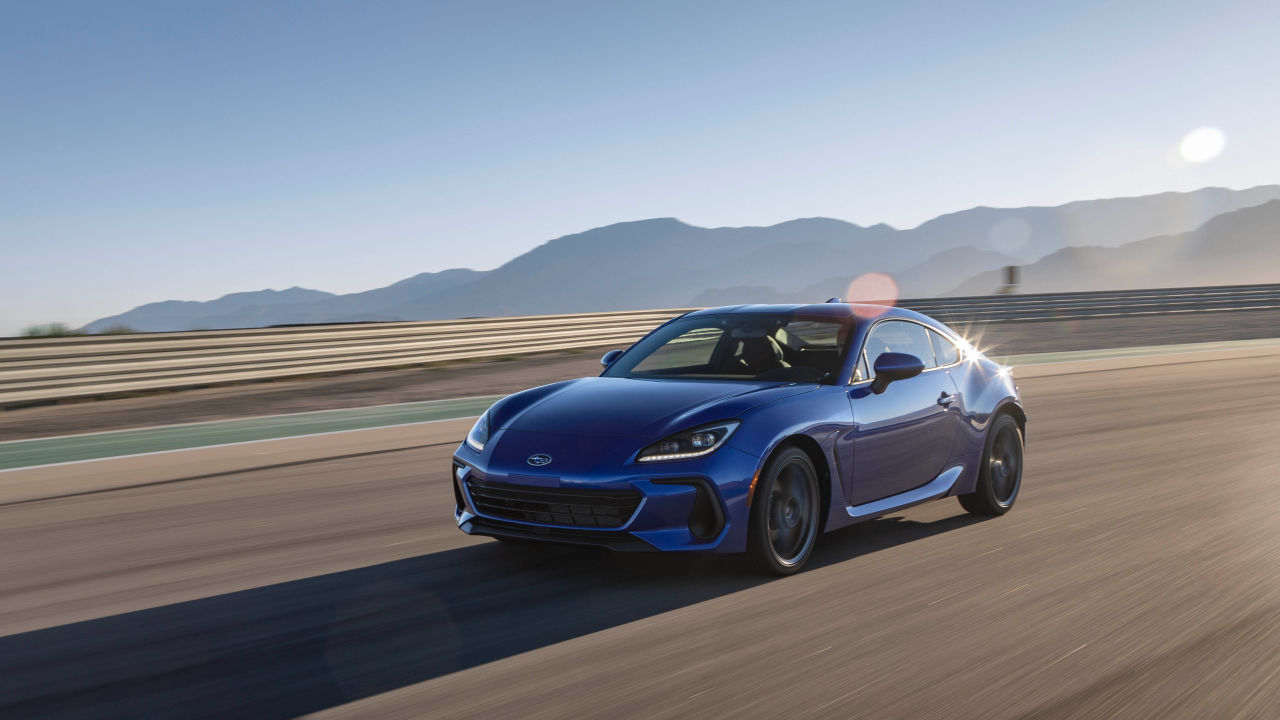
The second-generation Subaru BRZ is another modern car where the manual still makes the stronger performance case. MotorTrend tested both manual and automatic versions of the 2022 BRZ and recorded 5.9 seconds to 60 mph for the manual and 6.6 seconds for the automatic.
The quarter-mile also favored the manual. MotorTrend recorded 14.3 seconds at 99.8 mph for the stick-shift car, compared with 14.9 seconds at 97.0 mph for the automatic.
That advantage fits the BRZ’s personality. Its naturally aspirated 2.4-liter flat-four rewards revs, timing, and commitment. The automatic is easier in traffic, but the manual keeps the car sharper when the driver wants to use the engine properly.
The BRZ is not trying to win through huge horsepower. It wins through low weight, balance, and driver input. In this case, the more connected version is also the faster one.
Porsche Cayman S
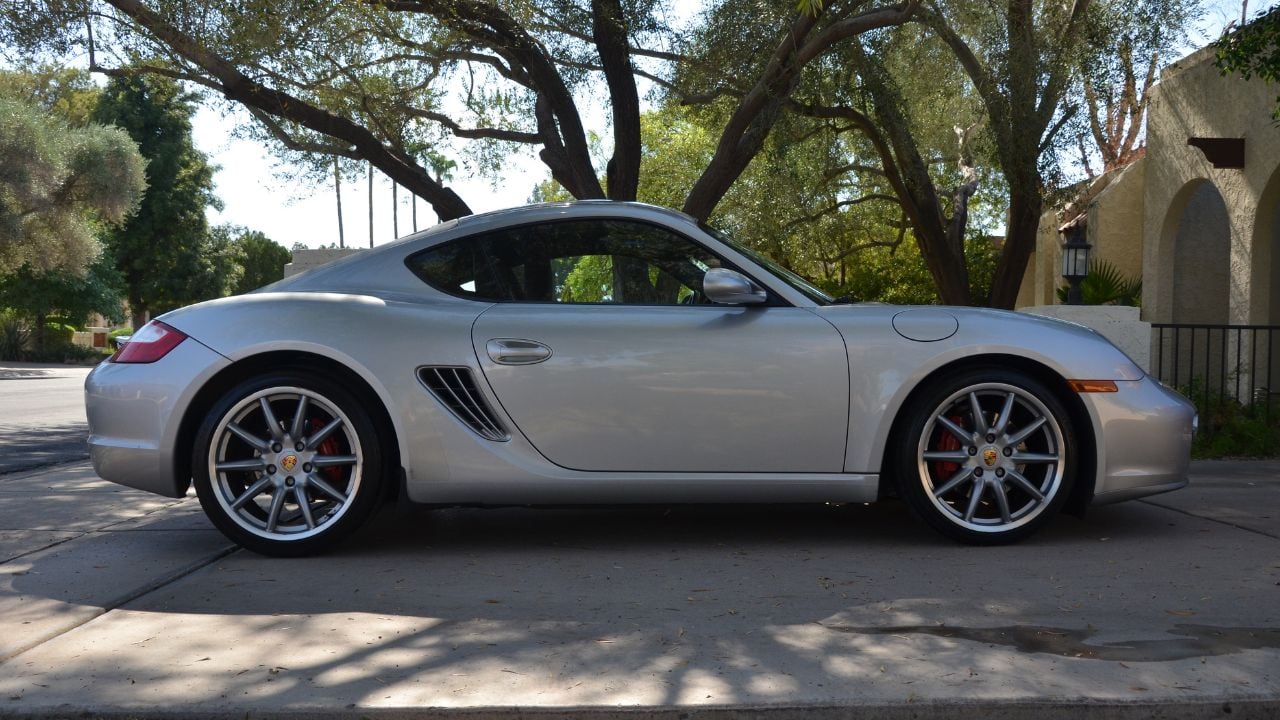
The 2006 to 2008 Porsche Cayman S belongs here because it arrived before Porsche’s PDK dual-clutch era changed the automatic-transmission argument. In the early 987.1 Cayman S, the comparison was between a 6-speed manual and the older Tiptronic S automatic.
Excellence Magazine’s specifications for the 2006 Cayman S list 0 to 60 mph in 5.1 seconds with the manual and 5.8 seconds with Tiptronic S. Top speed also favored the manual, at 171 mph versus 166 mph for the Tiptronic S car.
The Cayman S already had the right hardware: mid-engine balance, a naturally aspirated flat-six, rear-wheel drive, and a chassis that gave the driver clear feedback. The manual kept that package sharper and quicker.
This was the Porsche era where choosing the stick was not only the romantic call. Before PDK arrived, the manual was the better performance choice too.
Acura NSX
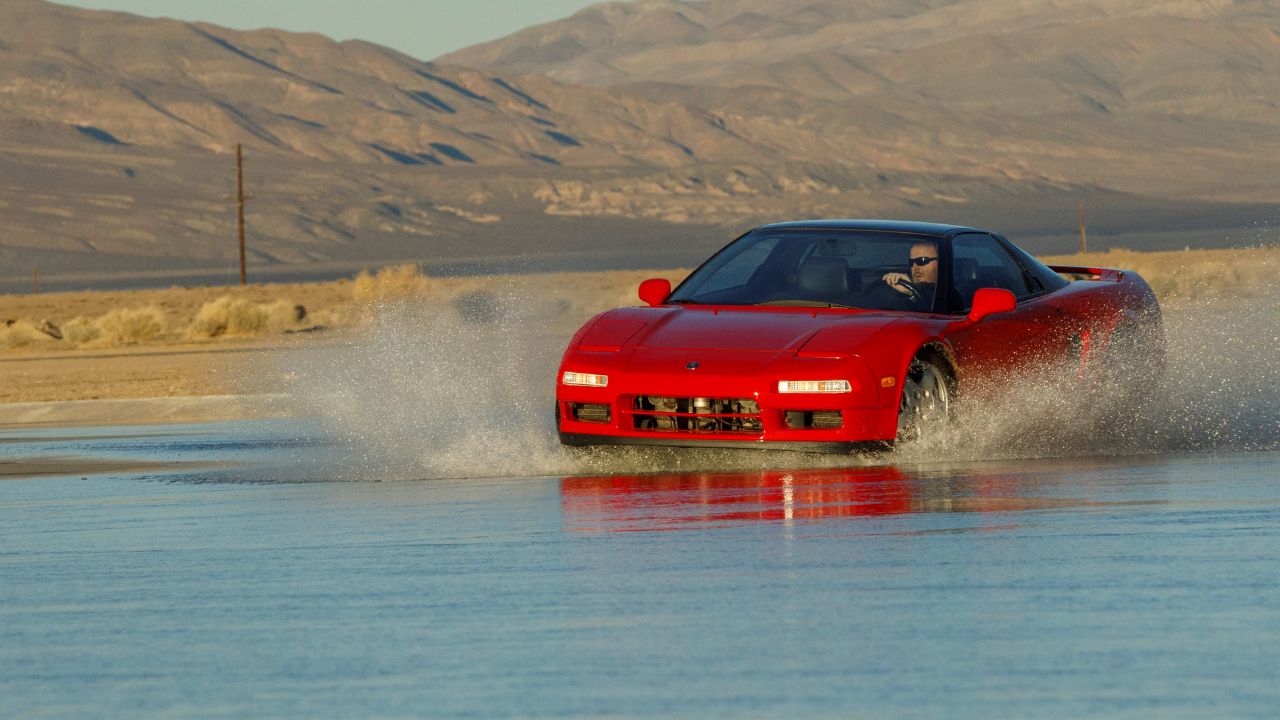
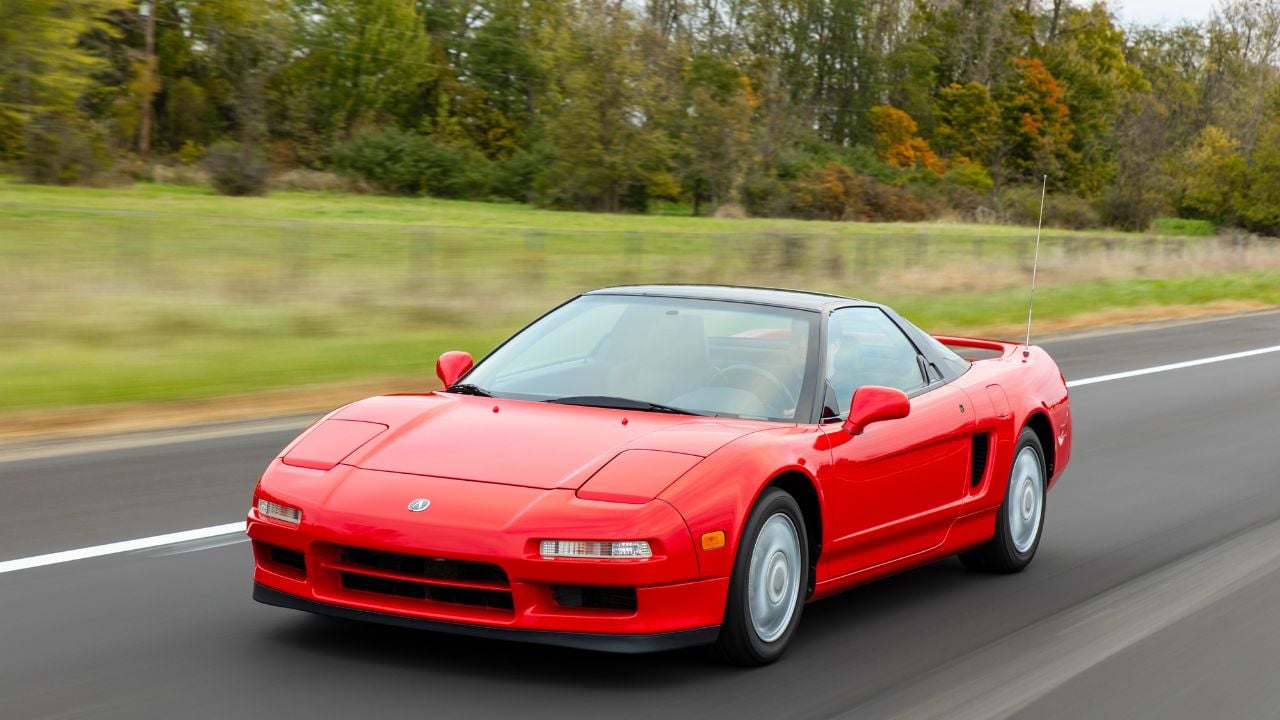
The first-generation Acura NSX is a clear case where the manual version became the true performance specification. Later manual cars received a 3.2-liter V6 rated at 290 hp, while automatic cars kept a smaller 3.0-liter V6 rated at 252 hp.
Acura’s own 2005 specifications confirm that split. The manual was not simply the more involving choice; it was the version with the larger engine and higher output.
That mattered because the NSX was never built around overwhelming power. Its strengths were balance, visibility, precision, low weight, and the confidence of a mid-engine chassis that did not punish the driver for using it.
The manual gave the NSX the full engine it deserved and the driver control that matched the rest of the car. The automatic made it easier, but it also removed a major part of the performance package.
Mazda RX-8
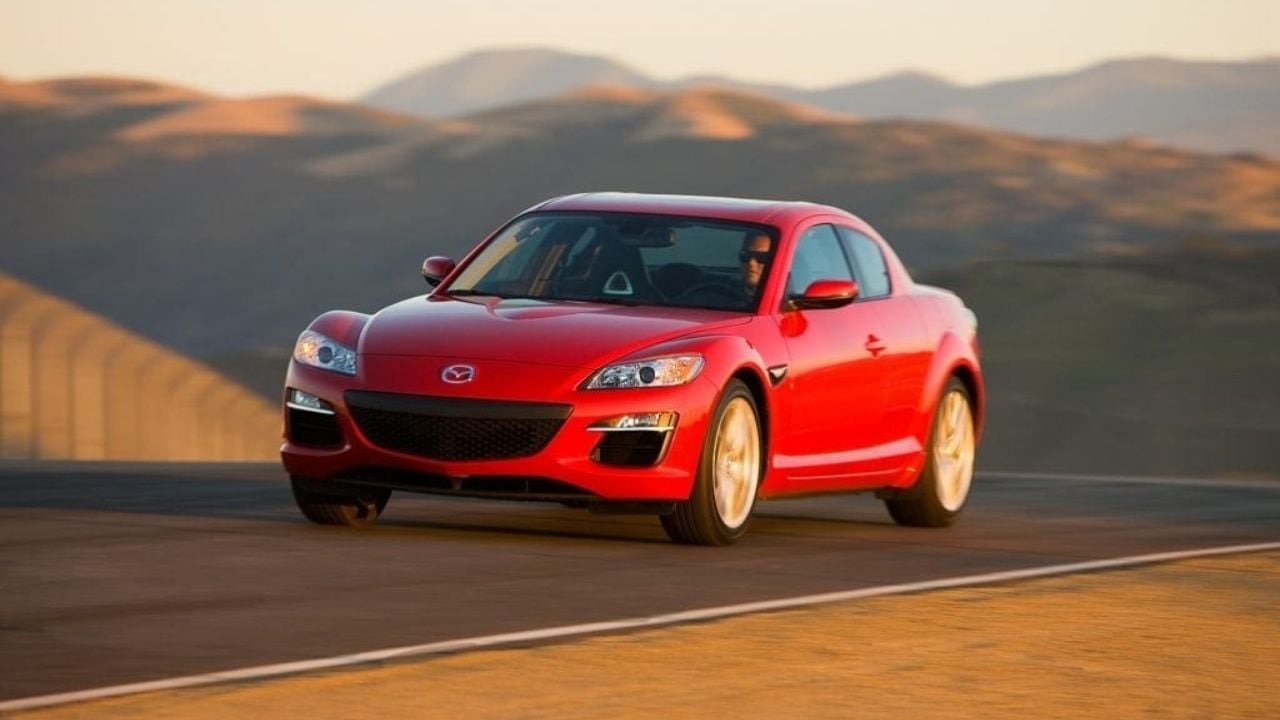
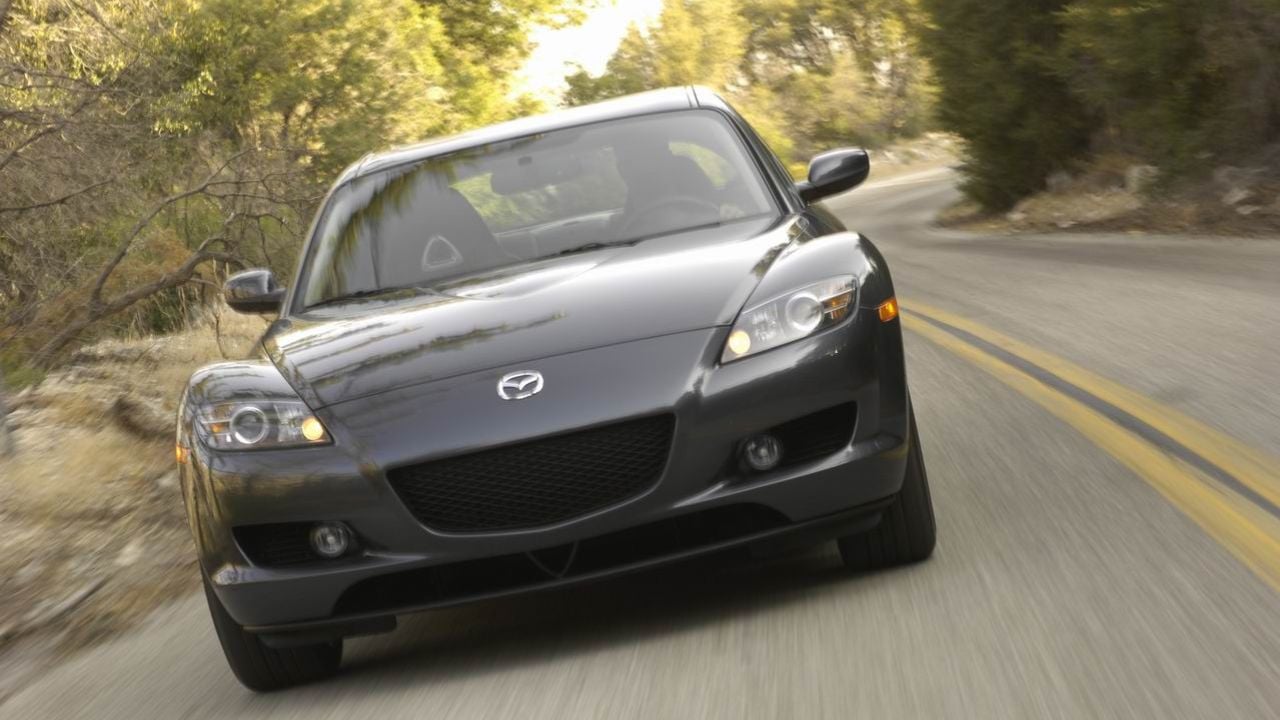
The Mazda RX-8 is one of the clearest cases where the manual changes the whole car. Mazda’s 2011 specification sheet lists the RENESIS rotary at 232 hp with the 6-speed manual transmission and 212 hp with the 6-speed automatic.
That 20-hp gap is important because the RX-8 never had much torque to lean on. The car needed revs, clean shifts, and a driver willing to keep the rotary in its best range.
The manual also brought a short-throw shifter, which suited the engine’s high-revving character far better than the automatic. In a rotary-powered car, staying in the right part of the rev range is not a small detail. It changes the whole feel of the car.
The automatic made the RX-8 easier to drive casually, but it moved the car away from its purpose. The manual version is stronger, sharper, and much closer to the reason this unusual Mazda still has a loyal following.
Toyota MR2 Spyder

The 2000 to 2005 Toyota MR2 Spyder shows how an early clutchless sequential setup could sound advanced and still slow a car down. The standard manual was the one to have, especially when compared with Toyota’s SMT sequential manual transmission.
MotorTrend’s period test data showed the regular manual MR2 Spyder reaching 60 mph in 7.0 seconds, while the SMT version needed 8.7 seconds with a conventional launch. The quarter-mile also favored the manual, 15.1 seconds versus 16.3 seconds.
That difference mattered because the MR2 Spyder lived on light weight and momentum. Its 1.8-liter engine was modest, so shift speed, driver control, and keeping the car moving cleanly all mattered.
With the proper manual, the MR2 feels like a small mid-engine sports car with sharp responses and very little excess. With the SMT, too much of that immediacy disappears.
Nissan 300ZX Twin Turbo

The 1990 to 1996 Nissan 300ZX Twin Turbo belongs here because the manual version preserved the full strength of one of the great Japanese performance cars of its era.
Hagerty notes that the Z32 Twin Turbo made 300 hp with the manual, but was detuned to 280 hp when paired with the automatic. MotorTrend’s buyer guidance also points shoppers toward the manual if they want the twin-turbo 3.0-liter V6’s full 300 hp.
That made the manual car the more serious performance choice. The Z32 already had advanced hardware for its time, including twin turbocharging, rear-wheel drive, multilink suspension, and available four-wheel steering. Losing power to the automatic worked against the whole idea.
The manual 300ZX Twin Turbo is the version for buyers who want the full grand-touring performance package. It is stronger, more involving, and more faithful to the car’s original performance identity.
Why the Manual Still Matters When It Actually Wins
The manual transmission has lost many stopwatch battles in the modern era. The fastest cars today often launch harder, shift quicker, and manage traction better when computers handle the work.
That makes these seven examples more useful than the usual nostalgia argument. They are cars where the manual still carries a real advantage: quicker test numbers, more horsepower, higher top speed, less weight, or a better match between transmission and engine.
The Miata RF and BRZ show how light sports cars can still reward the stick shift with better acceleration. The Cayman S shows how older automatics could hold back a great chassis. The NSX, RX-8, and 300ZX Twin Turbo gave manual buyers more engine. The MR2 Spyder showed how a clutchless automated transmission could miss the point.
The manual is not always quicker, and pretending otherwise makes no sense. These cars are the exceptions, which is why they work so well. They let the driver keep the clutch pedal and still keep the stronger claim on the stopwatch.