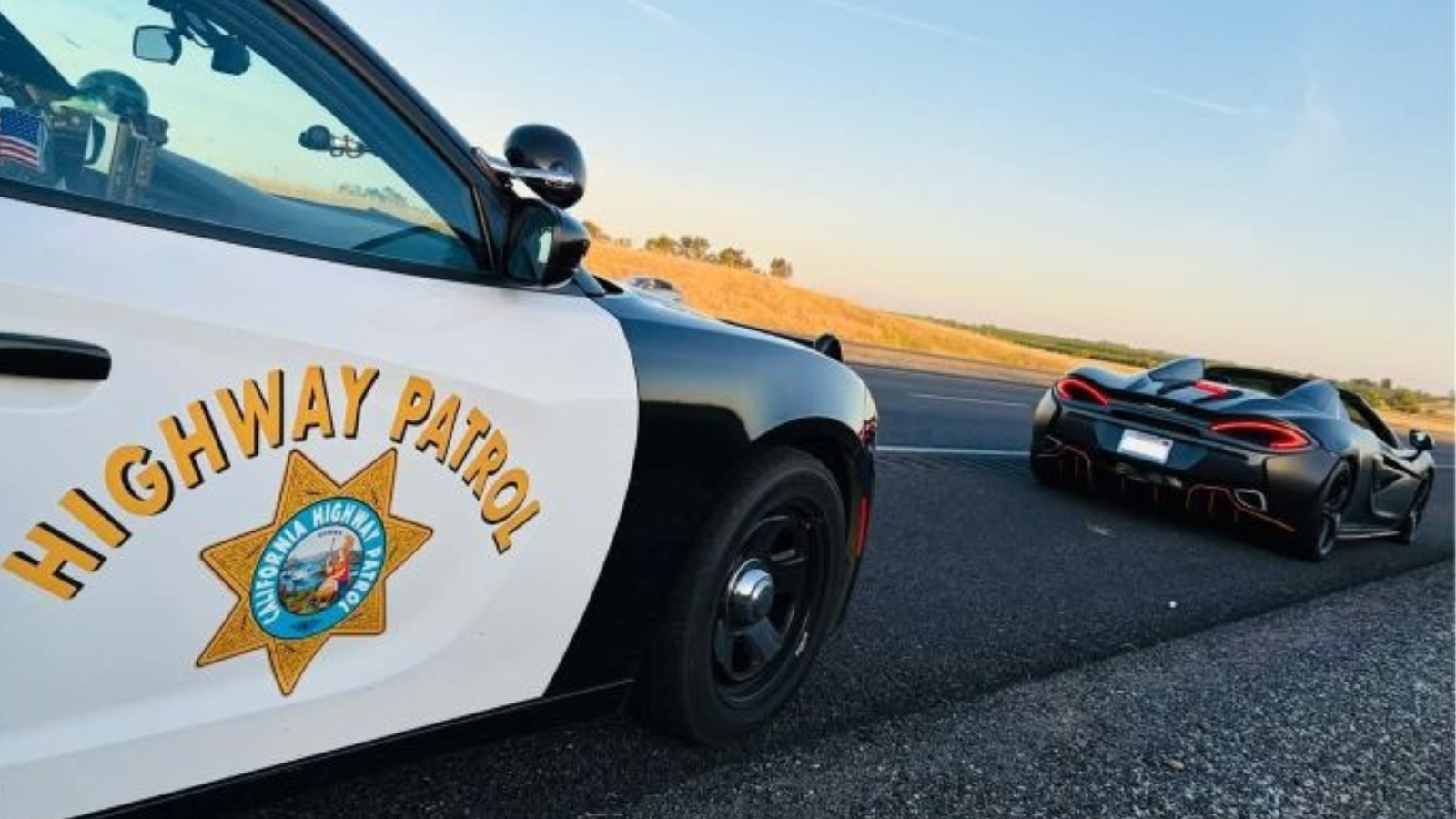
A California Highway Patrol office in Northern California is facing heavy backlash after publicly sharing, then quietly deleting, details of a traffic stop involving an allegedly unlicensed McLaren driver clocked at 151 mph.
The controversy is not just about the speed. It is about what happened after the stop.
According to a now-deleted Facebook post from CHP Red Bluff, later preserved through reposts and screenshots shared online, an officer stopped the driver of a McLaren 570S Spider after allegedly clocking the supercar at 151 mph on a California highway. During the stop, CHP said the officer learned the driver did not have a valid license.
Despite the driver’s extreme speed and lack of a license, the driver was reportedly cited and released rather than arrested. The McLaren was also not impounded. Instead, CHP said the officer exercised discretion and released the car to the driver’s licensed wife, who was riding in the passenger seat.
That decision instantly ignited debate online after the original post began circulating far beyond Northern California car groups and local Facebook pages.
CHP Deleted the Original Post After Backlash Started Pouring In
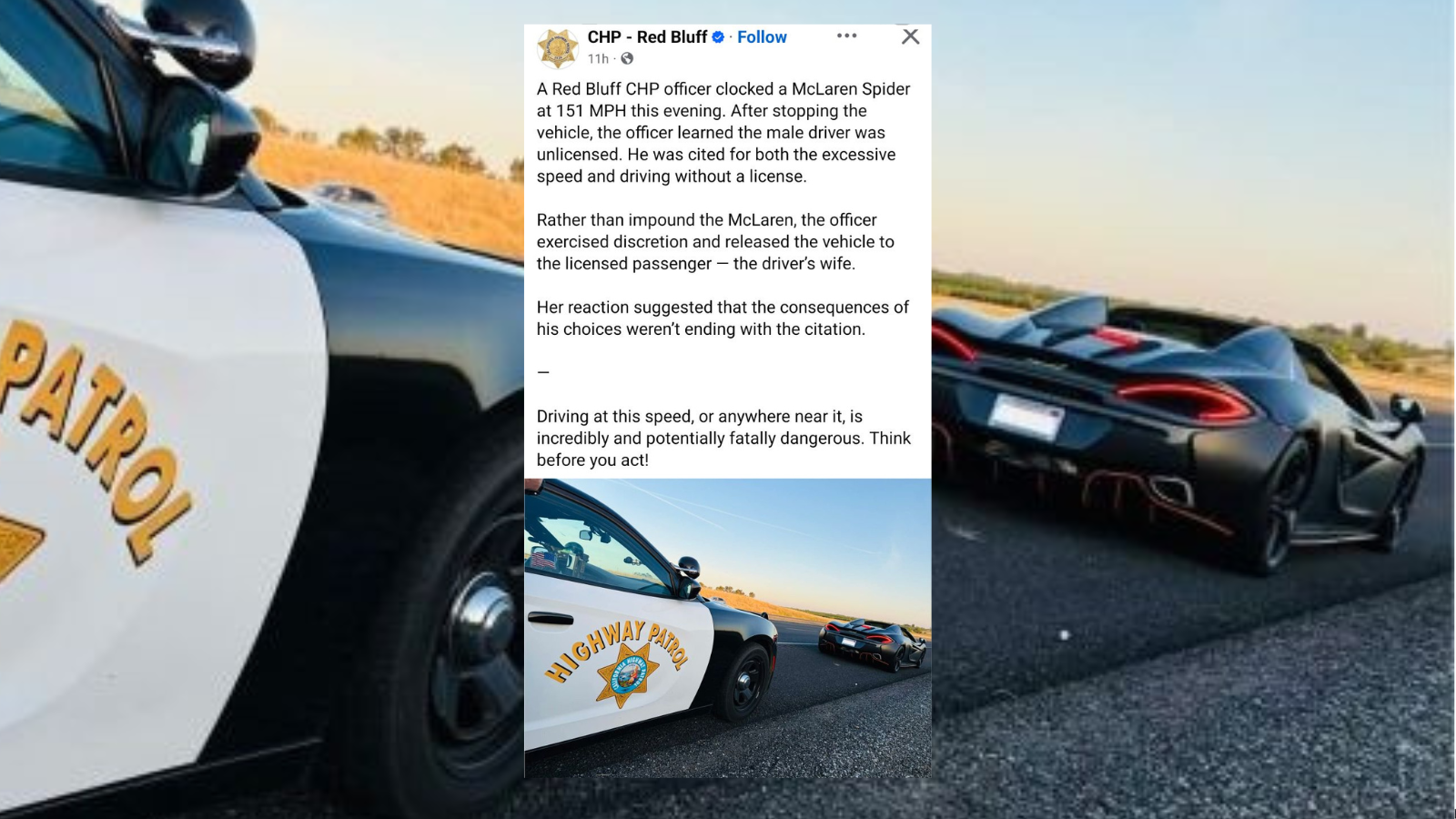
While the original CHP Red Bluff Facebook post was removed hours later, screenshots and reposts continued spreading online, including reposts from regional social media pages and local reporting from KRCR News.
The deleted post reportedly included a joking line suggesting the driver’s wife would likely handle the consequences at home, stating her reaction “suggested that the consequences of his choices weren’t ending with the citation.”
For many commenters, that tone only made the situation worse. Law enforcement agencies often use humor or lighthearted social media captions to draw attention and help promote broader public safety messages, such as slowing down or driving responsibly. In this case, however, the optics of an allegedly unlicensed driver being caught at 151 mph in a McLaren and still being allowed to leave with a citation tapped directly into growing public frustrations about perceived inequality in how laws are enforced depending on wealth, status, or connections.
Social media quickly filled with accusations of preferential treatment, with many people arguing that an ordinary driver in a cheaper car would have likely been arrested, jailed, or had their vehicle impounded for far less.
Others defended the officer’s discretion, pointing out that law enforcement officers regularly make judgment calls during traffic stops and that a licensed driver was available to take custody of the vehicle.
Still, the combination of an allegedly unlicensed driver, a reported 151 mph speed, a six-figure supercar, and the decision to remove the original post created exactly the kind of controversy the internet rarely lets disappear.
The McLaren Debate Quickly Turned Into a Debate About Fairness
A major reason the story exploded online is that many readers no longer viewed it as just another speeding stop. Instead, the conversation shifted toward whether wealth, status, or the type of car involved influenced how the stop was handled.
Commenters repeatedly compared the situation to what they believe would happen if someone in an older Honda Civic, Nissan Altima, or pickup truck had been stopped at similar speeds without a valid license.
Some commenters argued CHP simply did not want the liability of towing an expensive exotic car like a McLaren. Others pushed back against that explanation, noting that high-end exotic cars are transported and impounded across the country every day using specialty towing equipment.
The driver’s identity has not been publicly released.
Track Speeds Belong on the Track
One thing that gets lost in some of the online debates is that 151 mph on a public highway is not remotely normal, even in a modern supercar designed for high-speed performance.
Some commenters attempted to downplay the speed by arguing that a McLaren is specifically engineered for that kind of driving. But experienced performance drivers will usually point out that there is a massive difference between pushing a car at triple-digit speeds on a closed racetrack and doing the same on public roads, surrounded by unsuspecting drivers.
At 151 mph, a vehicle covers more than 220 feet every second. That leaves almost no time to react if traffic slows, another driver changes lanes, debris appears in the roadway, or a tire fails at speed.
Modern supercars are engineering marvels, but physics still wins every time.
KRCR News later reported that CHP Red Bluff said it stood behind the officer’s discretion not to impound the vehicle, but acknowledged the original social media post was ultimately removed because it was determined to be “not appropriate