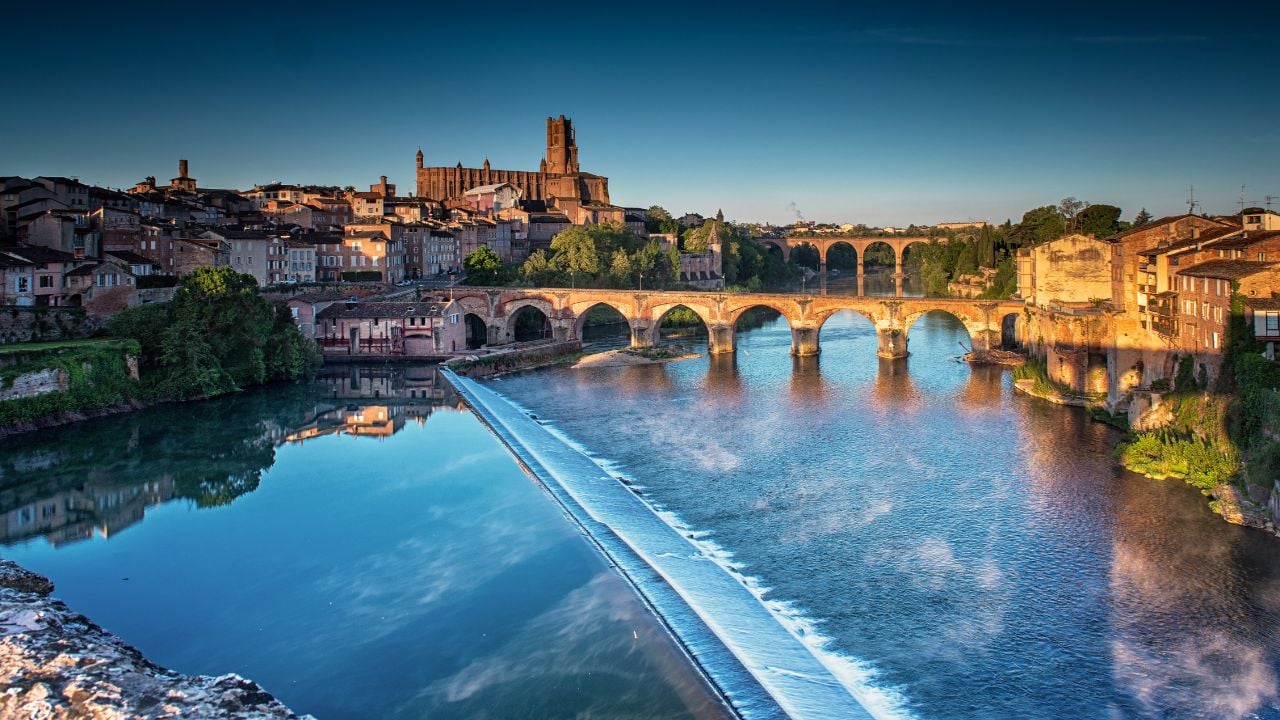
A slower vacation still needs places with enough texture to fill the day. The strongest options give travelers something specific before any major plan begins: tiled riverfront houses, fortress steps, marble squares, fishing boats, red-brick lanes, harbor towers, rooftop windows, market stalls, and food that belongs to the region.
Tavira, Nafplio, Syros, Albi, Piran, Ålesund, and Sibiu all fit that kind of trip. They are not empty retreats, and they are not cities that demand a schedule from breakfast to dinner. Their appeal comes from the way streets, water, food, viewpoints, and local routines sit close together.
A day might begin beside a river in Tavira, under flowered balconies in Nafplio, near Ermoupoli’s marble square, or below Albi’s red-brick cathedral. Later, the route might shift to a beach boat, a fortress climb, a seafood lunch, a museum, a harbor walk, or an old square after sunset.
The useful details still shape the visit: ferry times, market hours, beach access, museum tickets, weather, fortress steps, and dinner reservations. The difference is that these places give travelers enough around the center to enjoy the day without turning the trip into a race.
1. Tavira, Portugal
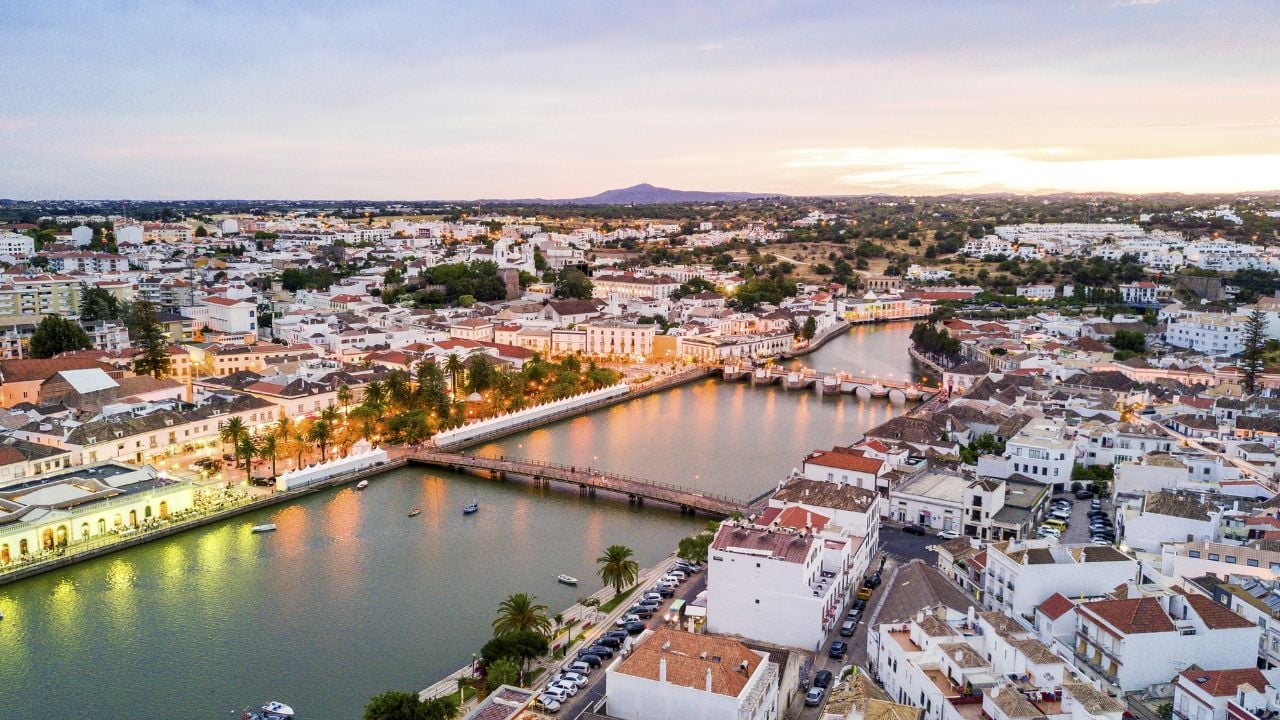
Tavira gives the eastern Algarve a quieter face. Along the Gilão River, whitewashed walls, patterned tiles, terracotta roofs, low bridges, church towers, and moored boats create a townscape still tied to daily life rather than only holiday traffic. Morning suits the riverfront, when cafés open, shutters lift, and the old streets keep some shade before the heat gathers.
The beaches sit nearby, but Tavira has more than sand and sea. The town has castle remnants, small squares, seafood restaurants, river walks, and access to the lagoon landscape of the Ria Formosa. Visit Portugal describes Ria Formosa as a protected natural park shaped by barrier islands, channels, marshland, and saltpans along the Algarve coast.
The day divides naturally between town and water. Use the first hours for the historic center, the Gilão River, tiled streets, and coffee near the bridge. Leave the hotter part of the day for a boat or beach outing toward the islands, then return for grilled fish, clams, octopus, or another local seafood dinner near the river.
Tavira loses depth when treated only as a beach base. Its best details are smaller: azulejo tiles on house fronts, narrow lanes behind the river, church bells over the roofs, and the shift from town streets to lagoon air once the boat leaves the pier.
2. Nafplio, Greece
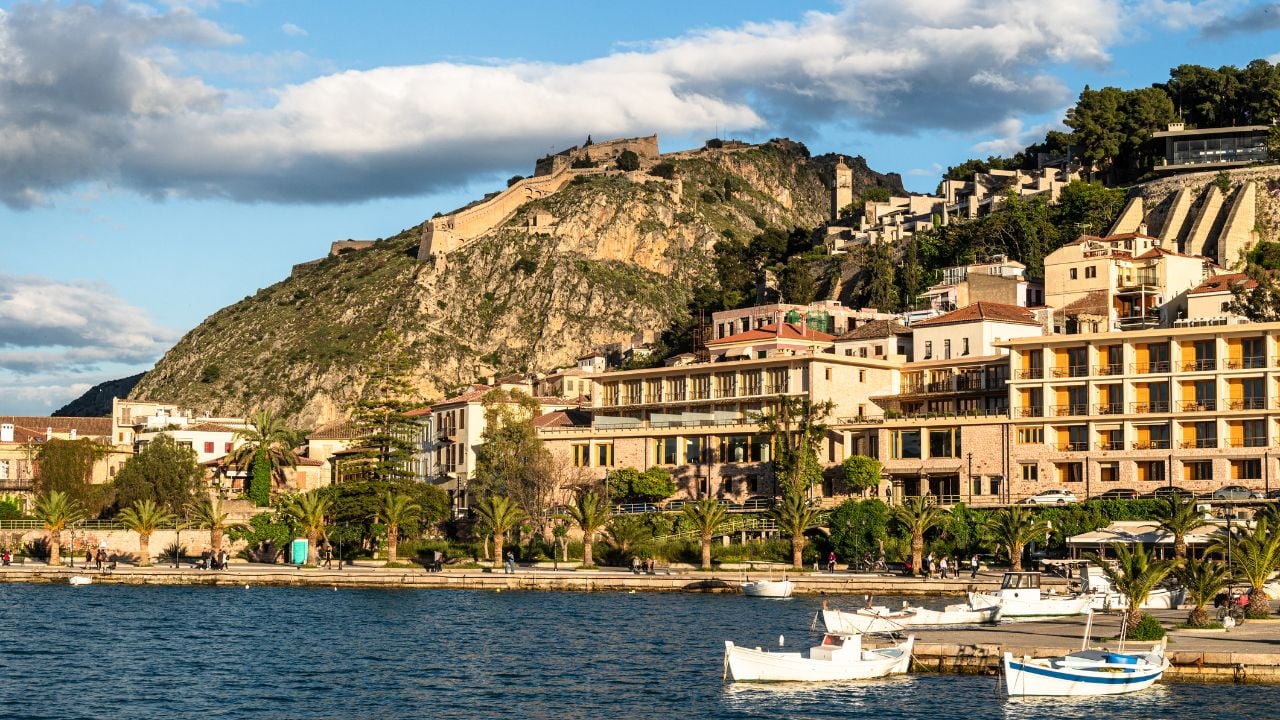
Nafplio puts the sea, the old town, and the fortress into one compact view. Neoclassical houses line the streets, balconies hold flowers above shaded lanes, Syntagma Square gathers cafés and restaurants, and the harbor keeps the Argolic Gulf close to nearly every walk. Palamidi Fortress sits above the town with the kind of height that makes the red roofs and bay feel connected at once.
Visit Greece describes Nafplio as one of the most beautiful towns in Argolis and notes that it was the first capital of the newly born Greek state from 1823 to 1834. Visit Peloponnese describes Palamidi as a major Venetian-era castle standing 216 meters above Nafplio.
The Palamidi climb belongs earlier in the day in warm weather. From the top, the town’s layout becomes clear: the harbor below, the Bourtzi fortress offshore, the old center pressed between sea and hill, and the surrounding gulf spreading out beyond the roofs.
After the fortress, the pace belongs back at street level. Lunch in the old town, a walk by the harbor, a pause in Syntagma Square, and dinner under the balconies give Nafplio its slower pleasure. Mycenae and Epidaurus deserve separate time; Nafplio should not be reduced to a hotel stop between archaeological sites.
3. Syros, Greece
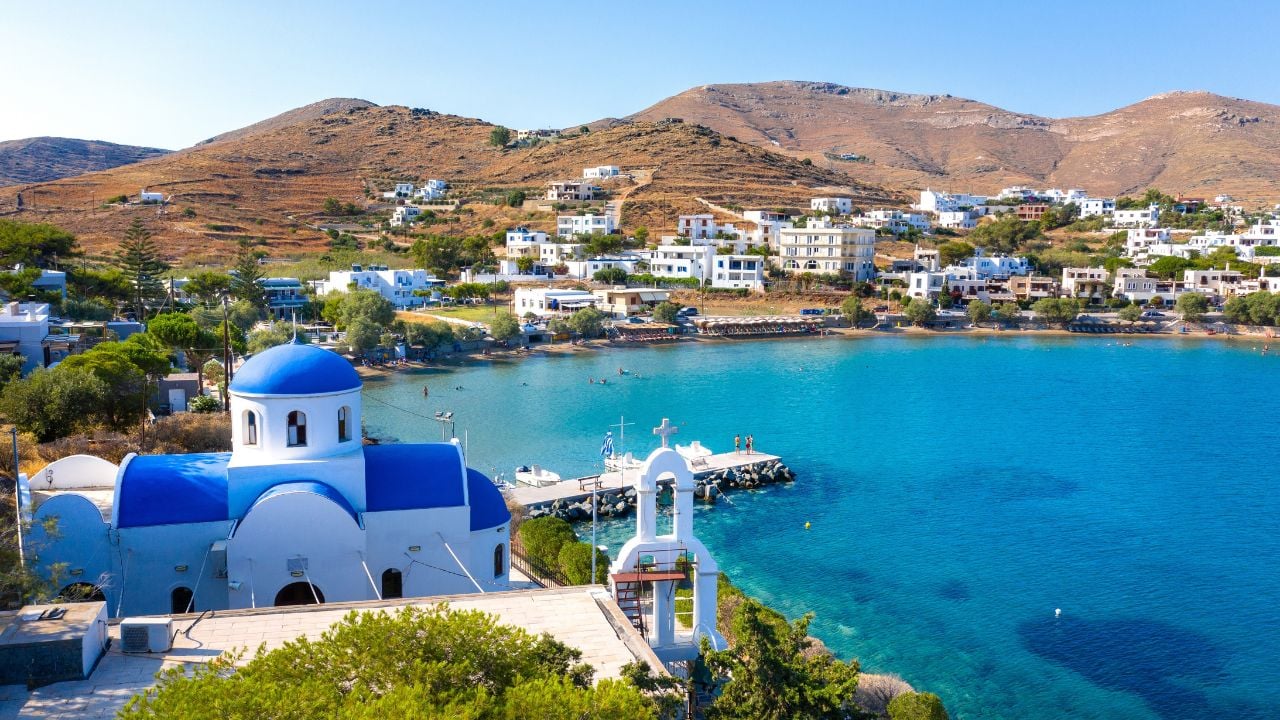
Syros has a different Cycladic character from the whitewashed-village image many travelers expect. Ermoupoli has neoclassical buildings, marble paving, a working harbor, town cafés, hillside churches, and streets that still function like an island capital rather than a resort set.
Visit Greece describes Ermoupoli as the capital of Syros and notes its 19th-century importance as a commercial and industrial center of Greece. That history still shapes the town’s first impression. Miaouli Square, the town hall, the Apollo Theater, Vaporia’s sea-facing mansions, and the harbor give Syros a civic presence many beach-first islands do not have.
Beach time fits better after the town has introduced itself. Start in Ermoupoli with coffee near the square or harbor, swim later at a beach such as Galissas, Kini, or Vari, then return as the late light warms the neoclassical façades and the harbor fills again for dinner.
Syros is strongest in the contrast between stone and sea. Marble underfoot in Ermoupoli, ferry horns at the port, stairways toward Ano Syros, seafood by the water, and evening streets that stay active after beach hours give the island more than a pretty coastline.
4. Albi, France
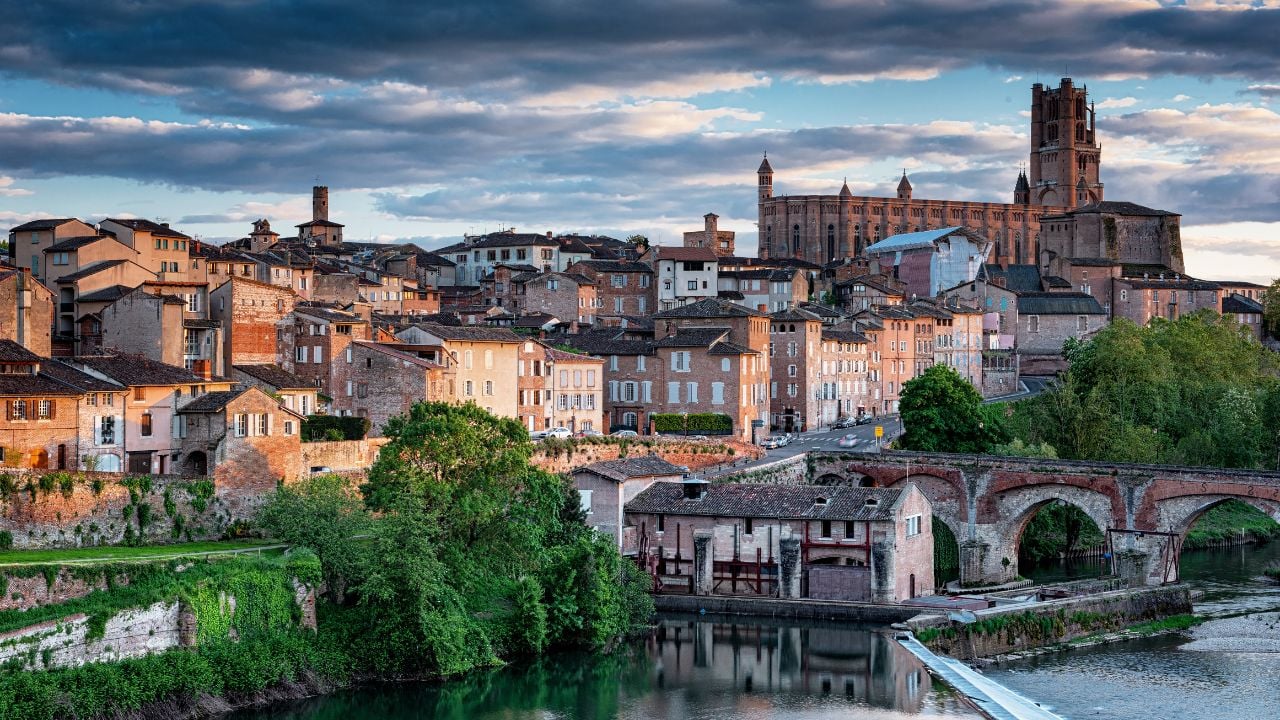
Albi is built in red brick, and that color shapes the whole visit. Sainte-Cécile Cathedral rises above the center like a fortress, the Berbie Palace looks down toward the Tarn River, and the old lanes keep the same warm brick tone around shutters, terraces, and small shopfronts.
Albi Tourism describes the Episcopal City as a UNESCO World Heritage Site and points visitors toward the cathedral, the Toulouse-Lautrec Museum, red-brick streets, and views across the city. The museum sits inside the Berbie Palace, so art, architecture, gardens, and river scenery gather around one central area.
A strong Albi day starts around the cathedral and the palace gardens, then moves across the bridges over the Tarn for the view back toward the old town. The opposite bank shows the city at its best: brick walls, cathedral mass, river curve, and rooftops stacked behind the water.
Lunch deserves room in the middle of the visit. Duck, local wines, cheese, market produce, or a terrace meal fit the pace of southwest France better than rushing from the cathedral to the museum to the next stop. Albi’s slower details are physical and specific: shutters on brick façades, quiet lanes behind the cathedral, the Tarn below the palace, and the evening color deepening on the walls.
5. Piran, Slovenia
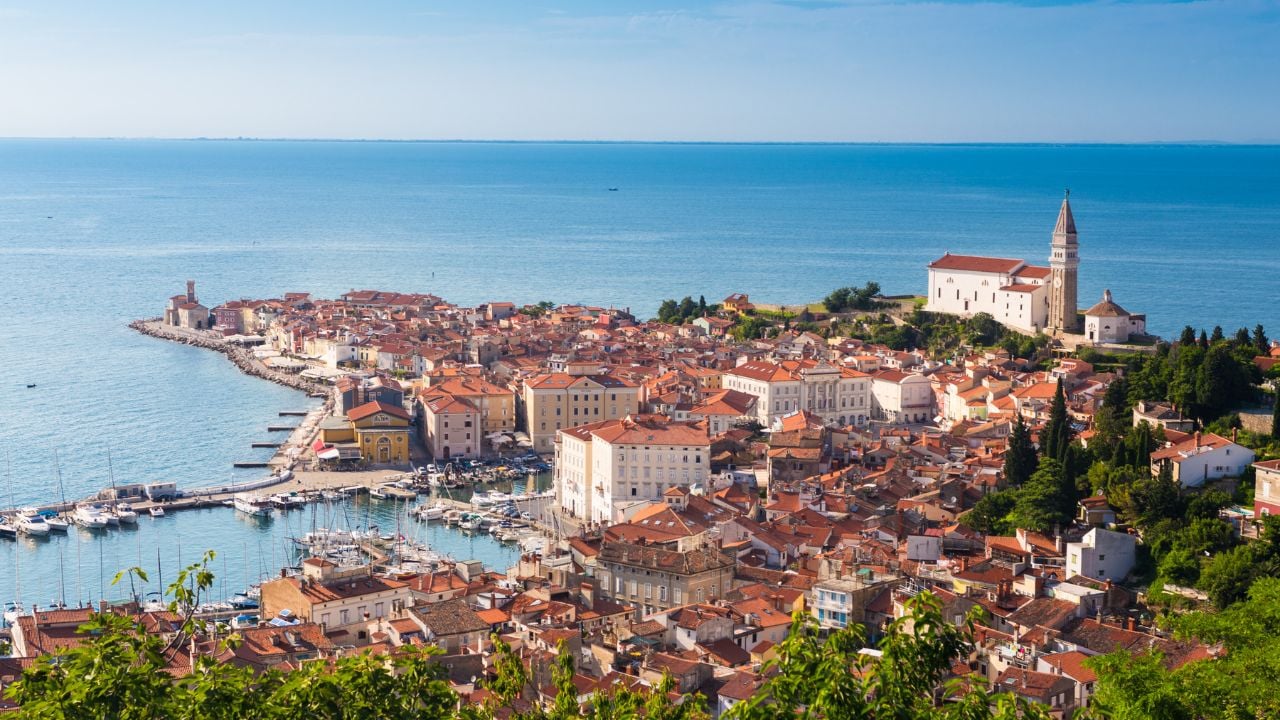
Piran sits tightly between stone streets and the Adriatic. The old town rises from the water toward the church and the walls, with narrow lanes, pale façades, shutters, laundry lines, seafood restaurants, and flashes of blue at the end of side streets.
Slovenia’s official tourism site describes Piran as an old port town with remnants of medieval walls, narrow streets, closely built houses, and Venetian influence. Tartini Square gives the town its open center. The Portorož and Piran tourism site says Tartini Square was once an inner harbor, later filled in to create public space, and is surrounded by historic buildings including the 15th-century Gothic palace Benečanka.
A focused day in Piran starts with coffee in Tartini Square, climbs toward the church area for the view, drops back into the lanes, then returns to the waterfront for seafood and sunset. The town is small, but the route keeps changing: square, church steps, tight alleys, sea wall, harbor edge.
Piran also carries the salt history of this coast. The nearby salt pans connect the town to a working tradition older than the modern Adriatic beach trip. That background gives the salt air, seafood menus, and lagoon landscape a clearer meaning.
6. Ålesund, Norway
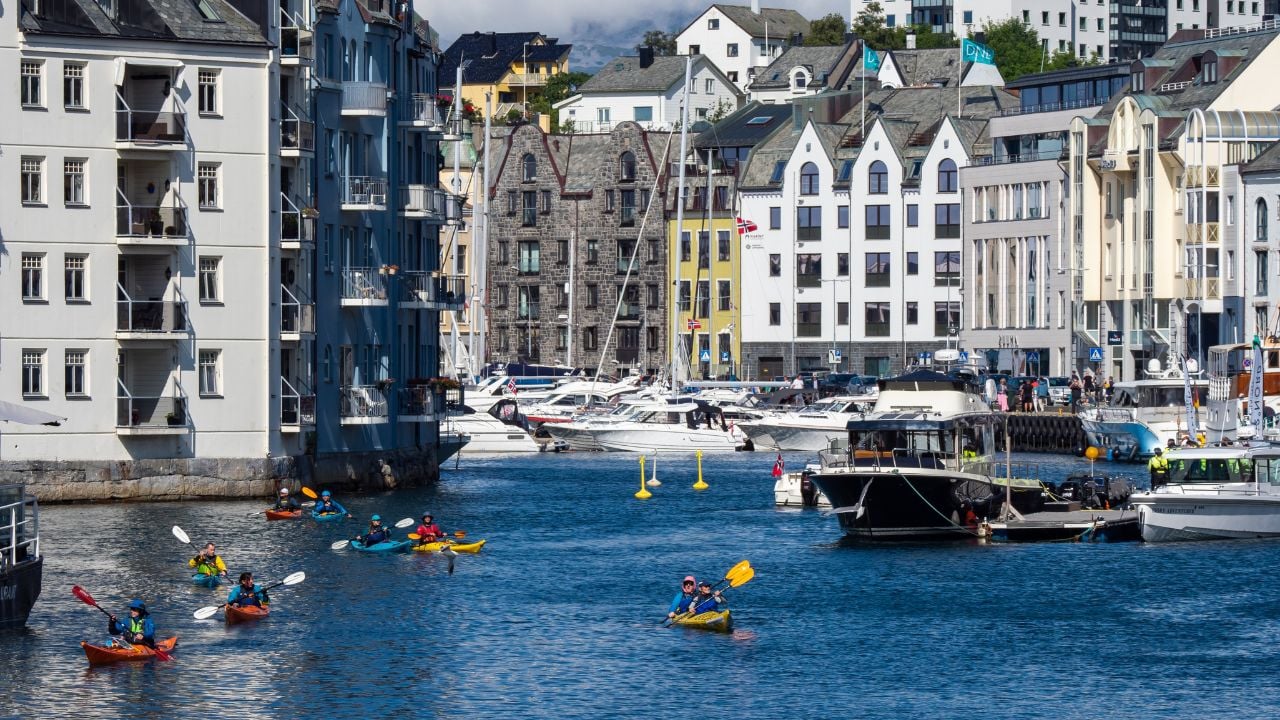
Ålesund gives a northern version of a slow city break: cold air, sharp harbor light, water on several sides, and buildings with turrets, ornamented façades, curved lines, and pale colors. The harbor and Brosundet canal keep the town connected to boats, seafood, and the Atlantic rather than turning it into a static row of pretty streets.
The architecture has a specific origin. Visit Norway’s Art Nouveau Centre listing says the catastrophic fire of 1904 left Ålesund in ashes, and the rebuilding created one of Europe’s most characteristic architectural environments in that style. The city’s look came from reconstruction after disaster, not decorative accident.
From Mount Aksla, the 418-step climb from Byparken ends above a map-like view of the town’s islands, harbors, fjord edges, and Art Nouveau center. Visit Norway recommends the climb for the view, and the route gives visitors a clear sense of how tightly the town sits between water and mountains.
A slower Ålesund day alternates between streets and water. Walk the center, climb Aksla if the weather is clear, eat seafood near the harbor, then leave larger fjord or island excursions for another day. The town itself has enough shape, color, and Atlantic texture before the bigger landscapes take over.
7. Sibiu, Romania
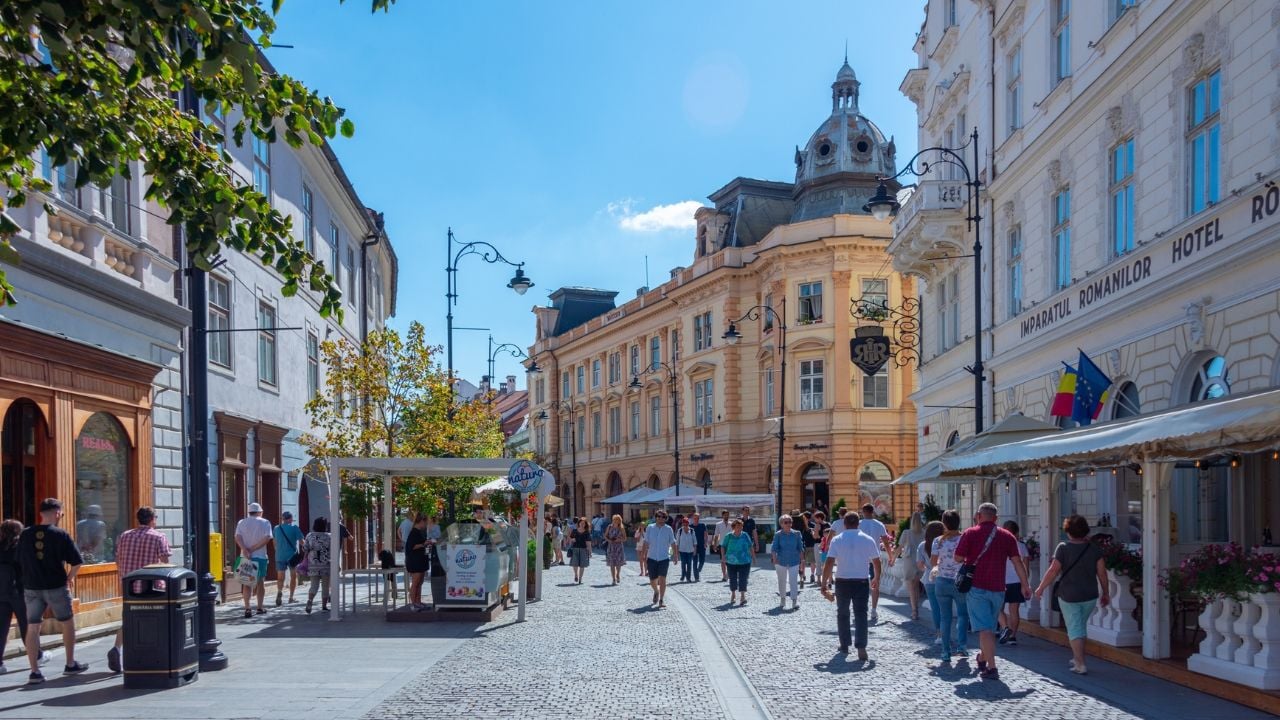
Sibiu has a center that seems watched over by its own rooftops. The old dormer windows look like half-closed eyes, while the streets below move between pastel façades, arched passages, broad squares, church towers, stone lanes, and café terraces.
The Upper Town gives the city its formal stage. Romania Tourism notes that the Great Square is one of the main spaces in the Upper Town, with the Roman Catholic church and Brukenthal Palace facing it. The official Sibiu city guide describes the Bridge of Lies as one of the city’s important symbols and says it was rebuilt in 1859 as Romania’s first forged iron bridge.
The walk from the Great Square into the Small Square, across the Bridge of Lies, and down toward the Lower Town changes the city’s texture quickly. Open plaza becomes narrow passage, café terrace becomes stairway, and the decorated façades give way to quieter houses below.
Sibiu’s food fits that slower route. A long meal might bring Transylvanian soups, pork dishes, polenta, cabbage, local cheeses, or pastries before an evening walk back through the squares. The museums and churches matter, but the memory often comes from the spaces between them: the bridge, the stairs, the roof eyes, and the shift from Upper Town to Lower Town.