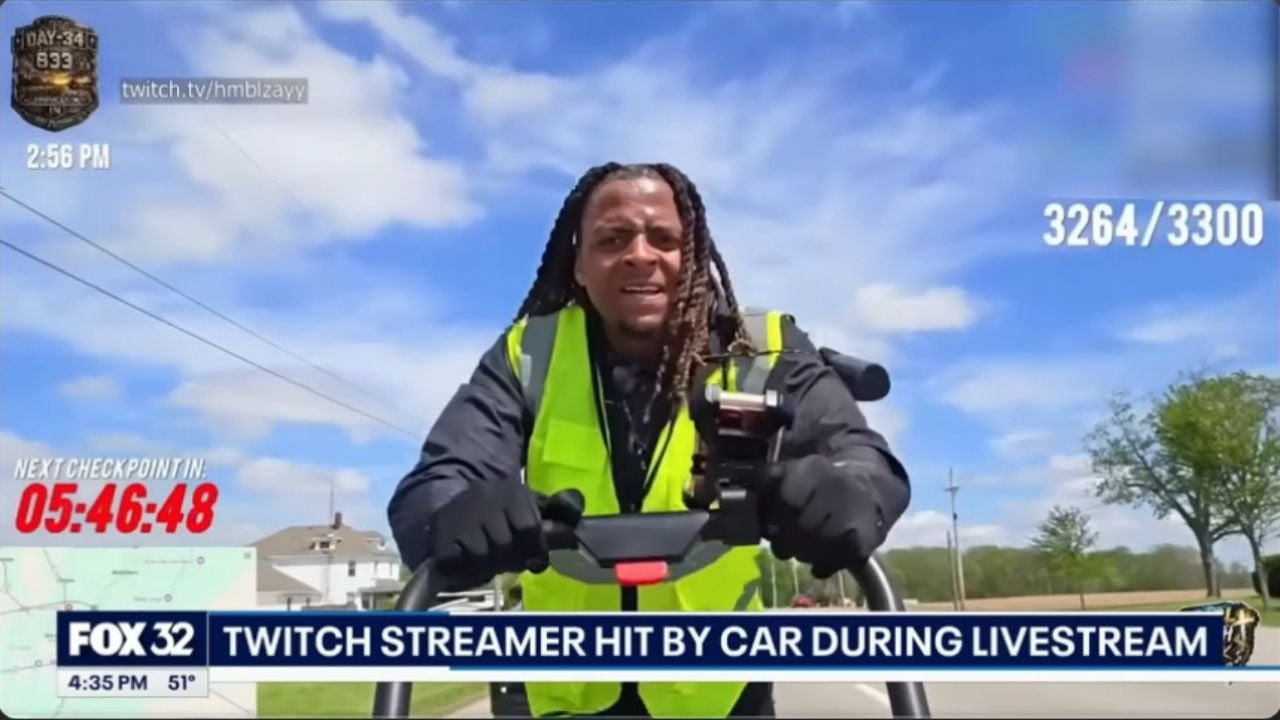

Isaiah Thomas, a 27-year-old from Philadelphia, set out on an extraordinary journey across the United States, walking from the East Coast to the West Coast with a clear goal.
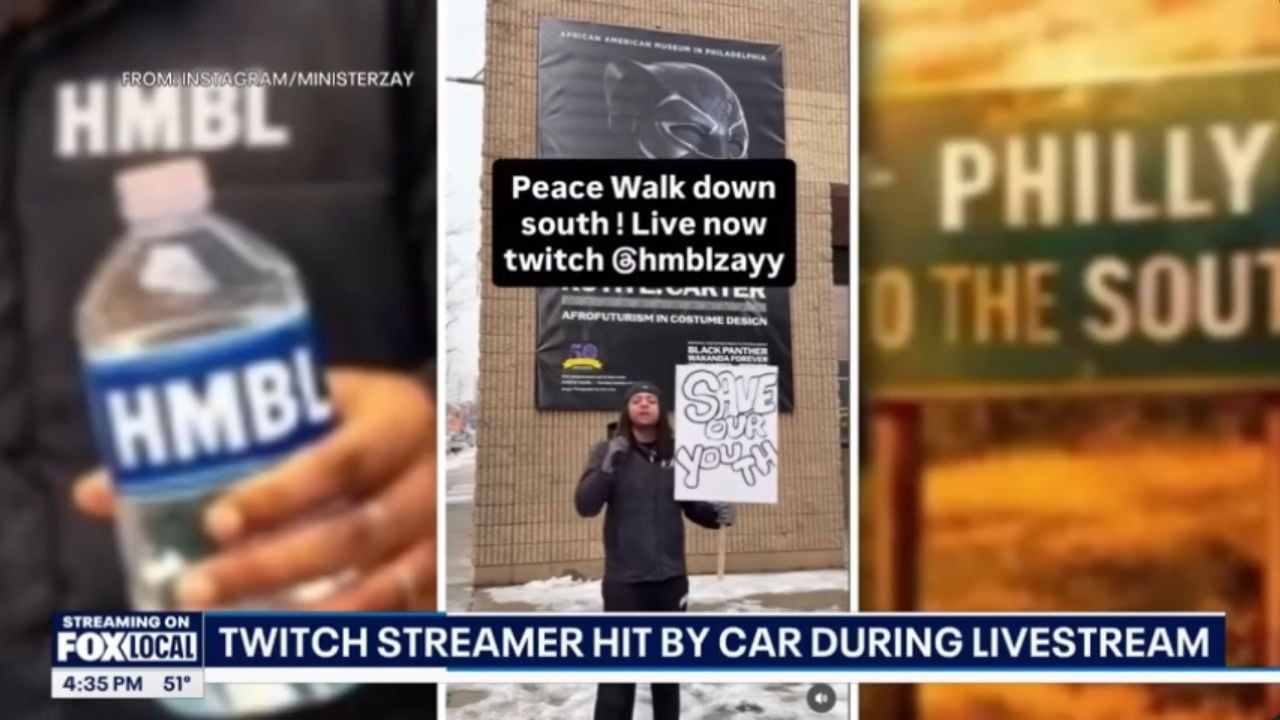
His mission, he says, is to inspire young people while raising funds to build a trade school that can offer direction and practical skills to those uncertain about their future.
Drawing from his own past, Thomas has turned his life around after a troubled youth that included a gun charge at age 14. A second chance from a judge, combined with a promise to his mother, became the foundation for a new path.
Determined to stay away from crime and create opportunities for others, Thomas began documenting his journey online.
Fans and supporters across social platforms like TikTok, Twitch, Instagram, and GoFundMe rallied behind him, offering encouragement and financial contributions.
His walk is not just a physical challenge but a growing movement, with followers joining him along the way and amplifying his message of hope and self-improvement.
Building Momentum Across Miles
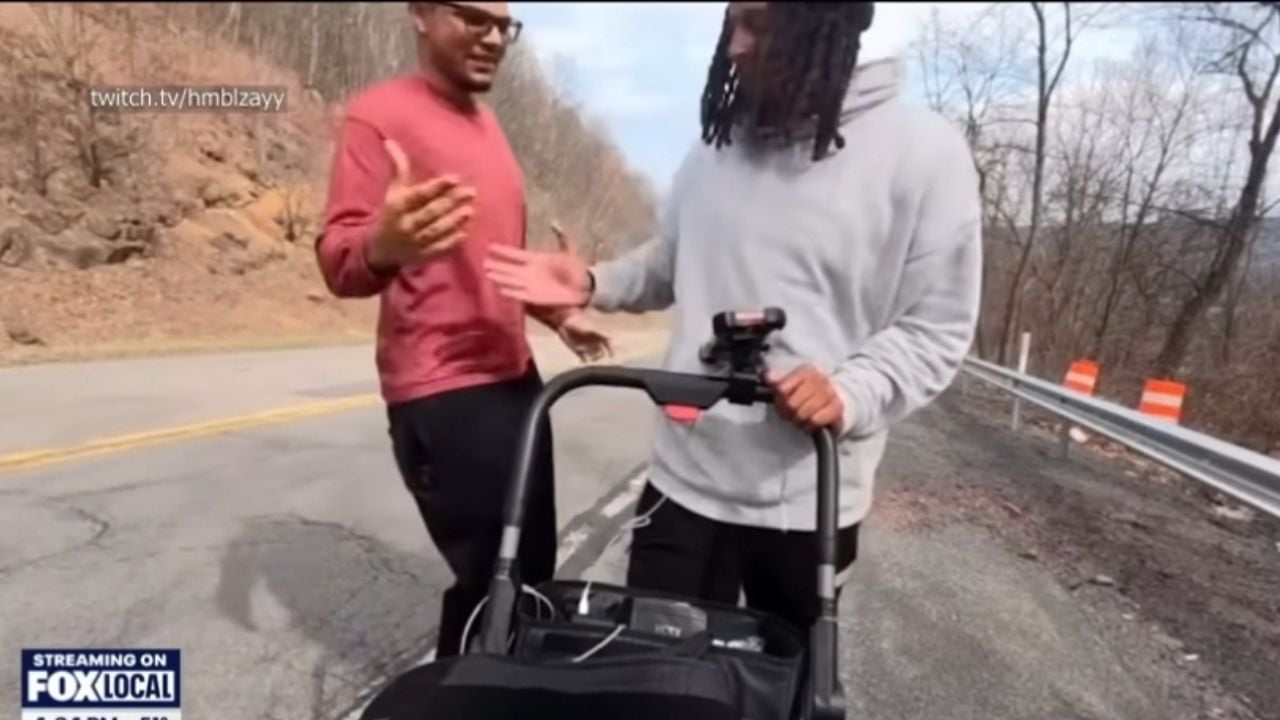
By the time Thomas reached Indiana, he had already covered 750 miles over 34 days, entirely on foot. Along the route, strangers became supporters, some even accompanying him for stretches of the journey.
One supporter offered to drive behind him in an SUV, providing a measure of safety and assistance as he navigated long highways and unfamiliar terrain.
Thomas also carried essential gear in a cart, including batteries, clothing, food, and equipment used to document his progress.
Every mile walked was shared with a growing audience online, many of whom were invested in both his story and his larger goal of creating a trade school.
He envisioned a place where young people could learn valuable trades, become financially independent by age 21, and even go on to start their own businesses.
The Crash That Changed Everything
While passing through Richmond, Indiana, events took a dangerous turn. In a moment captured on camera and witnessed live by thousands online, a car slammed into the SUV that was trailing Thomas.
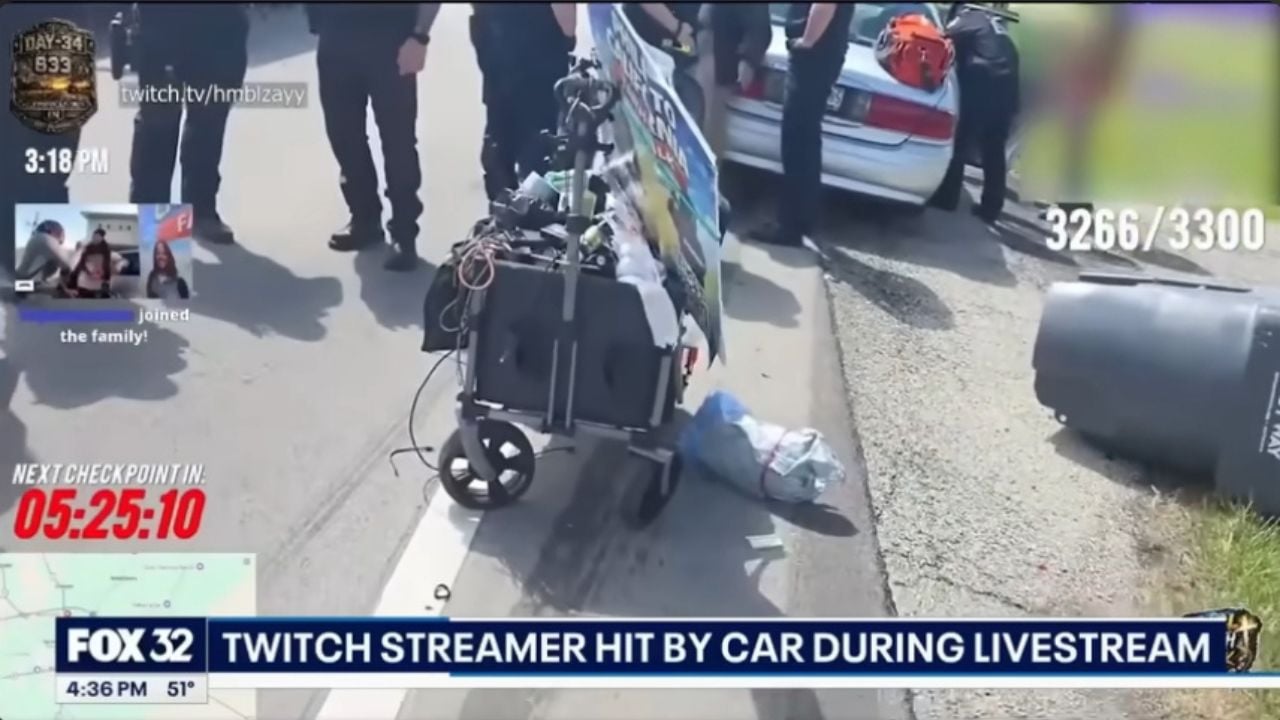
The impact sent him flying into the air, turning a mission of hope into a scene of chaos.
The driver involved was described as an older man, though details about what caused the crash remain unclear.
The collision destroyed Thomas’s cart, scattering the supplies he relied on for survival and documentation. Items essential to his journey, including food, clothing, and equipment, were either damaged or lost entirely.
For Thomas, the crash felt eerily familiar.
Just six months earlier, he had survived another serious accident that left him with fractured bones in his spine and ribs, along with a shoulder injury that required surgery. He had been wearing a back brace during this latest incident, which he believes played a crucial role in preventing more severe injuries.
Was Thomas Better Off Without the ‘Solidarity’ SUV?
Assessing whether a trailing vehicle increases or decreases risk for someone walking long distances requires weighing visibility, traffic dynamics, and accident exposure.
On one hand, having a car or SUV following a pedestrian can improve safety by making the walker more visible to other drivers. A slow-moving vehicle with hazard lights or signage can alert approaching traffic to the unusual presence of someone on foot along highways, where pedestrians are otherwise unexpected.
It can also provide immediate assistance in case of fatigue, injury, or hostile encounters. In rural stretches with limited shoulders, this protective buffer may reduce the likelihood of a direct pedestrian strike.
However, the trailing vehicle introduces new hazards.
First, it creates a moving obstruction in traffic flow. Drivers approaching from behind may misjudge speed, become impatient, or attempt risky maneuvers to pass. This raises the chance of rear-end collisions, as tragically occurred in Richmond, Indiana.
Second, the walker is now tethered to the vehicle’s position; if the vehicle is struck, the pedestrian is at risk of secondary impact, debris, or being thrown by the collision.
Without a trailing car, the walker would still face danger from inattentive drivers, but the risk would be more diffuse—spread across the possibility of a direct pedestrian strike rather than concentrated in one vulnerable convoy-like setup.
Summarily, the trailing SUV theoretically improves visibility but paradoxically amplifies collision risk by creating a slow-moving traffic obstacle. Statistically, pedestrians on highways are at high risk regardless, but coupling them with a shadow vehicle shifts the danger from invisibility to crash exposure.
The Richmond incident illustrates that while the intent was protective, the trailing car may have posed greater net risk than walking alone.
Injured but Unshaken
Following the accident, Thomas was taken to the hospital in Richmond. Despite the violent nature of the crash, he escaped with bruises and minor sprains.
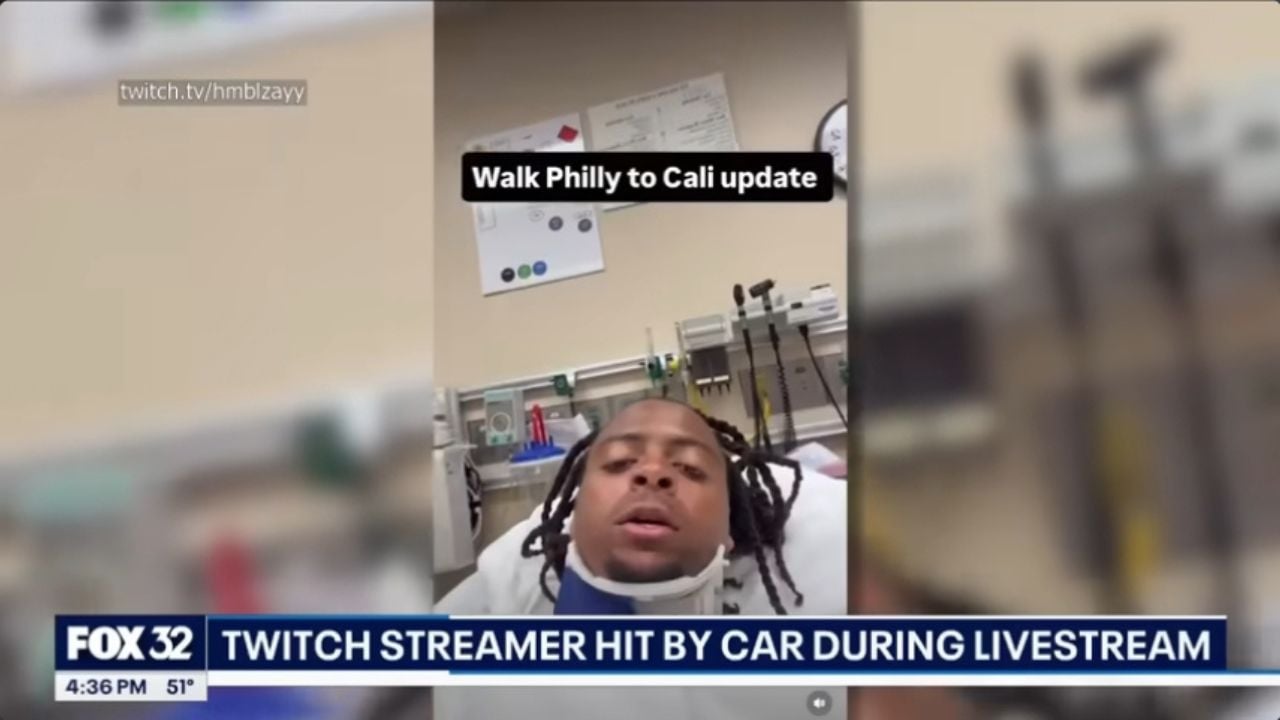
Medical tests confirmed that he had avoided major injuries, a result he attributes to both luck and resilience. Authorities at the scene reportedly told him he was fortunate to be alive given the force of the impact.
Although shaken, Thomas remained focused on his mission. The destruction of his cart and supplies presented a major setback, but it did not break his resolve.
He acknowledged the physical toll and the concerns about re-injury, especially considering his recent medical history. Still, his determination to continue remained intact.
Thomas emphasized his belief that his journey has a deeper purpose. With more than 2,300 miles still ahead of him, he plans to keep moving forward, supported by a community that continues to grow.
So far, his efforts have raised over $47,000, bringing him closer to his goal of creating a trade school that could transform lives.