A landmark climate lawsuit aimed at forcing BMW and Mercedes-Benz to stop selling combustion engine cars by 2030 has failed in Germany’s top civil court, handing the country’s auto industry a consequential legal win at a moment when the future of ICE vehicles remains anything but settled.
The decision, issued by Germany’s Federal Court of Justice in Karlsruhe, does not change the broader trajectory of Europe’s emissions rules. But it does make one thing clear: German courts are not prepared to order automakers to phase out combustion engines earlier than lawmakers have required.
Inside the Climate Case Against BMW and Mercedes-Benz
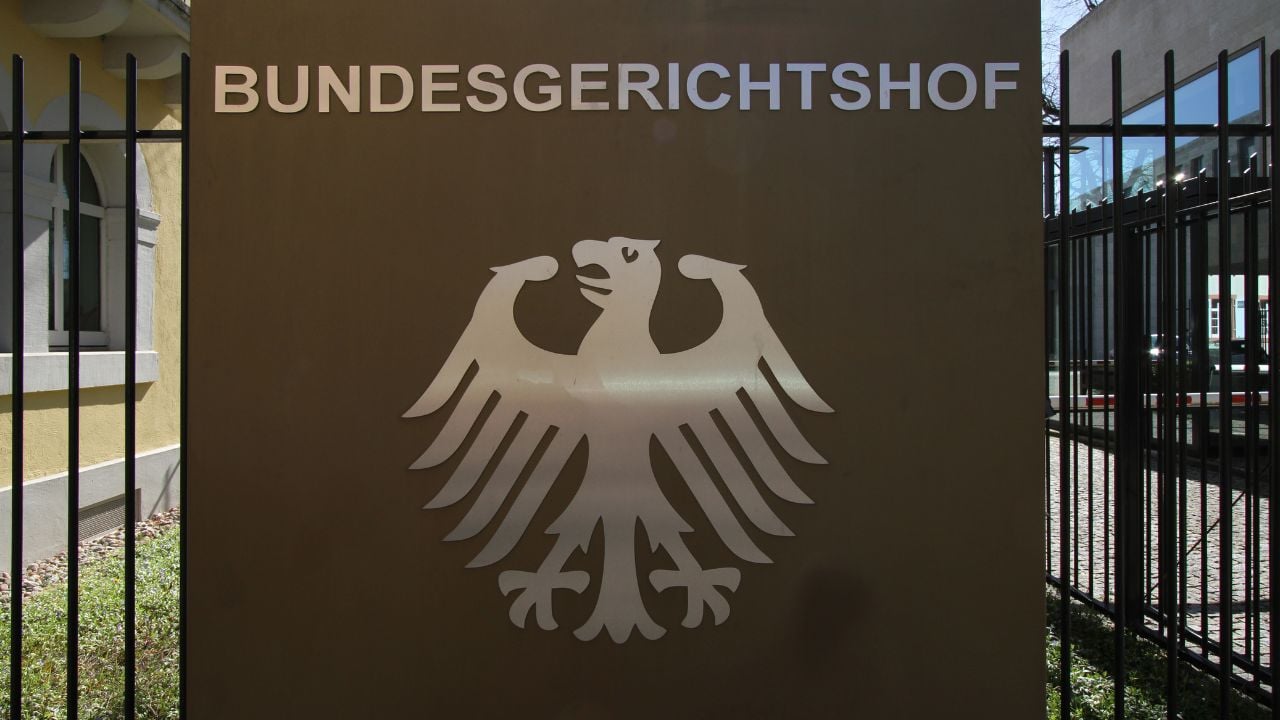
The suits were brought by three Deutsche Umwelthilfe (DUH) managing directors. The cases against BMW and Mercedes-Benz were heard by the Federal Court of Justice, known in Germany as the Bundesgerichtshof, or BGH, after lower courts in Munich and Stuttgart had already ruled in favor of the automakers.
DUH’s argument was ambitious. The group said that continuing to sell new combustion engine vehicles beyond 2030 would consume too much of the remaining carbon budget and, in effect, shift the burden of emissions cuts onto younger generations, potentially limiting their freedoms. The legal theory leaned heavily on Germany’s landmark 2021 Constitutional Court climate ruling, which found that the state has a duty to protect fundamental freedoms by not pushing disproportionate climate burdens into the future.
That earlier case was a turning point in German climate law and influenced wider European climate litigation debates. DUH tried to extend that logic from the state to private companies, arguing that major automakers should be prevented from continuing business practices that would worsen the climate burden later on.
What Germany’s Top Court Decided
The BGH said no. In dismissing the claims, the court held that private individuals cannot demand that BMW or Mercedes-Benz stop placing new combustion engine passenger cars on the market ahead of the deadlines set by European law. Presiding judge Stephan Seiters of the court’s Sixth Civil Senate said the companies’ conduct did not legally impair the plaintiffs’ rights in a way that would justify the outcome they were seeking.
The court also rejected the idea that there is a judicially enforceable carbon budget for individual companies under the plaintiffs’ theory. That point goes to the heart of the case. DUH had tried to argue that BMW and Mercedes-Benz were effectively using up too much of Germany’s remaining emissions space. The court’s response was that climate legislation and sector targets are matters for lawmakers, not something civil judges can independently reassign to specific manufacturers.
Barbara Metz, DUH’s executive director, sharply criticized the outcome, saying the decision did not “absolve Mercedes-Benz and BMW of their responsibility for the climate crisis.” But she also acknowledged the court had made clear where it believes the responsibility lies: with Berlin. DUH said it would review the ruling and consider whether to take the matter to Germany’s Constitutional Court.
Mercedes-Benz welcomed the decision as “a clarification of our democratic system,” saying in a company statement that “setting legal requirements for climate targets is the responsibility of the legislature, not the judiciary.”
BMW struck a similar note. BMW said through a spokesperson that the ruling brings “legal certainty for companies operating in Germany” and added that the debate over how to meet climate targets “must take place within the political process through democratically elected parliaments.”
Why the Ruling Matters for Mercedes-Benz and BMW
For European automakers, this ruling lands in the middle of a period of uncertainty. Current EU law still sets a 100 percent CO₂ reduction target for new cars by 2035, which would effectively end routine sales of new combustion-only passenger cars, but that framework is now under active review after the European Commission proposed in late 2025 to soften the 2035 requirement to a 90 percent reduction. But the political mood around that transition has softened after sustained industry pressure and political debate.
In 2025, the European Commission proposed extra compliance flexibility that lets automakers average their CO₂ performance across 2025 to 2027 instead of meeting each annual target in isolation, and the EU later adopted the proposal. That does not repeal the 2035 framework, but it does show that Brussels is increasingly willing to respond to industry pressure, uneven EV demand, and concerns over European cars’ competitiveness.
That matters especially for Mercedes-Benz, which in 2021 said it would be ready to go all electric by the end of the decade where market conditions allow, while also targeting up to 50 percent electrified sales by 2025. By early 2024, Mercedes-Benz had pushed that 50 percent electrified sales milestone back to 2030 and made clear that combustion engine models would remain part of the portfolio well into the next decade.
That strategic revision has not been purely theoretical. Mercedes has now unveiled a new flat-plane-crank V8 in the recently updated S-Class family, a notable sign that even in Europe’s tightening regulatory environment, high-end combustion powertrains are not disappearing overnight.
BMW, for its part, has consistently argued against fixed technology mandates and in favor of a more technology-neutral transition. The court’s decision reinforces that position. It does not guarantee the long-term survival of combustion engines, but it does reduce the risk of a German court forcing an abrupt 2030 cutoff outside the legislative process.
The Growing Push To Fight Climate Battles in Court

This case is part of a much wider movement in climate litigation. Across Europe, activists have increasingly turned to judges when they believe politicians are moving too slowly. Some of those efforts have succeeded, especially against governments, but cases against private companies have been more uneven. Climate litigation is still reshaping policy, but courts remain more comfortable ordering governments to act than telling companies to go beyond existing statutes.
The long-term future of combustion engines in Europe is still uncertain, and no court ruling can change the direction of regulation forever. But for now, BMW and Mercedes-Benz have won a meaningful reprieve, and for drivers who still want their straight-sixes, V8s, and gas-powered flagship sedans, there is at least some reason to believe those engines will be around a while longer.
Source: Reuters