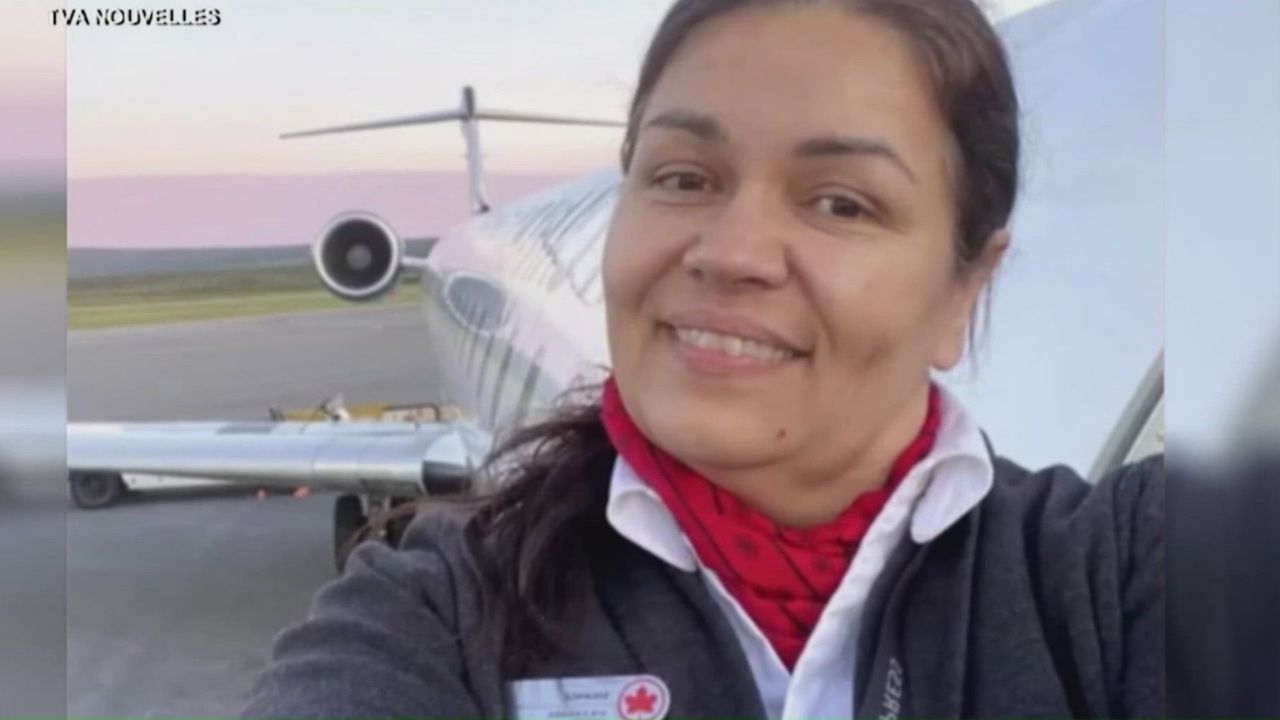

The morning began like any other at LaGuardia Airport, with aircraft lining up for departure and ground crews moving with practiced precision across the runways. But in a matter of seconds, routine gave way to chaos in a devastating crash that would leave investigators searching for answers and one flight attendant clinging to life in what many are calling a miracle.
At the center of that miracle is a flight attendant whose survival has stunned both aviation experts and first responders. According to early reports, she was violently ejected from the aircraft during the collision, thrown nearly 300 feet from the plane while still strapped into her jump seat.
The force of such an impact would typically be unsurvivable. Yet when emergency crews reached her, she was alive.

Her injuries were serious but not fatal. She suffered a broken leg and trauma consistent with the violent nature of the crash, but she was conscious.
Her daughter later described her survival as nothing short of extraordinary, a sentiment echoed by those familiar with aviation accidents. In a disaster that claimed the lives of both pilots, her story stands out as a rare thread of hope.
The Split Second That Changed Everything
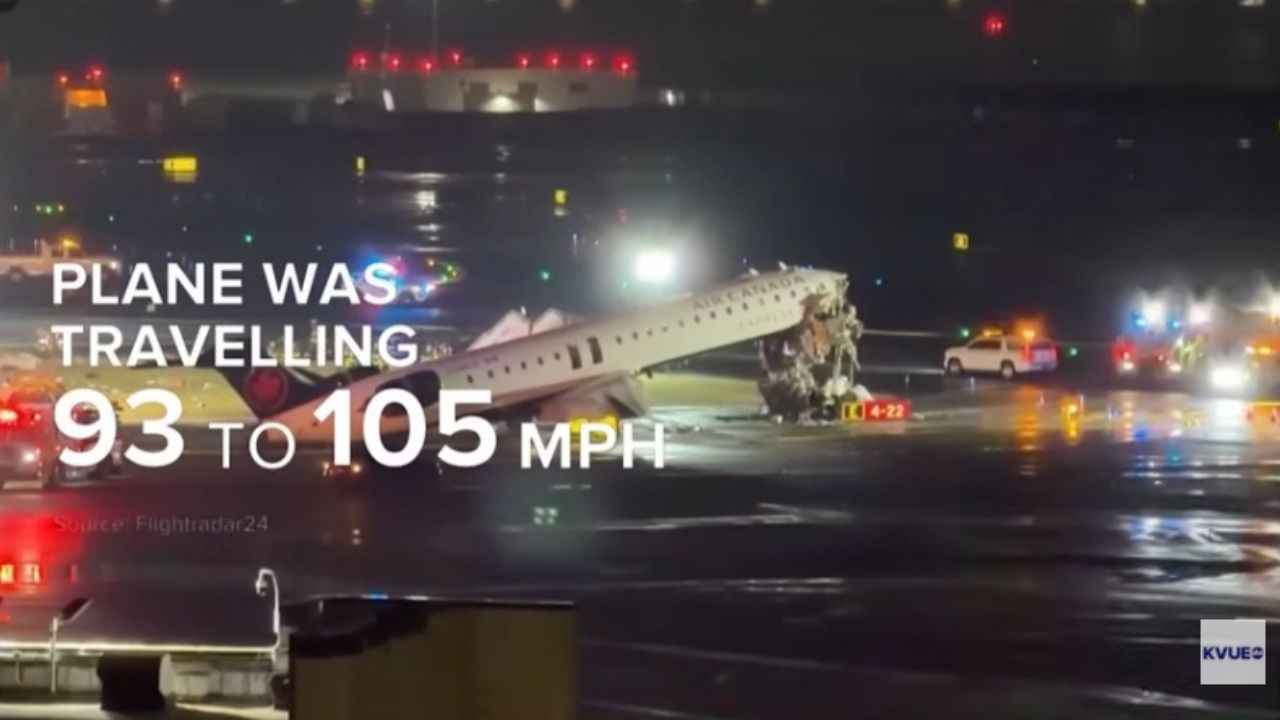
The crash itself unfolded in a split second. Surveillance footage shows an Air Canada jet accelerating down the runway at speeds estimated between 93 and 105 miles per hour. At that speed, pilots have little margin for error.
As the aircraft moved forward, a fire truck was crossing the same runway, having been cleared by air traffic control while responding to a separate incident involving an odor reported on a nearby United Airlines flight.
What happened next was catastrophic.
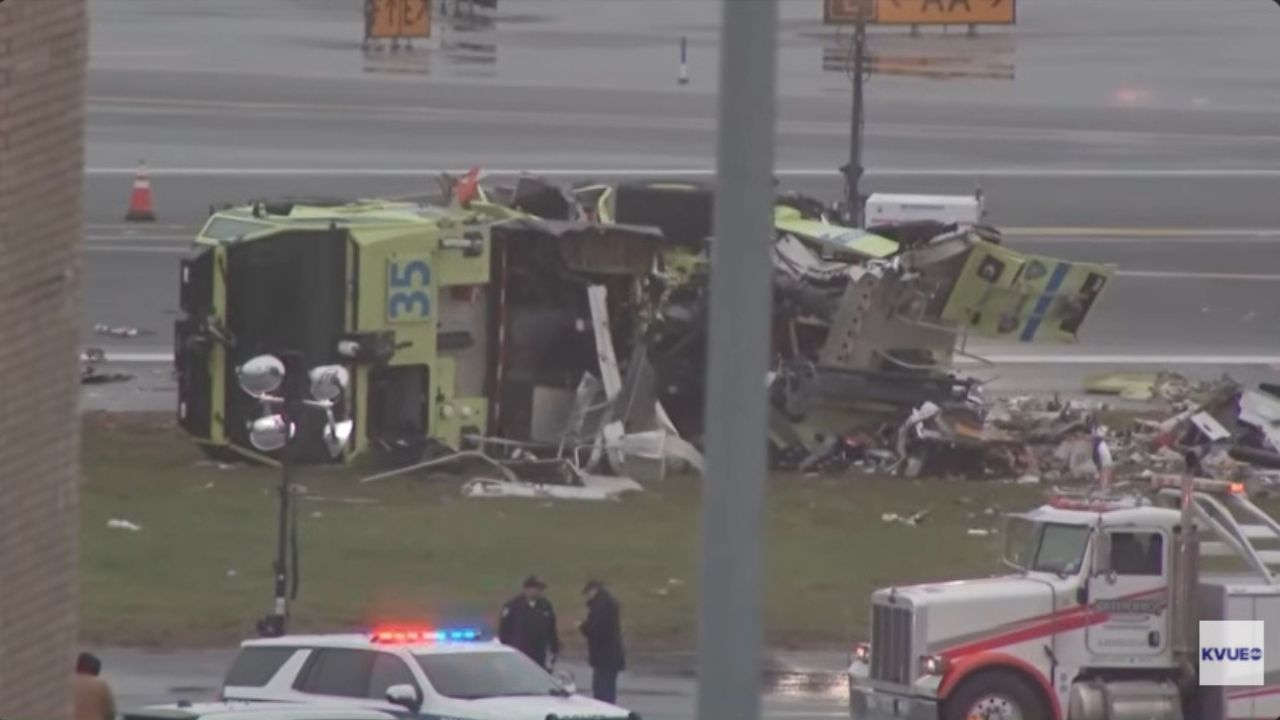
The jet slammed into the fire truck, tearing apart the front section of the aircraft. The impact killed both pilots instantly. One of them, identified as Antoine Forrest, was described by family as being early in his career, full of promise and ambition.
Panic erupted inside the plane’s cabin. Passengers were jolted violently as the plane’s nose lifted upward following the collision. Some scrambled toward the rear of the aircraft, seeking any possible escape. Others climbed out onto the wings, desperate to distance themselves from the wreckage.
Video captured by a passenger shows the confusion and fear as people tried to comprehend what had just happened.
A Flight Attendant’s Extraordinary Survival
Amid that chaos, the flight attendant had already been thrown from the plane. Still secured in her jump seat, she landed far from the main wreckage, a detail that may have contributed to her survival.

Aviation experts note that being separated from the collapsing structure and fire risk can sometimes improve survival odds, though such outcomes remain exceedingly rare.
Emergency crews quickly descended on the scene, battling debris and securing the area. Investigators from the National Transportation Safety Board began their work almost immediately, cutting into the aircraft to retrieve critical data from the black boxes.
Early findings suggest that human error may have played a role, particularly regarding the clearance given to the fire truck.
Attention has also turned to the Federal Aviation Administration, as questions emerge about whether the air traffic controller on duty was handling multiple responsibilities at the time. Understanding how such a critical mistake occurred is now a central focus of the investigation.
A Thread of Hope
The runway remains closed as officials continue their work, with ripple effects expected across the broader air travel network. For many, the crash is a sobering reminder of how quickly things can go wrong in aviation.
The last comparable accident occurred in 2025, when a small commuter plane crashed in Washington, D.C., killing several passengers but leaving others alive. Incidents like these are rare, but they highlight both the dangers of runway collisions and the resilience of modern safety systems.
Roughly seven years before that Washington D.C incident, Southwest Airlines flight 1380 suffered an engine failure that caused debris to break a window mid-flight. The resulting chaos left one passenger died, but the crew managed an emergency landing in Philadelphia, saving the rest of the passengers.
This came approximately five years after the 2009 “Miracle on the Hudson” involving US Airways flight 1549. After striking geese, both engines failed. Captain Chesley “Sully” Sullenberger landed the plane safely on the Hudson River, and all 155 passengers and crew survived. It became one of the most famous survival stories in aviation history and even inspired a movie.
Notably, both the LaGuardia crash and past incidents involved sudden, catastrophic failures during critical phases of flight (takeoff/landing).
Yet amid the wreckage and loss, the image of that flight attendant endures. Thrown hundreds of feet, injured but alive, her survival is being described not just as luck, but as a testament to resilience in the face of overwhelming odds.