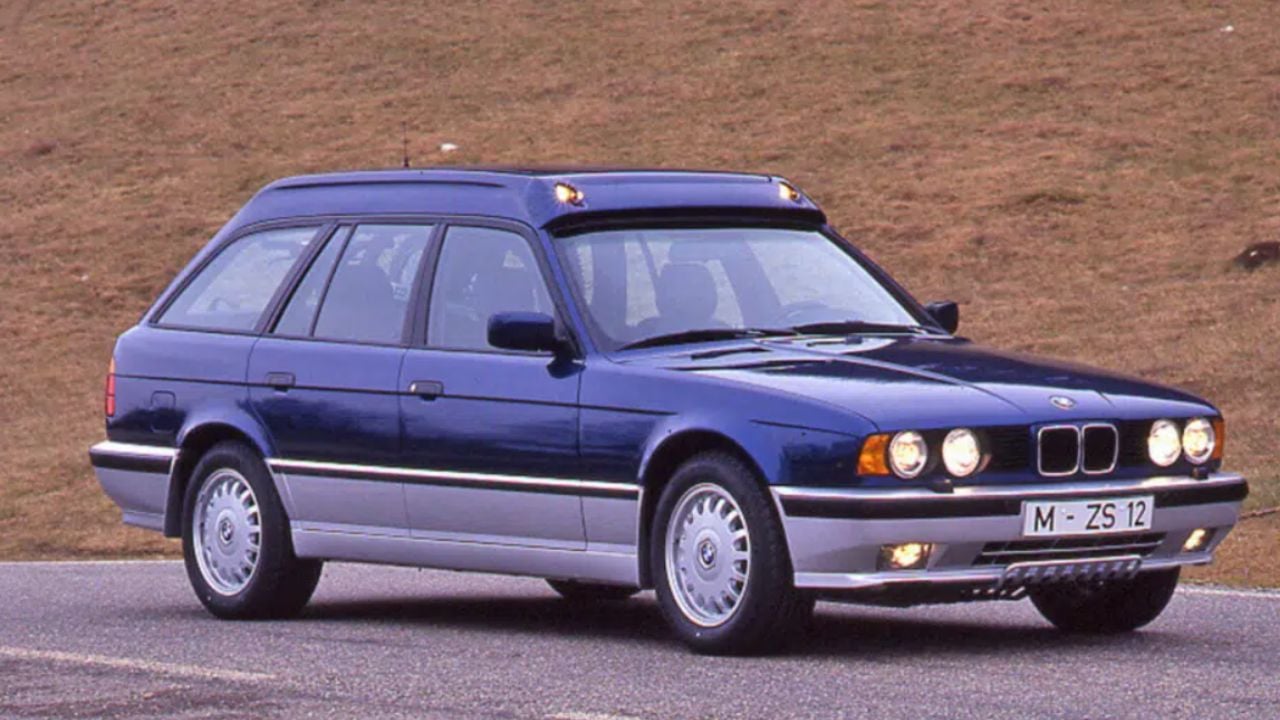
You read that correctly. Even though most people associate premium lifted wagons with Audi’s Allroad models or Volvo’s Cross Country lineup, the true pioneer of the concept was actually their longtime rival from Munich: BMW.
Back in 1993, BMW quietly revealed a fascinating prototype called the 530iX Enduro Touring, a one-off concept based on the wagon version of the third-generation 5 Series, better known to enthusiasts as the E34.
While it may not be the prettiest interpretation of the iconic E34 silhouette, it was arguably one of the most technically ambitious experiments BMW engineers attempted in the 1990s.
Had BMW pushed the project into production, the brand might today be remembered as the founder of the premium adventure wagon class. Instead, more than three decades later, the Enduro Touring survives mainly as a reminder of how forward-thinking BMW’s engineers were during that era.
A 5 Series Built For More Than Pavement
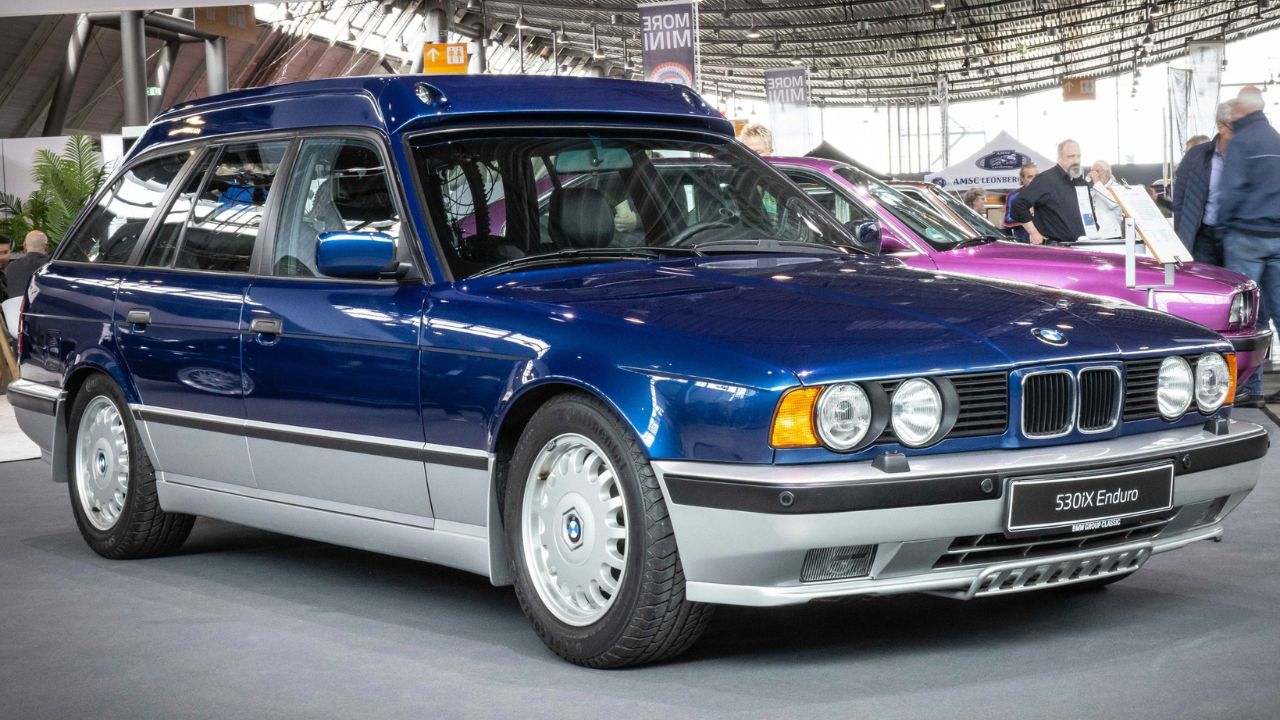
The concept’s mission was surprisingly simple. BMW wanted a vehicle that could combine strong on-road dynamics with genuine off-pavement capability while still preserving the space and practicality expected from a wagon.
The solution came directly from within BMW’s lineup. The company selected the 5 Series Touring body for its cargo flexibility and paired it with the all-wheel-drive hardware already used in the 525iX. The resulting vehicle, the 530iX Enduro Touring, essentially contained all the ingredients of what would later become known as the “adventure wagon.”
To support this mission, BMW equipped the prototype with adjustable air suspension featuring four ride height settings, each separated by about one inch. This allowed the car to raise its stance for rough terrain while maintaining road manners when lowered. Engineers also extended the roof by roughly five inches, added auxiliary lighting, and introduced various exterior modifications to emphasize its rugged intent.
Interior Innovation Decades Ahead Of Its Time
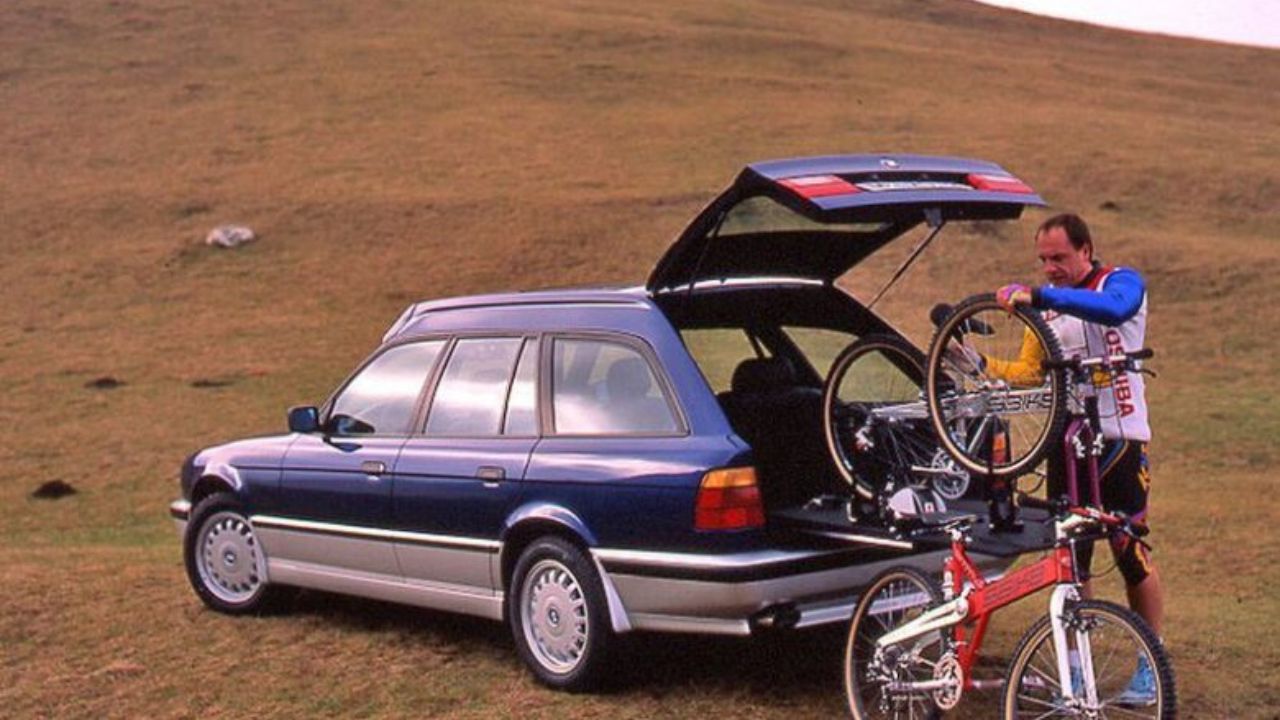
The cabin revealed just how ambitious BMW’s experiment really was. The Enduro Touring included a third-row bench seat, an interior bike carrying system, a mini fridge, and even a fax machine, a high-tech luxury item in the early 1990s.
Design sketches reportedly envisioned even more adventurous equipment, including a roof-mounted tent and systems intended to carry water sports gear like jet skis. In other words, BMW was already experimenting with the overlanding lifestyle long before the term became mainstream in the U.S. market.
At the time, the “iX” badge did not refer to electric vehicles as it does today. Instead, it signified BMW’s all-wheel-drive system, intended to improve traction on poor roads and light off-road surfaces.
Serious Engineering Under The Hood
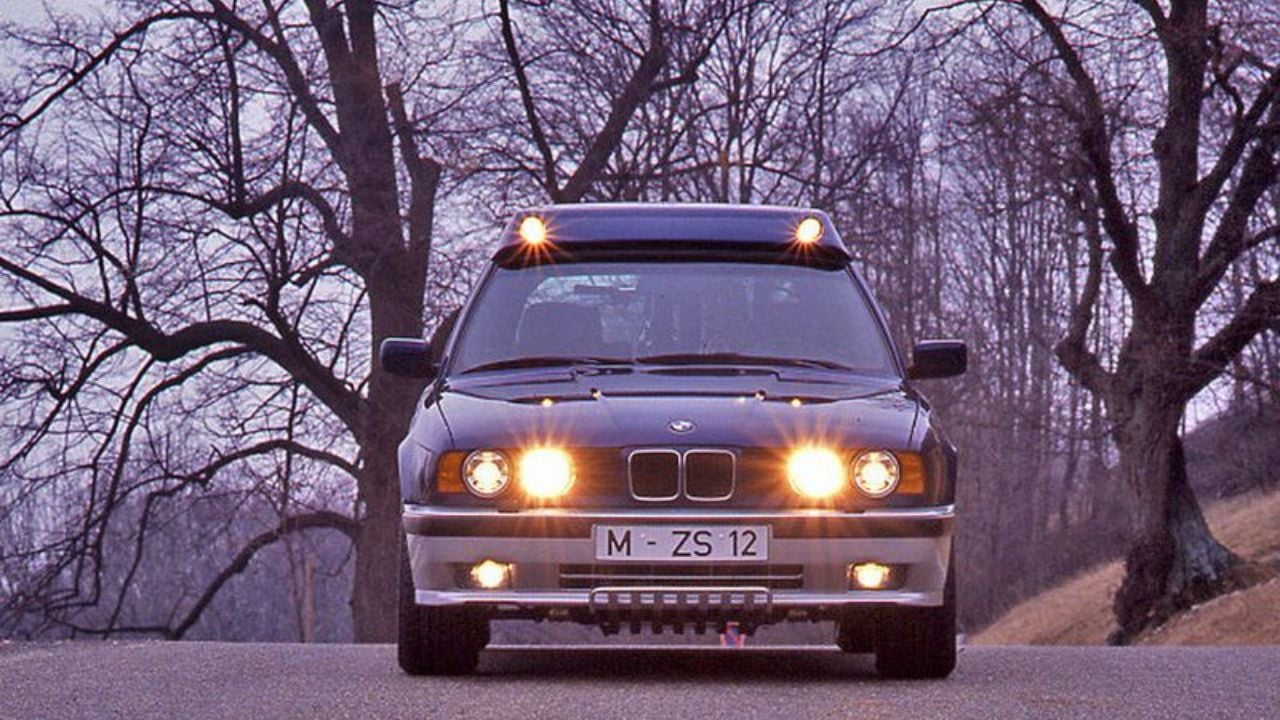
BMW knew this prototype would face more demanding conditions than a standard 5 Series. To support those expectations, engineers added practical extras such as an air compressor and a secondary battery to ensure electrical reliability in remote situations.
Mechanical changes were just as significant. The car used the M50 inline six from the 525iX, but displacement was increased to 3.0 liters thanks to a new crankshaft. Output jumped from 192 horsepower to 246 horsepower, while torque increased to 233 lb ft. Inevitably, all the added hardware pushed curb weight up to about 4,057 pounds.
Even by modern standards, those numbers were respectable for a luxury wagon aimed at both performance and versatility.
The Missed Opportunity
Although the 530iX Enduro Touring never advanced beyond prototype status, BMW seriously evaluated putting it into limited production. According to information shared with the German magazine Auto Motor und Sport, the project would have moved forward if BMW had secured at least 50 orders. The estimated price was an eye-watering 170,000 German marks, which translated into supercar money at the time.
Ultimately, BMW concluded that demand simply did not exist for such a vehicle and redirected resources to other projects. Ironically, only a few years later, Volvo and Audi successfully opened the door for raised premium wagons and became strongly associated with the segment.
In hindsight, the BMW 530iX Enduro Touring looks less like a strange experiment and more like a blueprint for an entire category that arrived years too early. For enthusiasts today, it remains one of the great “what if” stories from BMW’s history.
This article originally appeared on Autorepublika.com and has been republished with permission by Guessing Headlights. AI-assisted translation was used, followed by human editing and review.