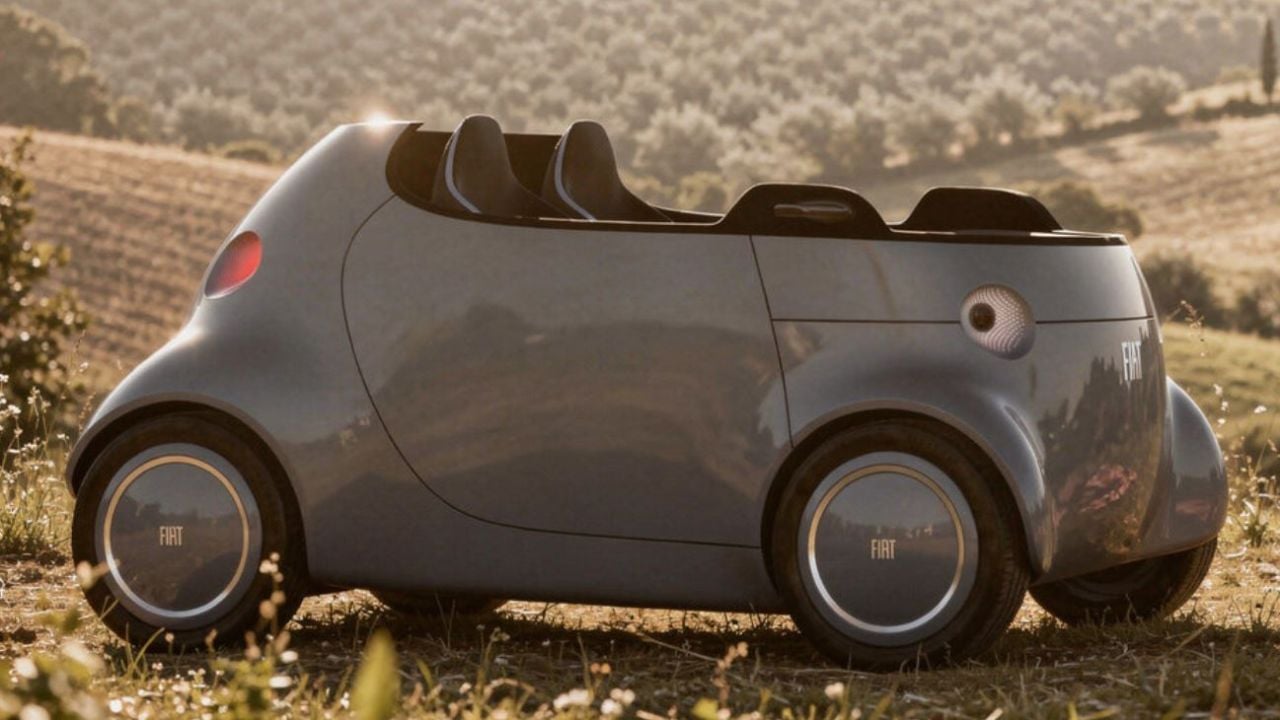
Fiat’s extra-small Topolino has already proven there is still room in modern cities for ultra-compact mobility.
Now a new design study called the Fiat Topolino XS takes that idea even further, proposing a modular microelectric car that can switch personalities depending on how you want to drive it.
Created by designer Wini Camacho, the Topolino XS is envisioned as a tiny all-electric vehicle that can transform into a coupe, a roadster, or a roofless targa-style runabout.
The goal is simple: one vehicle that adapts to multiple use cases, without forcing the owner to buy separate models for different moods or seasons.
Three-in-One Modularity With Removable Panels
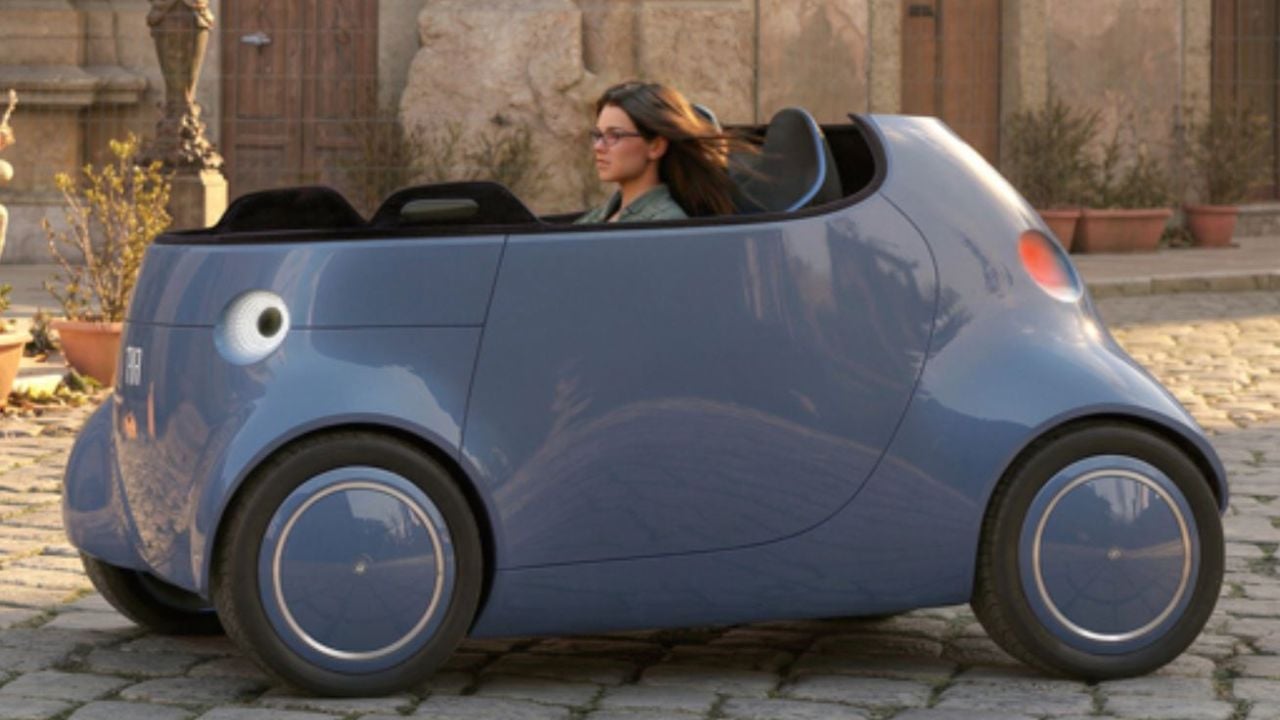
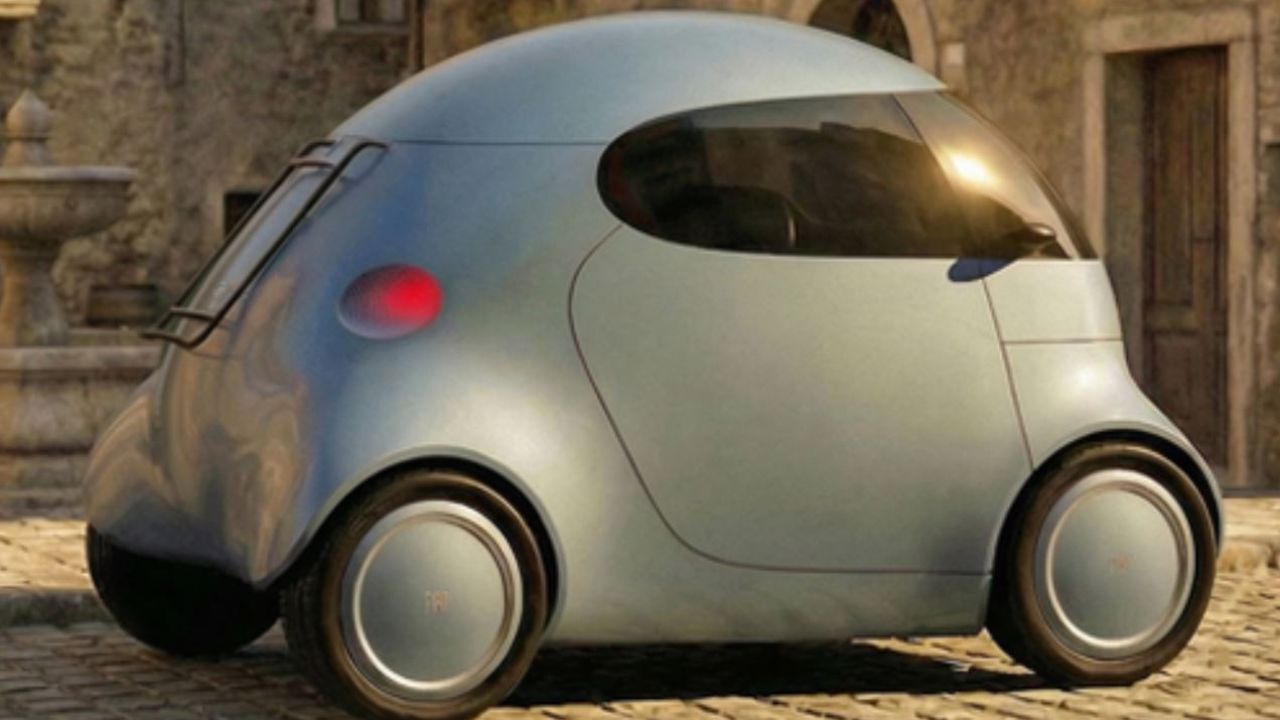
The core of the Topolino XS concept is a three-in-one system that lets the driver remove major pieces of the upper body structure. Depending on the desired experience, the roof, windshield, and side windows can be taken off. In the most open configuration, the vehicle becomes a minimalist, no-roof city cruiser. In the most closed configuration, it returns to a coupe-like form designed for daily use.
Camacho frames the idea as an extreme version of the “less is more” philosophy. Instead of adding complexity through multiple trims and body styles, the concept adds value by removing parts and simplifying the overall design.
Lighting Integrated Into A Clean, Rounded Shape
Visually, the Topolino XS leans into a unified, rounded profile. The headlights and taillights are designed to look carved into the body surface, helping preserve the continuous, spherical shape. Up front, the headlights resemble a playful face, with dark circular centers surrounded by bright white LED rings that read like eyes as the car moves through city streets.
At the rear, the taillights are made up of hundreds of tiny LEDs. The concept suggests these could be reconfigured into different patterns, allowing the car’s signature look to change without altering the body itself.
A Fixed Steering Core With A Moving Rim
Inside, the concept proposes an unconventional steering solution. Instead of a traditional wheel layout, Camacho places a fixed central steering core that remains stationary while the single-spoke steering rim rotates around it. The idea is to keep key functions stable and easy to access, including the digital display, horn, and safety-related controls.
The center screen is also designed to remain fixed in place, while the minimal steering rim turns without bringing additional clutter into the driver’s field of view.
Small Battery, Home Charging, And Tiny Dimensions
The Topolino XS is described as using a small battery pack that can be charged at home, reinforcing its focus on short-range urban use rather than long-distance travel. In the designer’s proposed dimensions, the car measures about 2.4 meters long and 1.4 meters wide, which is roughly 94.5 inches long and 55.1 inches wide.
That footprint is firmly in microcar territory, built for tight streets, small parking spaces, and quick trips.
PURO And ABARTH Variants, Plus Smart Access
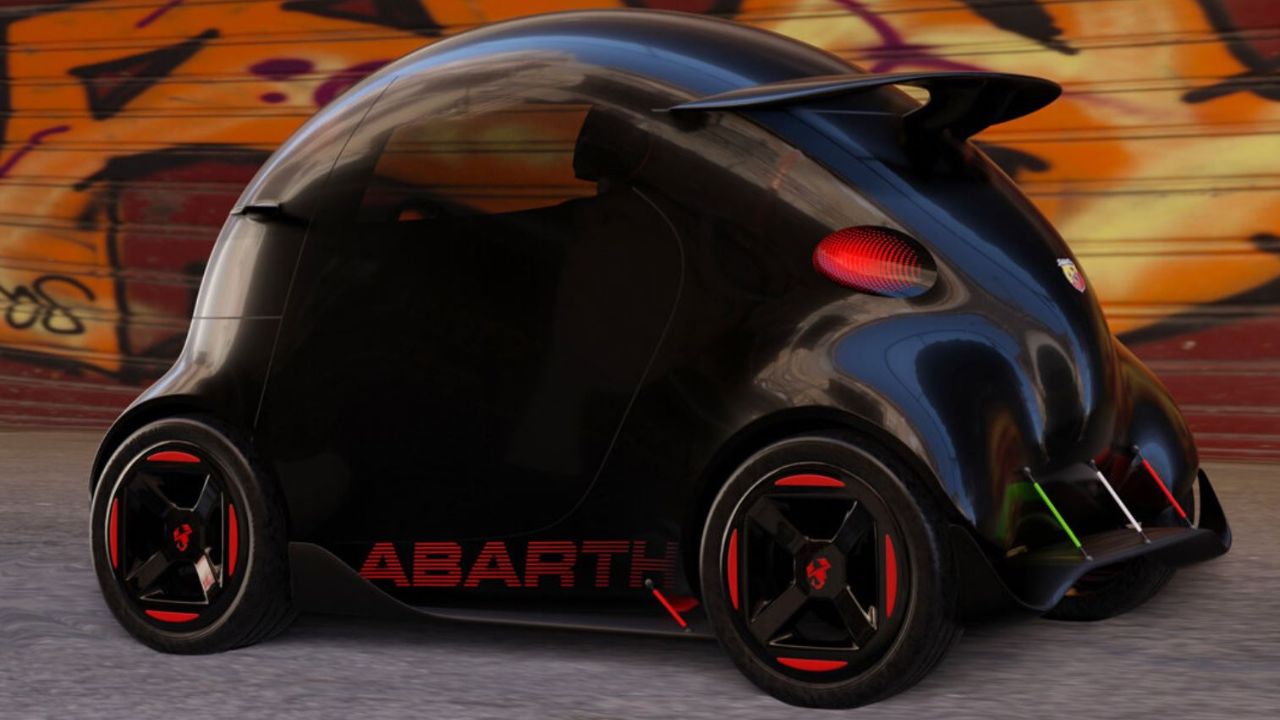
Two versions are envisioned: a base model called PURO and a higher-performance concept variant labeled ABARTH. Both are intended to keep the same modular body approach, allowing either version to be configured as a coupe, roadster, or open-top targa-style layout.
The concept also bakes in smart connectivity. Instead of limiting remote access to a phone app, the Topolino XS is imagined with support for wearable devices, giving drivers another way to unlock and manage functions. For style, the graphics lean on Italy’s Tricolore theme, and practical add-ons include an optional wheeled all-weather bag and a rack for extra cargo.
A Concept For Now, But A Clear Idea
For the moment, the Fiat Topolino XS remains a design concept rather than a confirmed production vehicle. Still, it presents a clear and timely argument: in crowded cities, the next big idea might be making cars smaller, lighter, and more adaptable, not more complicated.
This article originally appeared on Autorepublika.com and has been republished with permission by Guessing Headlights. AI-assisted translation was used, followed by human editing and review.