
Picture this: you’re a carriage driver in 1885, your fastest speed is maybe 15 mph downhill with a tailwind, and your most advanced technology is a leather suspension strap. Now imagine someone rolls up in a car that drives itself, has no engine you can see, and accelerates faster than a telegram travels. You’d probably need to sit down for a while.
The automotive world has given us machines that would seem like pure sorcery to our 19th-century ancestors, vehicles so advanced they’d make a horse-drawn buggy look like a stone wheel. These aren’t just cars with fancy paint jobs or leather seats — these are rolling examples of technology that would fundamentally break a Victorian-era mind.
Let’s look at the modern marvels that would absolutely floor someone from the 1800s, assuming they could comprehend what they were seeing before fainting dead away.
Tesla Model S Plaid

The Tesla Model S Plaid doesn’t just whisper down the road — it screams to 60 mph in 1.99 seconds without making any noise your great-great-grandfather would recognize as an engine. Imagine explaining to an 1800s person that this carriage has no horses, no steam engine, and runs on bottled lightning stored in the floor.
The Plaid produces 1,020 horsepower from three electric motors, which would require roughly 1,020 actual horses to match in their world, an absurd image that perfectly captures the insanity of this machine. The 17-inch touchscreen that controls everything would look like a magic painting to someone whose most advanced dashboard was a pocket watch. With a top speed of 200 mph and a range of 396 miles on a single charge, this sedan would seem to defy every law of physics they understood.
Try explaining that you “fill it up” by plugging it into your house.
Mercedes-Benz EQS

The Mercedes-Benz EQS looks like it was designed by someone who watched too much sci-fi and decided flowing, organic shapes were the future — and they were absolutely right. This electric luxury sedan features a hyperscreen that stretches 56 inches across the entire dashboard, essentially turning your car into a living room with a movie theater bolted to the front.
An 1800s observer would think the smooth, grille-less face is missing crucial components, not understanding that electric cars don’t need to breathe like their gas-powered cousins. The door handles sit flush with the body and pop out automatically when you approach, which would seem like the car is greeting you of its own accord. Inside, the EQS offers massage seats, ambient lighting with 64 color options, and a sound system that would make a concert hall jealous.
The fact that it whispers down the highway at 70 mph while using zero gasoline would fundamentally confuse someone whose entire understanding of transportation involved visible combustion.
Lucid Air Sapphire
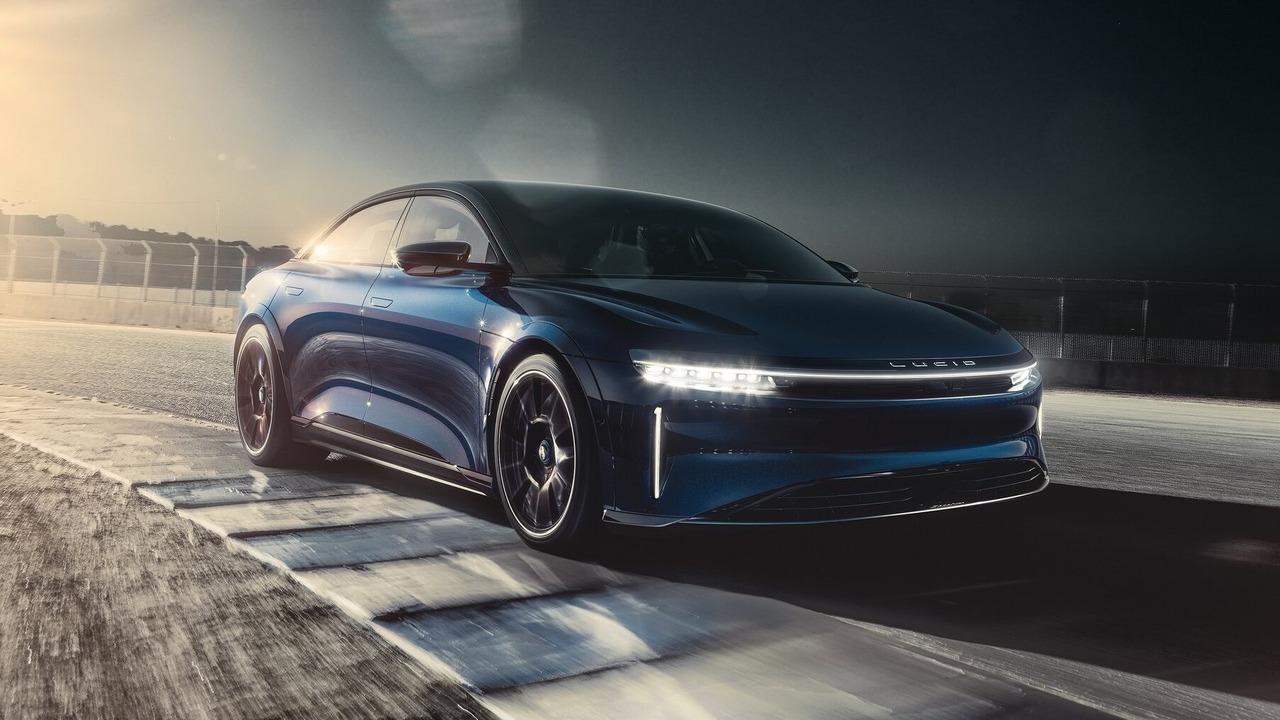
The Lucid Air Sapphire produces 1,234 horsepower from three electric motors and hits 60 mph in 1.89 seconds, making it faster than most people can process what’s happening. To an 1800s mind, the idea of a vehicle this quick would be incomprehensible — their fastest experience was probably a galloping horse at 30 mph, which felt genuinely dangerous.
The Air’s 920-volt electrical architecture would sound like you’re describing a lightning bolt, which isn’t far from the truth when you consider what’s actually happening. With over 400 miles of range and the ability to add 200 miles in just 12 minutes of charging, it operates on a timescale that would seem instantaneous compared to hitching up a team of horses. The glass canopy roof and minimalist interior design would appear impossibly clean and futuristic, like someone hollowed out a crystal and made it drivable.
The price tag of around $249,000 is steep, but try explaining inflation to someone who bought their house for $200.
BMW i7

The BMW i7 brings executive luxury into the electric age with rear seats that recline 42 degrees and a 31-inch theater screen that drops from the ceiling for passengers. Imagine showing an 1800s aristocrat that their servants’ quarters have been replaced with heated, ventilated, and massaging chairs that rival their actual bedroom.
The i7’s crystal-look headlights and illuminated kidney grille would appear to be jewelry rather than functional components, glowing with an otherworldly light. The executive lounge seating package essentially turns the back seat into a first-class airplane cabin, complete with tablet controls and a refrigerator. With up to 318 miles of electric range and the ability to charge at 195 kW, it refuels faster than you could water and feed six horses.
The fact that it weighs over 6,000 pounds but still accelerates smoothly and silently would violate everything a Victorian engineer thought they knew about momentum and energy.
Porsche Taycan Turbo S

The Porsche Taycan Turbo S is hilariously named because it has a “Turbo” badge despite having no turbocharger, no engine, and technically no way to boost intake pressure. This electric sport sedan launches to 60 mph in 2.6 seconds with launch control, delivering the kind of acceleration that would make an 1800s person think they’d been shot from a cannon.
The two-speed transmission on the rear axle is an engineering marvel that helps it maintain brutal acceleration even at highway speeds. With 938 horsepower on tap when using overboost, it has more power than several steam locomotives from the 1800s combined. The active aerodynamics and adaptive air suspension constantly adjust to road conditions automatically, making decisions faster than any human driver could.
That it can do all this while looking like a sleek, low-slung coupe rather than a coal-burning monstrosity would be the final straw for our time-traveling observer.
Rivian R1T

The Rivian R1T is an electric pickup truck with a 135-kWh battery pack, four motors (one per wheel), and a “gear tunnel” storage compartment that runs between the wheels. Try explaining to someone from the 1800s that this work vehicle doesn’t need horses, produces 835 horsepower, and can tow 11,000 pounds while making almost no sound.
The quad-motor setup allows for tank turns, where the vehicle can rotate nearly in place by spinning the wheels on each side in opposite directions — a party trick that would look like witchcraft. The truck bed features an optional powered tonneau cover, a built-in air compressor, and a camp kitchen that slides out from the gear tunnel. With over 300 miles of range and the ability to ford 3 feet of water, it’s more capable than most working horses of the 1800s era.
The fact that you can use its battery to power your entire house during an outage would make it seem like a magical artifact rather than a vehicle.
Bugatti Chiron Super Sport

The Bugatti Chiron Super Sport features an 8.0-liter quad-turbocharged W16 engine producing 1,577 horsepower, which is the kind of number that would require a mathematician from the 1800s to verify because it sounds made up. This hypercar hits a top speed of 273 mph, which is faster than most small aircraft and would seem like teleportation to someone who previously didn’t even know phones existed.
The engine alone has 16 cylinders arranged in a W configuration with four turbochargers, a description that would take hours to explain to a Victorian engineer who just mastered the steam piston. The carbon fiber monocoque chassis and active aerodynamics constantly adjust to keep this missile stable at speeds that would literally tear apart any vehicle from the 1800s. With a price tag of around $3.9 million, it costs more than entire towns were worth back then.
The fact that it reaches 60 mph in 2.3 seconds means you’re traveling faster than a horse’s gallop before someone from 1885 could even process what’s happening.
Koenigsegg Jesko Absolut

The Koenigsegg Jesko Absolut is engineered for one purpose: to become the fastest car on Earth, with a theoretical top speed exceeding 330 mph using its 1,600-horsepower twin-turbo V8 engine. An 1800s person would need the concept of “miles per hour” completely reframed because numbers this large simply didn’t exist in their transportation vocabulary.
The Light Speed Transmission shifts between nine gears in virtually zero time using multi-clutch technology that pre-selects the next gear, which would sound like magic since their “transmission” was telling a horse to go faster. The active rear wing and front flaps adjust automatically to balance downforce and drag, making the car smarter about aerodynamics than any human driver could be. With a dry weight of just 3,130 pounds and a carbon fiber chassis, it achieves power-to-weight ratios that would make a Victorian physicist question their entire education.
At a price around $3 million for only 125 units worldwide, it represents the absolute bleeding edge of what’s possible with internal combustion before the world goes electric.
McLaren Speedtail

The McLaren Speedtail is a hyper-GT with a hybrid powertrain producing 1,035 horsepower, featuring a central driving position like a jet fighter and two passenger seats flanking the driver. The design is so obsessively aerodynamic that even the side mirrors are replaced with cameras feeding retractable digital displays, which would look like portals showing the view behind you.
An 1800s person would be completely baffled by the teardrop shape optimized through thousands of hours of computer simulation, a process that didn’t exist and couldn’t be explained with their mathematics. The retractable rear ailerons and flexible carbon fiber panels actively bend and flex to reduce drag, making the bodywork itself part of the engine’s efficiency strategy. With a top speed of 250 mph and a 0-186 mph time of just 12.8 seconds, it reaches speeds that would require a steam locomotive several minutes to achieve, if it could even get there.
The Velocity mode lowers the car, closes the ailerons, and optimizes every system for maximum speed, essentially transforming it from a luxury cruiser into a guided missile with the push of a button.
GMC Hummer EV

The GMC Hummer EV weighs 9,063 pounds, produces 1,000 horsepower from three electric motors, and features a “CrabWalk” mode that moves diagonally using four-wheel steering. Explaining to an 1800s person that this three-ton vehicle can scuttle sideways like a crustacean would break their understanding of how wheels are supposed to function.
The removable roof panels turn it into a convertible, and the entire front roof section weighs 300 pounds. With 329 miles of range and the ability to charge at 350 kW, it adds 100 miles of range in about 10 minutes, which is faster than you could hitch and brief a fresh team of horses. The UltraVision camera system provides 18 different views around the vehicle through multiple cameras, essentially giving the driver superhuman awareness.
At a starting price of around $99,000, it’s expensive, but you’re basically buying a lunar rover for the street.
Pagani Huayra R

The Pagani Huayra R is a track-only hypercar with a naturally aspirated 6.0-liter V12 engine producing 850 horsepower and revving to 9,000 RPM, screaming louder than anything from the 1800s except maybe a wounded elephant. The active aerodynamics include four independent flaps that adjust constantly to balance the car through corners, moving like mechanical wings on a metal bird.
An 1800s observer would think the exposed gear linkage and visible suspension components are unfinished, not realizing that showing the mechanical beauty is the entire point of Pagani’s design philosophy. The interior features hand-crafted aluminum and carbon fiber with exposed elements that look like baroque jewelry merged with spacecraft components. With a sequential six-speed transmission and a design focused purely on performance without road-legal compromises, it represents racing taken to an artistic extreme.
At around $3.5 million, only 30 will ever be built, making each one as rare as a working steam engine would be today.
Rimac Nevera
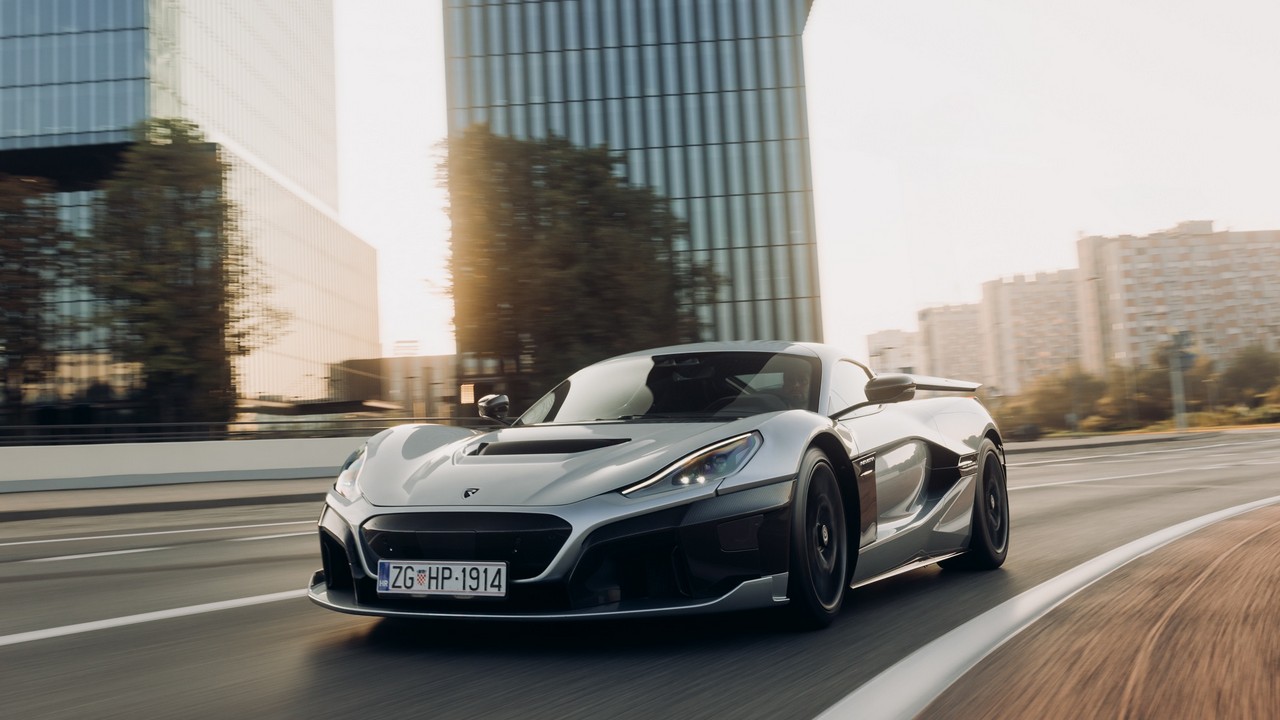
The Rimac Nevera is an electric hypercar with 1,914 horsepower from four independent electric motors, hitting 60 mph in 1.85 seconds and topping out at 258 mph. These numbers would mean absolutely nothing to someone from the 1800s except that they’re all very, very large, which generally indicates something terrifying.
The Nevera features a 120-kWh battery pack that enables all this insanity while still providing 287 miles of range, which is like having a coal locomotive that fits in your pocket. The torque vectoring system adjusts power to each wheel thousands of times per second, making decisions faster than human thought and keeping this missile pointed in the right direction. With a carbon fiber monocoque chassis and active aerodynamics, it represents the absolute cutting edge of what’s possible when you combine electric propulsion with hypercar engineering.
At a price of around $2.4 million, only 150 will be built, making it as rare as it is incomprehensible to anyone who thinks “horseless carriage” is a cutting-edge term.
Conclusion

The vehicles we’ve explored represent more than just technological progress — they’re proof that human ingenuity sometimes borders on the absurd in the best possible way. These cars don’t just move people from place to place; they do it while massaging your back, playing synthetic engine sounds, moving sideways like crabs, and accelerating faster than Victorian-era folks thought possible for any earthbound object.
The truly wild part is that these aren’t concept cars or science experiments — they’re production vehicles you can buy and drive today, assuming you have the budget and the stomach for instant acceleration. An 1800s driver wouldn’t just be impressed; they’d genuinely question whether they’d lost their mind or stumbled into a Jules Verne novel. The future of transportation turned out to be silent, electric, impossibly fast, and covered in touchscreens: which somehow makes perfect sense and no sense at all.
If we’ve learned anything, it’s that the next century of automotive development will probably make today’s cars look as quaint as a horse and buggy, and honestly, we can’t wait to see what breaks our brains next!