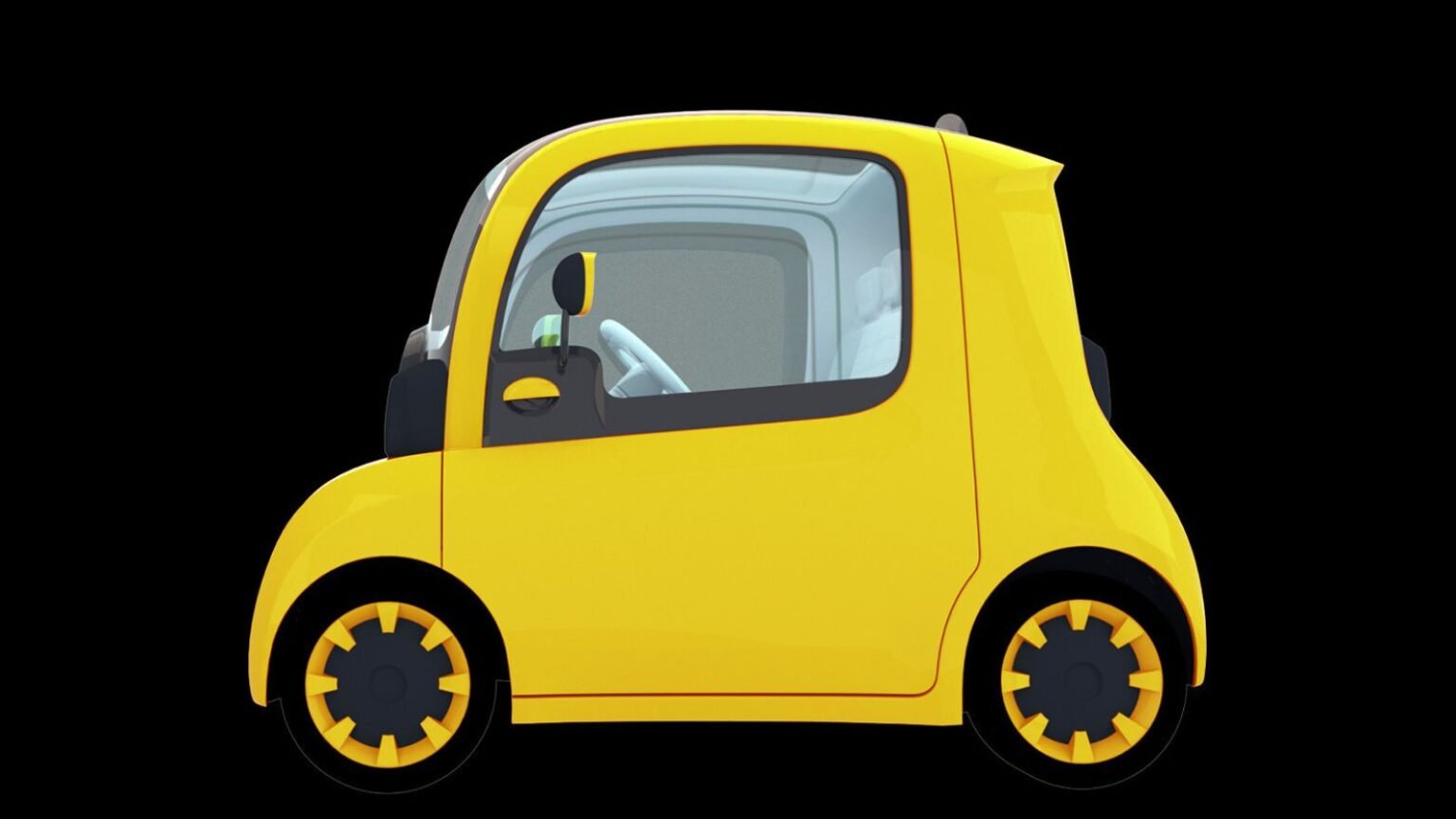
Here we go again. Another tech company has discovered the revolutionary concept of putting teenagers behind the wheel of tiny electric vehicles, complete with karaoke systems and drone attachments, because apparently what the world desperately needs is a €7,990 ($9,355) mobile TikTok studio that can legally terrorize European bike lanes.
Meet ASTRAUX’s new Micro Smart EV AL series: part car, part entertainment center, part expensive mistake waiting to happen. The Chinese company is betting that combining the engineering challenges of electric vehicles with the decision-making prowess of 14-year-olds will somehow result in market success. Spoiler alert: we’ve tried this before.
The Graveyard of Good Intentions
As a lover of concept cars, I’ve seen my fair share of strange ones that definitely stand out, but probably not for the right reasons. Honda introduced the Fuya-Jo at the last Tokyo Motor Show in 1999, an ugly boxy vehicle with standing seats, a DJ turntable, and a “hello, fellow kids” aesthetic that is quite painful when you think of the old men who were sitting discussing this thing behind closed doors. In a press release, Honda even said that the Fuya-Jo was supposed to give you the same experience as being in a club. You know, because you want to be hit on by sleazy men and surrounded by drunk people while driving to work.
The European micro EV scene has its own collection of corpses. The Kewet, launched in 1991, was replaced by the Buddy in 2008. Also, the Th!nk City was launched in 2008 but production was halted due to financial difficulties. These weren’t party-focused teen machines — they were serious attempts at urban mobility that still couldn’t find sustainable markets.
Even established companies struggle with electric vehicles. Sales of the Fisker Karma EV were plagued by production delays and missed deadlines. Sales of the car were suspended in 2012, and, in 2014, its assets and designs were sold off after the company collapsed. If Henrik Fisker couldn’t make luxury electric vehicles work for affluent adults, what makes ASTRAUX think they can crack the code with disco-ball-equipped micro cars for teenagers? It seems like the teen driver market and the tiny EV market are both hard to crack, but maybe ASTRAUX thinks it can combine the two for a different outcome.
The Teen Vehicle Paradox

The fundamental problem with teen-focused vehicles isn’t technological: it’s anthropological. Teenagers want what adults have, not what adults think teenagers should have. They want real cars with real horsepower and real social status, not glorified golf carts with RGB lighting. Trust me, when I went to Monterey Car Week (which was essentially taken over by influencers and trust fund kids), almost all the teens were drooling over supercars, Porsches, and BMWs. They wouldn’t have turned to look at a micro EV chugging down the street.
Previous attempts at teen-specific transportation have consistently missed this mark. Remember when Segway tried marketing scooters to young people? It didn’t live up to its promise of revolutionizing foot travel for any but a few select niche markets (mall cops, postal delivery workers, billionaires). The pattern is clear: when you design transportation specifically for demographics that can’t yet afford premium products, you usually end up with products that feel premium to no one.
The ASTRAUX approach doubles down on this mistake by turning their micro EV into a mobile entertainment complex. A car with karaoke? An external drone? These are just distractions that signal the vehicle isn’t serious about its primary function: getting from point A to point B safely and efficiently.
The 2025 Reality Check

I feel like I see a handful of mini EV concepts (and even production cars) every few months that just fade into oblivion. There’s always some tiny EV being touted as a breakthrough, yet nobody seems to want them. YouTube comments will say it’s so cute, but nobody has a genuine intention of actually commuting to work in one of these deathtraps. They have subpar range, terrible top speeds, and are just sort of miserable to slowly chug around in. Sure, it’s easier to parallel park, but nobody is jumping to drive one around the city anytime they are introduced.
Will ASTRAUX succeed where others have failed? The signs aren’t encouraging. The EV revolution is a tempting proposition for entrepreneurs. But the business is not for the faint of heart. The company is asking European families to spend nearly €8,000 on what amounts to an experimental vehicle for their most inexperienced drivers. That’s not far from the price of a reliable used car that can actually carry more than two people and travel on highways.
The regulatory environment might initially seem favorable — EU L6e/L7e classifications do allow younger drivers — but regulations change when things go wrong. Ask anyone in the micro-mobility industry about the shifting legal landscape for e-scooters and e-bikes in major cities. What starts as permissive often becomes restrictive once insurance claims and safety incidents accumulate.
More fundamentally, ASTRAUX faces the same challenge that has killed micro EVs for the past, like, eight decades: they’re solving a problem that doesn’t really exist. Urban mobility has real issues — traffic, parking, emissions — but teenagers not having access to karaoke-enabled vehicles isn’t one of them. Public transportation, e-bikes, and eventually regular driver’s licenses provide actual solutions to teenage mobility needs.
The company’s €9.9 reservation promotion reveals its own uncertainty. When you need gimmicky pricing to generate interest in a product that is supposedly revolutionary, you might be building another expensive curiosity rather than a sustainable business.
The entertainment features that ASTRAUX touts as selling points might actually be red flags for parents and regulators. Do we really want 14-year-olds controlling drones from their vehicles? Will European insurance companies embrace cars designed primarily as entertainment platforms for inexperienced drivers?
Perhaps the real question isn’t whether ASTRAUX will succeed, but whether we should keep trying this approach at all. The micro EV market has produced more case studies than success stories. Every few years, a new company discovers this supposedly untapped market, burns through investor money, and joins the graveyard of “revolutionary” transportation solutions.
Perhaps it’s time to acknowledge that effective transportation doesn’t require reinvention every few years with new gadgets. Sometimes the best innovation is making existing solutions better, cheaper, and more accessible — not adding karaoke to everything.
ASTRAUX might prove me wrong. Their September 4th launch in Berlin (which also includes an AI companion robot and AI sunglasses) will certainly generate headlines and probably some sales from early adopters willing to gamble €8,000 on the latest tech trend. But history suggests that by 2027, we’ll be reading articles about another Chinese startup that thinks they’ve finally cracked the code on teen-focused micro mobility.
The pattern repeats because the fundamental assumption remains wrong: that transportation needs to be reinvented for every demographic with every technological advancement. Sometimes a bicycle is just fine.