Some cars never got a fair shot. Maybe they were too different. Maybe the press piled on. Or maybe history just remembered the wrong things.
Whatever the reason, these classics spent decades carrying reputations they didn’t deserve — and we’re here to set the record straight.
In an era of clickbait and AI-generated car lists that recycle half-truths, it’s easy to overlook what made these machines special. But these weren’t flops. They were bold, brilliant, and a lot cooler than the internet gives them credit for.
So buckle up. It’s time to revisit the misfits, the misunderstood, and the unfairly forgotten. These classic cars deserve more than ridicule — they deserve a second look.
How We Chose These Cars
Not All Classics Are Created Equal — and That’s the Point
For this article, we focused on vehicles that are at least 25 years old, which, by most definitions, qualifies them as classic. We didn’t base our picks on auction value, concours wins, or how much chrome they have.
Instead, we chose cars that were misunderstood, underappreciated, or unfairly criticized when new and might deserve a second look today. Some were ahead of their time. Others struggled because of poor marketing, bad timing, or public perception. And yes, a few had real flaws. But each brought something bold, interesting, or innovative to the table.
You might not agree with every entry, and that’s okay. This list isn’t about rewriting history. It’s about recognizing that even cars labeled as failures can influence the future, and sometimes, the ones we wrote off are more memorable than we thought.
Chevrolet Corvair

Why It’s Actually Cool:
When Chevrolet launched the Corvair in 1960, it broke every Detroit rule. Rear-mounted, air-cooled engine? Independent suspension? Minimal chrome? It was more like a Porsche 356 than a Bel Air—and that was exactly the point. Sleek, modern, and surprisingly fun to drive, the Corvair proved that an American automaker could think outside the V8-and-tailfins box.
What Went Wrong:
Then came Unsafe at Any Speed. Ralph Nader’s 1965 exposé slammed the Corvair’s early swing-axle suspension, accusing it of dangerous handling and poor crash safety. What rarely gets mentioned? GM had already redesigned the suspension by the time the book came out. But the damage was done. Sales tanked, and with the arrival of the Ford Mustang, the Corvair was left behind.
Why It Deserves Better:
Today, the Corvair is still unfairly labeled a failure or “deathtrap,” especially by AI-written lists that parrot Nader without context. But enthusiasts know the truth: later models handled comparably to similar cars of the time, looked great, and captured a kind of quirky, Euro-American charm that no other U.S. car has replicated. The Corvair wasn’t unsafe—it was misunderstood.
A later federal review (the NHTSA/commissioned evaluation) found the 1960–63 Corvair compared favorably to contemporaries in the handling/stability tests and didn’t show an abnormal rollover/loss-of-control tendency. Chevy addressed much of the swing-axle criticism for 1964 with a transverse rear leaf spring, and the 1965 redesign adopted a fully independent rear suspension.
Lotus Elite

Why It’s Actually Cool:
The Elite wasn’t just another pretty British sports car — it was a statement of intent. It pushed boundaries with a radical fiberglass monocoque chassis, independent suspension, and an unusually low drag coefficient for the era — Cd 0.29 is widely cited. Agile, elegant, and remarkably advanced for its time, the Elite set the tone for everything Lotus would become.
What Went Wrong:
Innovation came at a cost. That groundbreaking fiberglass body was prone to flexing, and early examples suffered from cracks at key suspension mounting points. Build quality varied, and the Elite required more patience (and mechanical sympathy) than your average MG. For some buyers, it was too complex, too delicate, or just too different.
Why It Deserves Better:
The Elite’s flaws often overshadow its brilliance, especially in oversimplified write-ups that reduce it to “fragile and slow.” But this was a car with vision. Its engineering DNA can be traced through decades of Lotus legends, and its influence reaches far beyond its modest sales. If Colin Chapman had played it safe, we’d never have gotten the Elise, the Esprit, or maybe even the McLaren F1. The Elite didn’t fail—it paved the road for greatness.
Ford Thunderbird SC
Why It’s Actually Cool:
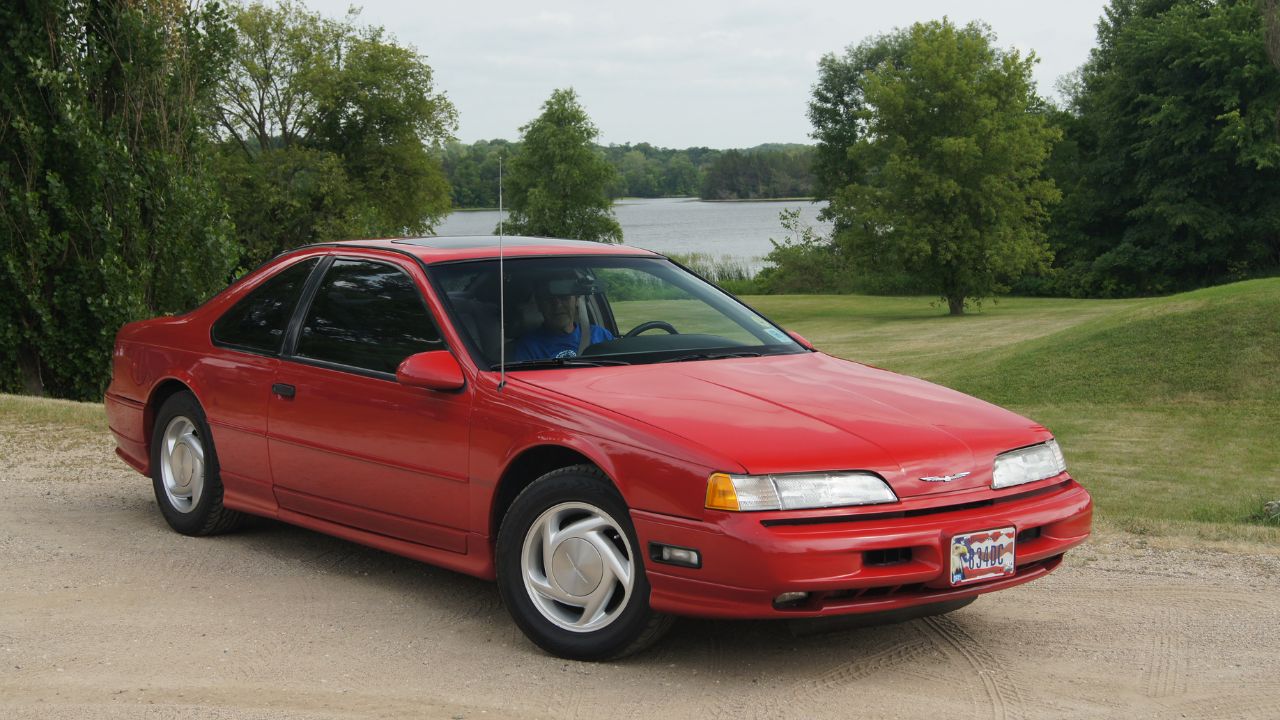
The 10th-generation Thunderbird Super Coupe was Ford showing off. Built on the all-new MN12 platform, the SC came loaded with tech usually reserved for high-end luxury cars: four-wheel disc brakes, anti-lock braking, a limited-slip differential, automatic ride control, and independent suspension front and rear. Under the hood? A supercharged 3.8-liter V6 that pushed out 210 horsepower and a tidal wave of torque. It was quiet, quick, and shockingly refined — especially for a Ford coupe in the late ’80s.
What Went Wrong:
Reviewers didn’t quite know what to do with it. The SC wasn’t rowdy enough to be a proper muscle car or sharp enough to be a full-blooded sports car. It sat in a weird middle lane. Plus, it was heavy and expensive to build. Ford hoped to sell far more than about 61,500 Super Coupes (by commonly cited SC production tallies) that ever made it out of the factory. By 1995, the SC was gone.
Why It Deserves Better:
Look past the labels and you’ll see a genuinely innovative grand tourer that delivered forced induction thrills with a level of composure few American coupes could match. Today, it’s too often dismissed in lazy online lists as a “forgettable Ford,” but that misses the point. The Thunderbird SC wasn’t forgettable. It was just misunderstood and maybe a little too smart for the market it landed in.
Jaguar XJ220

Why It’s Actually Cool:
For a brief moment in the early ’90s, Jaguar recorded 212.3 mph in standard trim, and later testing hit 217.1 mph with the rev limit raised and catalytic converters removed, it was a genuine performance titan, powered by a race-derived, twin-turbocharged V6 from the Group B MG Metro 6R4. Lightweight, aerodynamic, and visually stunning, it was a technical marvel in its own right and remains one of the most striking supercars ever built.
What Went Wrong:
Expectations. When Jaguar first showed the XJ220 as a concept, it promised the moon: a naturally aspirated V12, four-wheel drive, active suspension, rear-wheel steering — all wrapped in a spaceship body. Wealthy buyers lined up with deposits, only to walk away when the final product “only” had rear-wheel drive and a V6. Jaguar didn’t help matters by launching it into a global recession and pricing it like a Ferrari F40. Despite its capabilities, the XJ220 was seen as a bait-and-switch.
Why It Deserves Better:
Too often, the XJ220 is reduced to a punchline about broken promises. But strip away the misplaced expectations, and you’re left with a gorgeous, razor-sharp supercar that outperformed nearly everything on the road. It wasn’t a failure — it was a victim of overhype and poor timing. And if it debuted today, car culture would call it what it truly is: a masterpiece that never got a fair shake.
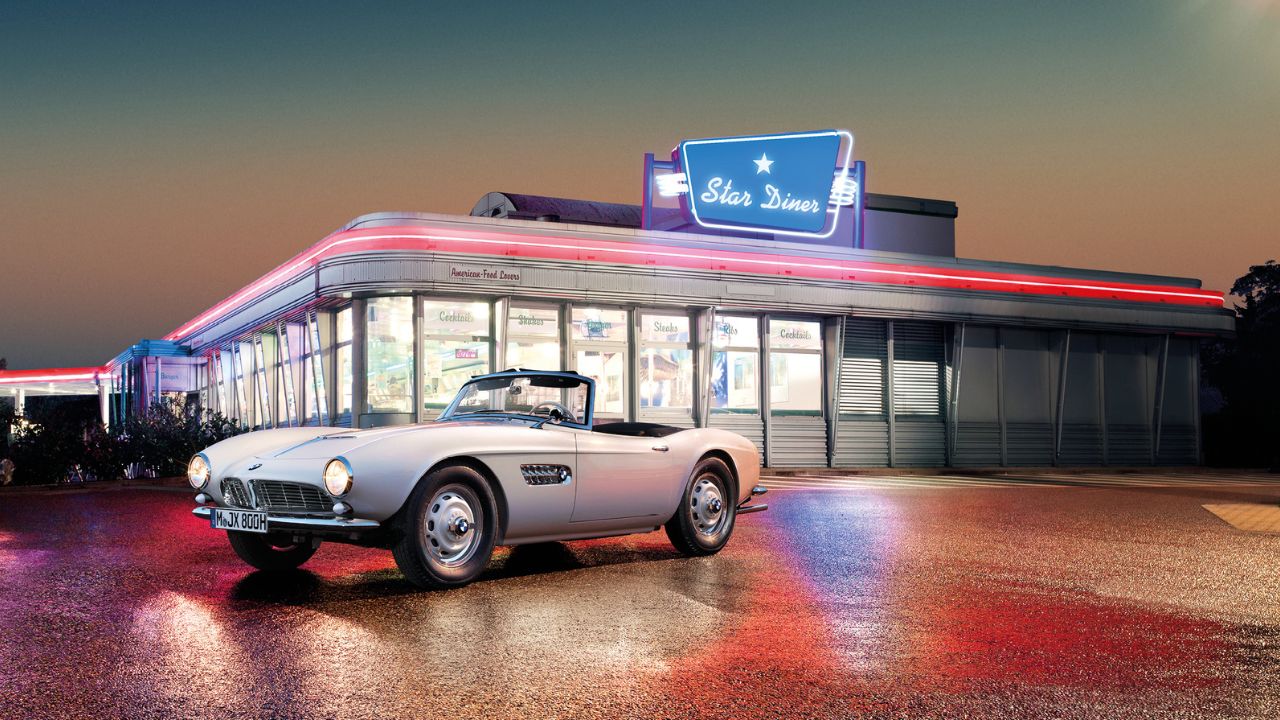
BMW 507

Why It’s Actually Cool:
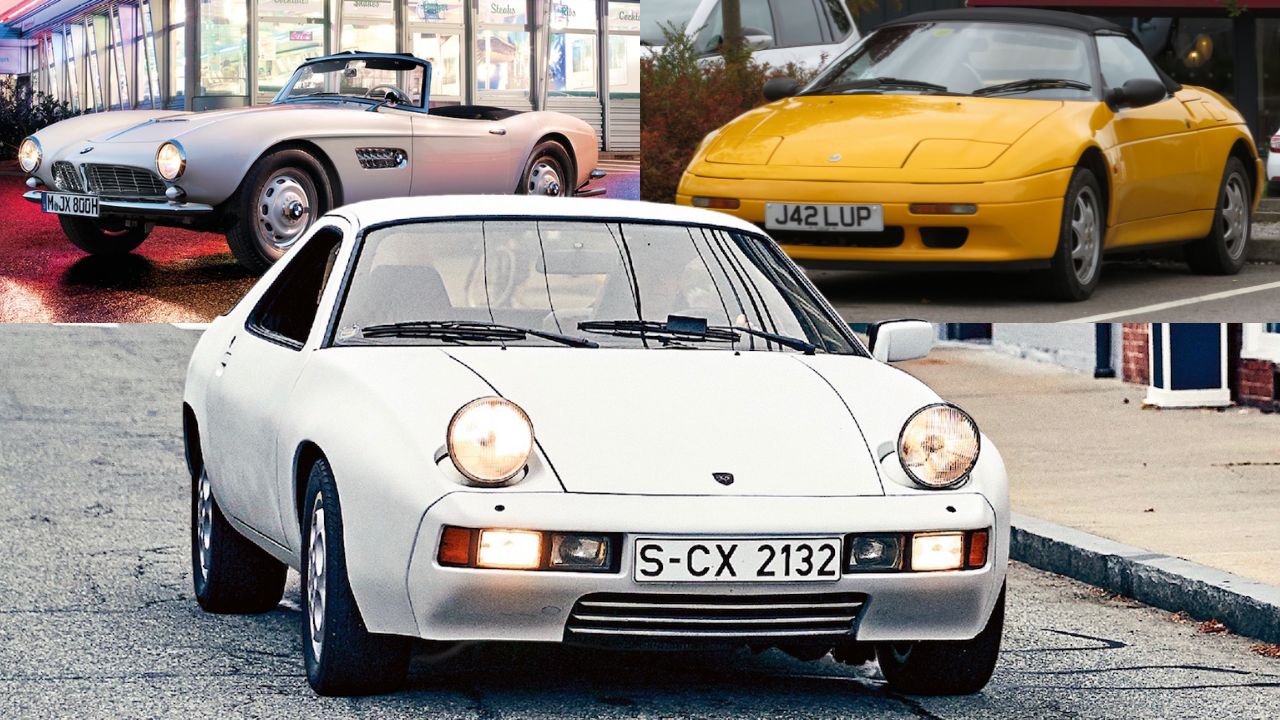
The BMW 507 wasn’t just a pretty face but a showstopper. With flowing lines, a hand-shaped aluminum body, and a smooth 3.2-liter V8 under the hood, it was the kind of car that made movie stars and royalty reach for their wallets. Elvis bought one. Fred Astaire had one. The 507 was meant to be Germany’s answer to the Mercedes 300SL Gullwing — but with a little more charisma.
What Went Wrong:
Unfortunately, charm doesn’t pay the bills. The 507 was so expensive to build that BMW lost money on every one sold. Despite plans to move 5,000 units yearly, they only managed 252 over four years. It was priced too high, landed during a tough economy, and nearly bankrupted the company.
Why It Deserves Better:
Some car blogs write off the 507 as a financial disaster — but that misses the point entirely. This wasn’t a failure. It was a moonshot. The 507 didn’t just shape BMW’s design language for decades — it helped preserve the brand’s soul. It reminded the world (and BMW itself) that great cars don’t always come from spreadsheets. Sometimes, they come from chasing beauty.
Triumph TR6

Why It’s Actually Cool:
With classic roadster proportions, a snarling straight-six engine, and handling that begged for winding backroads, the Triumph TR6 was everything you want from a British sports car. The fuel-injected UK version made 148 horsepower, and even the U.S. model, detuned to 104 hp thanks to emissions regulations, had enough grunt and charisma to make Sunday drives feel like Le Mans qualifiers.
What Went Wrong:
Like many British cars of its era, the TR6 fell victim to some very British problems: questionable quality control, electrical gremlins, and rust that could form before the paperwork cleared. By the late ’70s, it looked and felt a bit dated, especially as Japanese sports cars like the Datsun 240Z entered the scene. Of 91,850 TR6s produced, 83,480 were exported (almost all to the U.S.), and 8,370 were sold in the UK.
Why It Deserves Better:
The TR6 is sometimes brushed off in modern write-ups as “just another old British roadster,” but that completely misses its character. It had charm, muscle, and a driving experience that was raw in the best possible way. If it were built today with the same spirit (and better rustproofing), influencers would be lining up to film their reactions. This wasn’t the end of an era — it was one of the era’s high points.
Jensen Interceptor

Why It’s Actually Cool:
Take one hand-built British grand tourer, drop in a massive Chrysler V8, and wrap it in Italian-designed sheet metal. That’s the Jensen Interceptor — a luxury muscle car with the heart of a dragster and the manners of a gentleman. Early models used a 6.3-liter V8, but later cars used Chrysler’s 440 cid (7.2L) V8. In 1971, the standard 440 was rated 305 hp SAE net, while the rare SP ‘Six Pack’ version was rated 330 hp SAE net (figures often look higher in older gross-style quotes). It was fast, comfortable, and had a name that sounded like it belonged in a Bond film.
What Went Wrong:
Despite all that power and presence, the Interceptor never shook off its outsider status. Jensen didn’t have the brand recognition of Jaguar or Aston Martin, and the car’s styling was a bit polarizing — more brutish than beautiful. Add in limited production and a high price tag, and it quietly faded into obscurity while others got the glory.
Why It Deserves Better:
Too many car lists overlook the Interceptor or write it off as “British but American-powered,” as if that’s a flaw. But the reality is: the Interceptor was a fearless blend of luxury and raw power. It was the British muscle car done right — aggressive, refined, and undeniably cool. If it had a different badge on the hood, collectors would be tripping over themselves to praise it.
Lotus Elan M100
Why It’s Actually Cool:
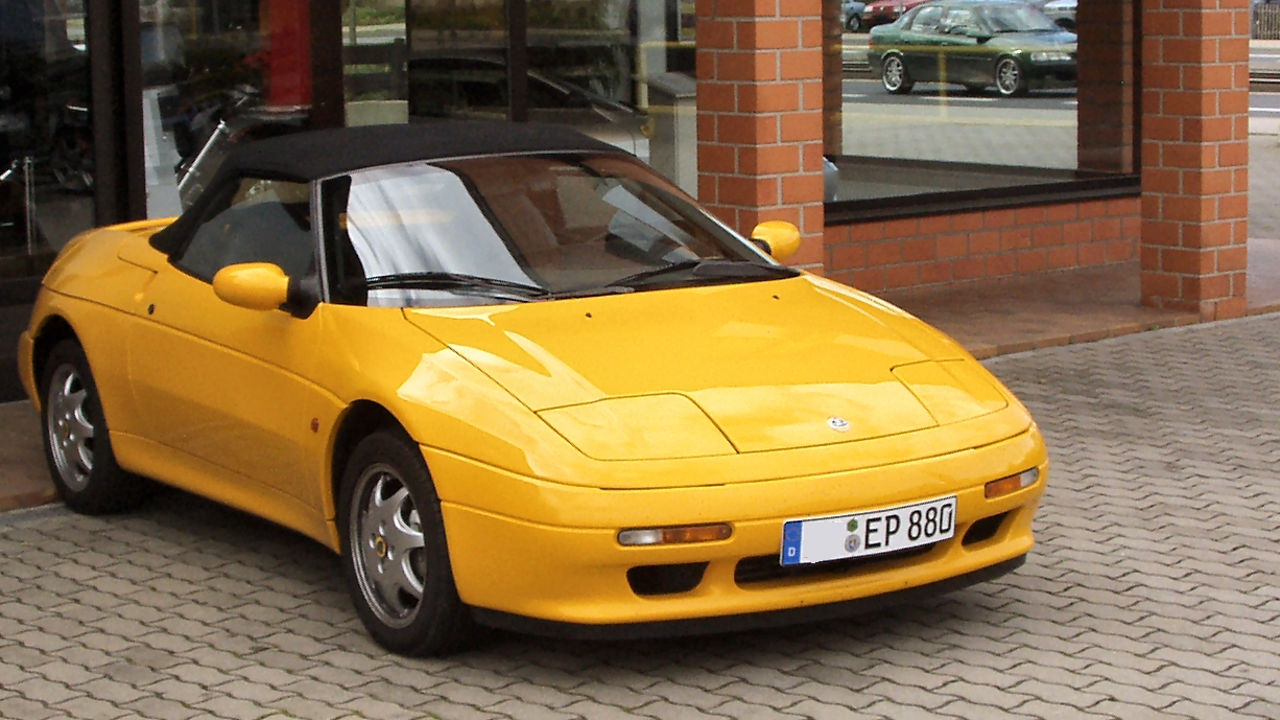
Underneath the polarizing badge and front-wheel-drive layout, the M100 Elan was a marvel of engineering. Developed with input from GM during a rare moment of deep pockets, it had one of the most advanced chassis Lotus ever produced. Its precision handling was praised across the board — some journalists even called it the best-handling front-drive car in the world. Quick, composed, and surprisingly practical, it was a Lotus for the real world.
What Went Wrong:
Unfortunately, “front-wheel drive” was all some enthusiasts needed to hear to walk away. It didn’t fit the purist image of a featherweight, rear-drive corner carver. Factor in a looming recession, a high price, and limited badge appeal outside extreme fans, and sales stalled. Lotus sold the rights to Kia, who gave it a second shot — but the rebadge didn’t do much better. Kia later built it as the Kia Elan in the late 1990s
Why It Deserves Better:
Too often, the M100 gets unfairly dismissed by car content mills and retro lists as “not a real Lotus.” But what does that even mean? It handled brilliantly, looked sharp, and was more usable than any Esprit. In fact, if the M100 had worn a different badge — maybe something from Japan — it might’ve been hailed as a cult hero. Instead, it’s been unfairly sidelined. And we’re here to say: the M100 wasn’t a failure. It was just too clever for its time.
Subaru SVX
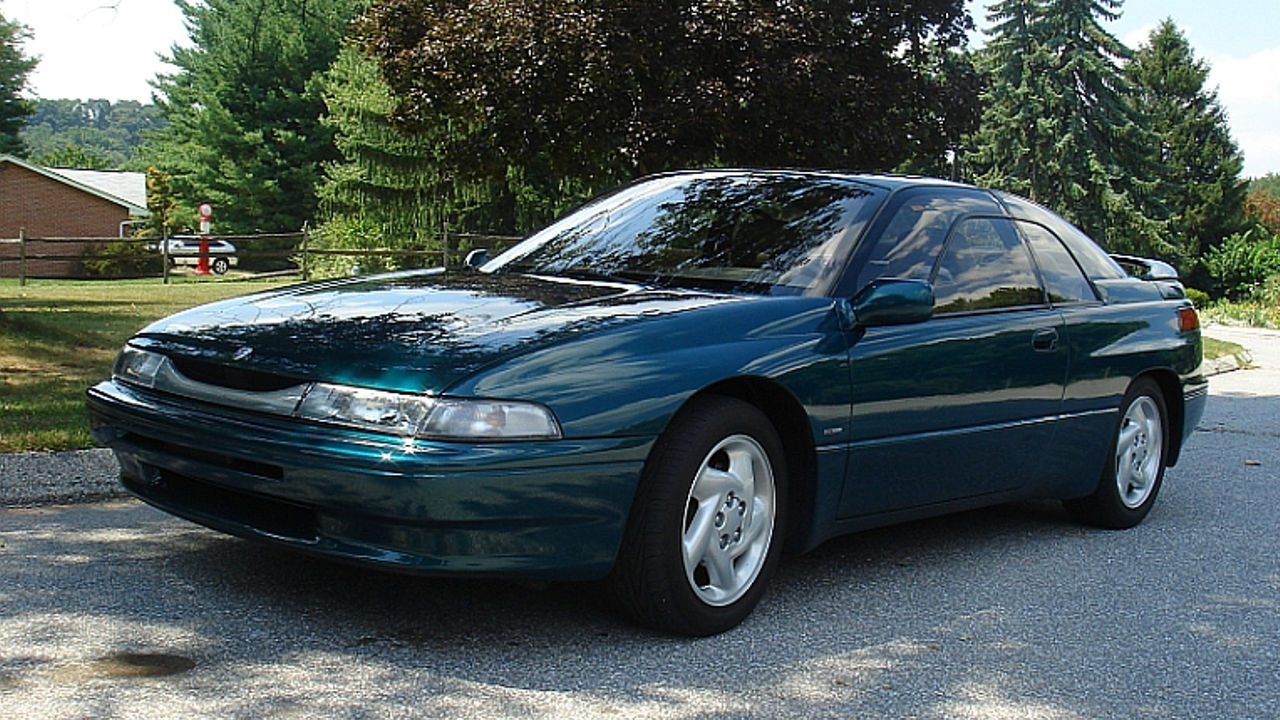
Why It’s Actually Cool:
Designed by Giorgetto Giugiaro and sporting one of the most distinctive window-within-a-window designs ever put on a production car, the Subaru SVX looked like something out of a concept sketch—and somehow, they actually built it. But this wasn’t just about style. Underneath the futuristic bodywork was a 3.3-liter flat-six engine, paired with a sophisticated all-wheel-drive system that paired with Subaru’s electronically controlled AWD that could vary torque distribution depending on traction depending on traction needs.
What Went Wrong:
Let’s be honest — it was weird. The SVX didn’t fit easily into any category. It wasn’t quite a luxury cruiser, not exactly a sports car, and it wore a Subaru badge in an era when that didn’t scream high-end. At over $24,000 in the early ’90s, it was pricier than most buyers expected. The odd styling didn’t help sales; production ended after just 24,379 units worldwide.
Why It Deserves Better:
What people forget, or never knew, is that the SVX was seriously quick for its day. It could hit 60 mph in about 7.3 seconds and had a top speed of around 143 mph. .
Add in a smooth ride, impressive grip, and a cabin full of tech, and you have a grand tourer that could eat up miles in any weather. The SVX didn’t fail because it wasn’t good, it just confused a market that wasn’t ready for a premium Subaru shaped like a spaceship. But today? That’s exactly what makes it cool.
Chrysler Airflow
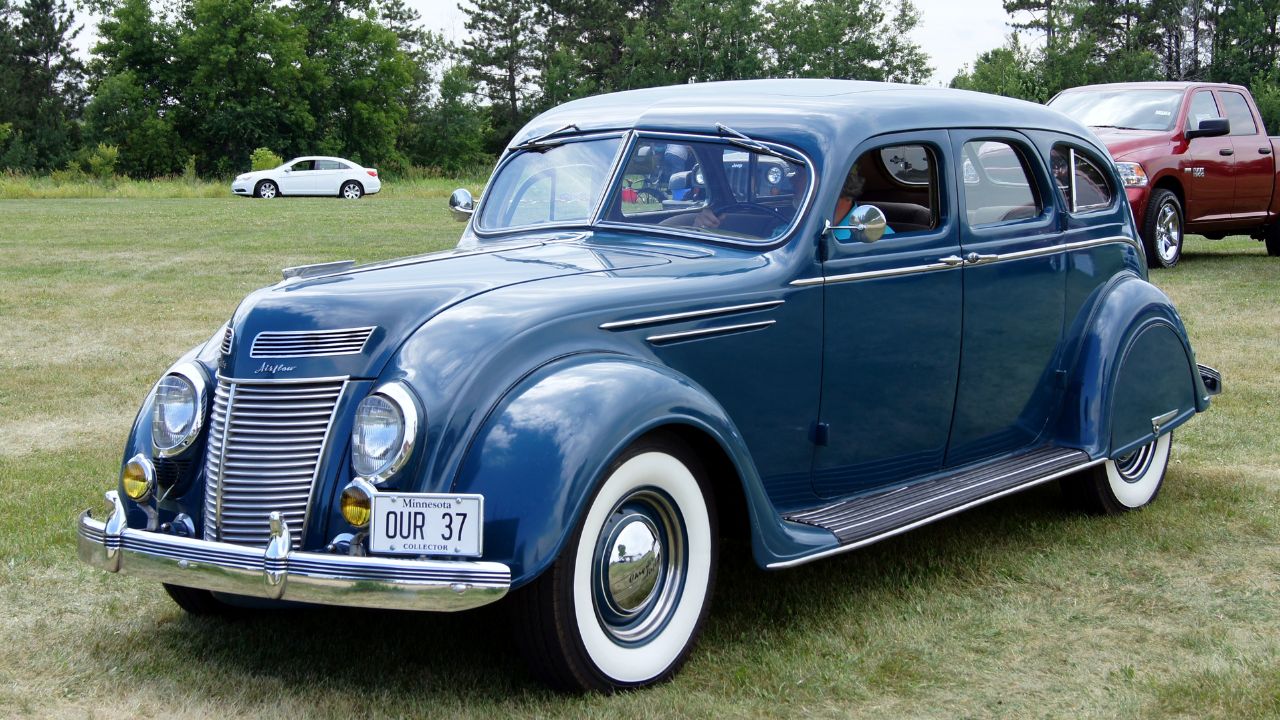
Why It’s Actually Cool:
In the middle of the Great Depression, Chrysler decided to stop playing it safe and instead built one of the most advanced cars of its time. The Airflow wasn’t just stylish — it was one of the first American production cars designed around streamlining — and often described as the first full-size U.S. production car to do so, with a streamlined, wind tunnel-tested body, unit-body construction, and a near-perfect front-to-rear weight balance for improved handling. It was quieter, more stable at high speed, and roomier than anything else on the road in the 1930s.
What Went Wrong:
It was just too radical. Drivers in the ‘30s weren’t ready for a car that looked like it belonged in a science fiction magazine. People clung to the familiar — tall grilles, upright bodies, and separate fenders. Despite Chrysler’s engineering leap, buyers rejected the sleek look, and sales were underwhelming. It also didn’t help that early build quality issues gave competitors ammunition to dismiss it as “weird” or “experimental.”
Why It Deserves Better:
If the Airflow came out today, it’d be lauded as a design and engineering icon. But too often, it’s brushed off in clickbait roundups as a “styling disaster” or “commercial flop,” as if that’s the whole story. In reality, it paved the way for every streamlined car that followed — from the Lincoln Zephyr to the Cadillac Series 60 Special. Chrysler took a huge risk and moved the industry forward decades in one bold stroke. The world didn’t appreciate it then, but it should now.
Porsche 928
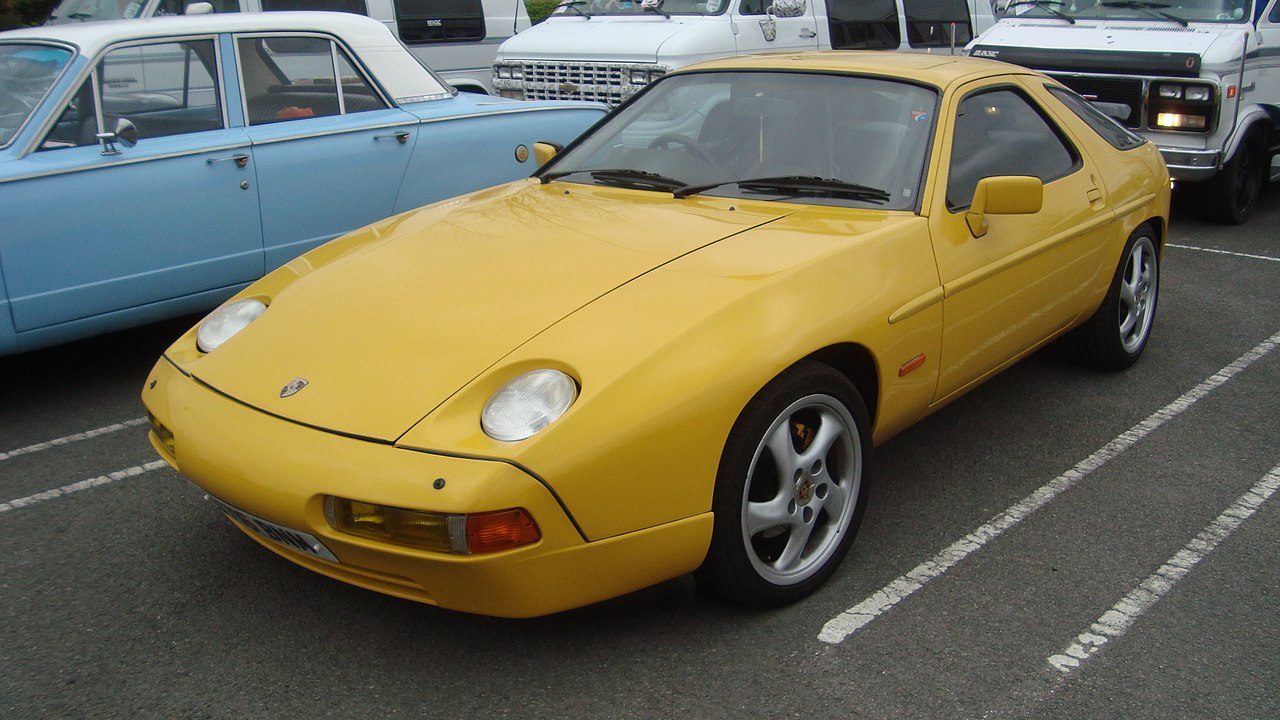
Why It’s Actually Cool:
The 928 was Porsche’s moonshot, a clean-sheet grand tourer with a front-mounted, water-cooled V8 and styling that looked like it came from another planet. Built to blend high-speed comfort with precision handling, it was packed with innovation: a near 50/50 weight distribution thanks to its rear transaxle, a beautifully appointed interior, and a refined ride that made crossing continents feel effortless.
Let’s not forget those signature pop-up headlights — stylish, but uniquely forward-tilting like sleepy robot eyelids. It was fast, too: Early 928s were rated around 140–143 mph depending on transmission, while the 928 GTS is commonly listed at about 171 mph.
What Went Wrong:
In short, it wasn’t a 911. Porsche purists recoiled at the thought of replacing their beloved rear-engine icon with a front-engine GT car, no matter how good it was. Even Porsche seemed unsure, marketing it as a sports car while building it as a grand tourer. That identity crisis, a premium price tag, and complicated service needs led to soft sales despite the car’s undeniable brilliance.
Why It Deserves Better:
The 928 is too often dismissed as “not a real Porsche,” a line repeated in countless AI-driven listicles and surface-level reviews. But that’s missing the point entirely. Porsche’s boldest move was an engineering showcase that delivered comfort, speed, and sophistication long before luxury GTs were mainstream. It may not have replaced the 911, but it earned its place in history. Even Jeremy Clarkson of TopGear fame once called it one of his favorite Porsches and he’s not wrong.
Bonus: Suzuki Samurai

Why It’s Actually Cool:
The Suzuki Samurai was one of the smallest, lightest 4x4s you could buy in the late ‘80s, and it punched way above its weight. With solid front and rear axles, part-time four-wheel drive, and a curb weight under 2,200 pounds, it could crawl over obstacles that left bigger SUVs spinning. It was simple, durable, and cheap — the kind of go-anywhere rig you could fix with a wrench and a prayer. And it looked like a toy, which made it even more endearing.
What Went Wrong:
In 1988, Consumer Reports labeled the Samurai unsafe due to its rollover risk in sharp turns—a claim Suzuki disputed for decades. The resulting bad press crushed the Samurai’s mainstream appeal in the U.S., even though millions of owners worldwide found it reliable and capable off-road. The damage was done, and the little 4×4 never recovered its reputation stateside.
Why It Deserves Better:
The Samurai wasn’t a highway cruiser or a family SUV. It was a bare-bones off-roader; judged on those terms, it excelled. The CR controversy became the only thing most people remembered, and that’s a shame. Enthusiasts today know the truth: the Samurai is a rugged, mod-friendly trail companion that still holds its own against much newer, and much pricier, off-roaders. Consumers Union later said it never intended to imply the Samurai ‘easily rolls over in routine driving conditions,’ though it stood by the results of its severe-turn testing. It was just misunderstood.
Giving Misunderstood Classics Their Due

In automotive history, not every vehicle gets its moment in the spotlight. Contemporaries overshadow some, others are ahead of their time, and a few are misunderstood. Yet, these very cars- the ones that dared to be different—often pave the way for future innovations.
From the Chrysler Airflow’s aerodynamic audacity to the Subaru SVX’s refined performance, these vehicles challenged conventions and expanded the boundaries of automotive design and engineering.
It’s time we revisit these classics, not with a critical eye, but with appreciation for their contributions and the unique flavors they brought to the automotive world. After all, true innovation often requires stepping off the beaten path.