A manual transmission can turn a fast car into something far more memorable. It adds rhythm, responsibility, and a physical connection that no shift paddle can fully copy.
That connection matters most when the car itself is already special. A supercar, sports car, or homologation legend feels different when the driver has to work with the machine instead of simply asking electronics to do the hard part.
For decades, some automakers understood that perfectly. They built cars where the manual gearbox was not a trim choice or a nostalgic extra. It was part of the car’s identity from the start.
These 10 cars became legends for many reasons, but the clutch pedal helped define all of them. They remind us that the most memorable performance cars are not always the easiest ones to drive. Sometimes the effort is the point.
Where the Manual Became Part of the Car’s Identity

The standard here is strict. Each car needed to be manual-only in the version discussed, or so closely defined by its manual gearbox that removing it would change the car’s identity.
Exact versions matter because many famous nameplates changed their transmission strategy across generations. A model name alone is not enough; the specific car has to carry the manual gearbox as a defining part of the experience.
Performance also had to be meaningful, but speed alone was never enough. A car belongs here when the manual shaped its reputation, collector appeal, and driving character.
The final choices include supercars, American icons, Japanese driver’s cars, and rare performance specials. What connects them is simple: take away the clutch pedal, and each car loses part of what made people remember it.
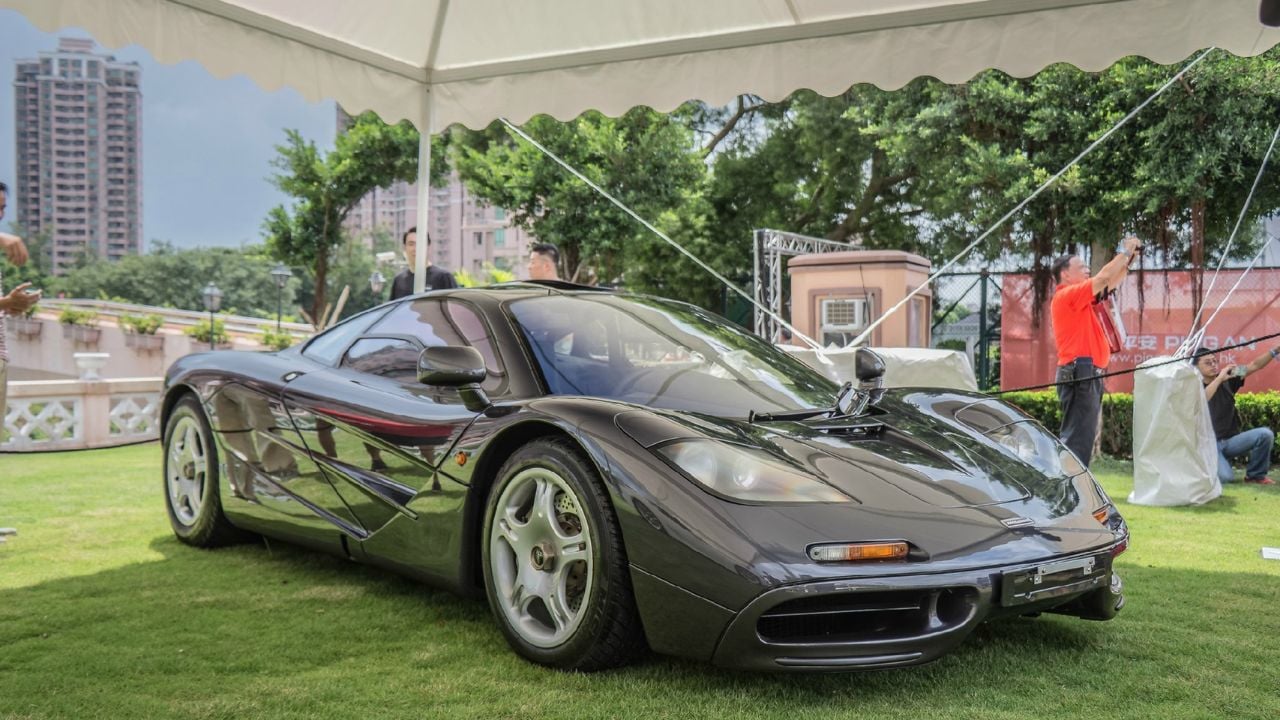
McLaren F1
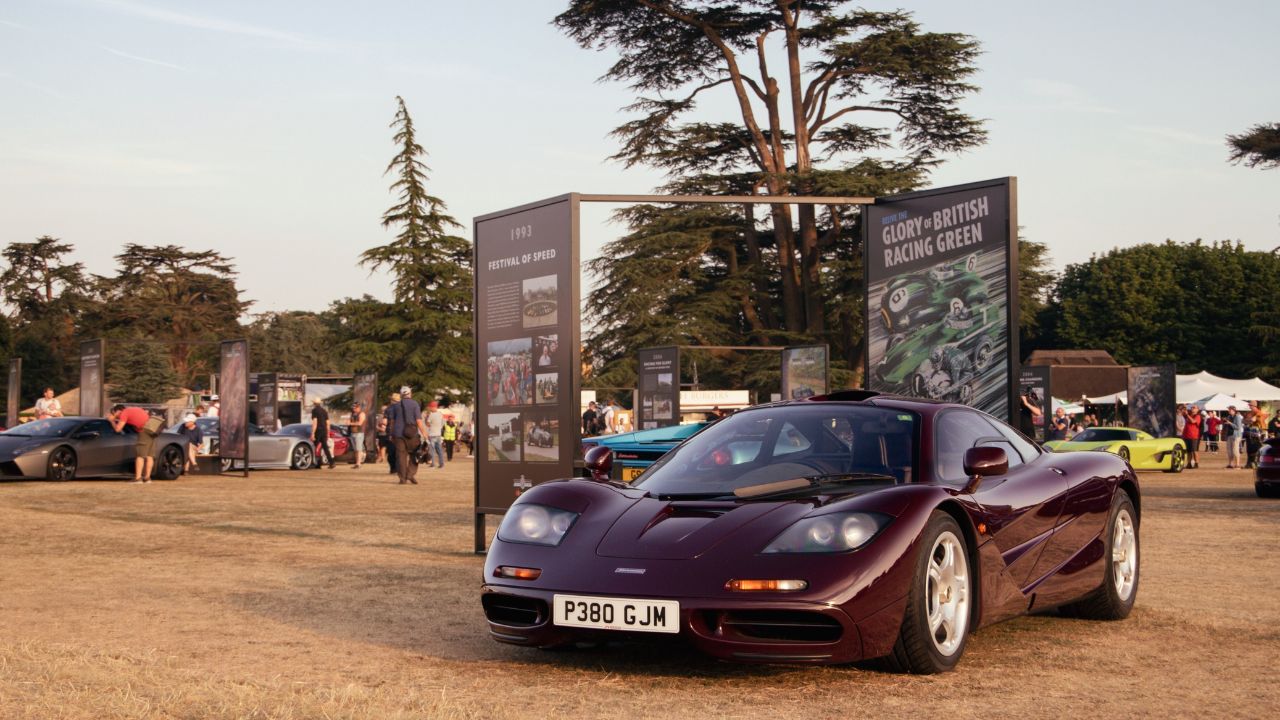
The McLaren F1 is still one of the purest manual supercars ever built. It paired a BMW S70/2 V12 with a 6-speed manual gearbox and a central driving position, creating a road-car layout that still feels almost unreal.
The standard F1 used a transverse 6-speed manual gearbox with an AP carbon triple-plate clutch. That detail matters because the car was not built around convenience. It was built around weight, response, packaging, and the feeling that the driver sat at the center of everything.
The naturally aspirated V12 helped make the F1 one of the fastest road cars of its era, but the gearbox helped make it personal. The driver had to manage the engine, the ratios, the clutch, and the car’s pace directly.
That is why the F1 still feels untouchable. Its greatness was not only about numbers. It was about the way the machine made the driver part of every decision.
Ferrari F40

The Ferrari F40 was the last Ferrari road car launched during Enzo Ferrari’s lifetime, and it still feels like one of the brand’s rawest modern icons. Ferrari lists the F40 at 0 to 100 km/h in 4.1 seconds and a top speed of 324 km/h, equal to about 201 mph.
Period figures place its twin-turbocharged V8 at 478 PS, or about 471 hp, paired with a 5-speed manual transmission. That gearbox was central to the F40’s character because the car had very little interest in comfort or polish.
The F40 was loud, light, turbocharged, and intimidating in a way modern supercars rarely are. The gated shifter gave the driver a direct role in managing the boost, the noise, and the speed.
Modern Ferraris are much quicker and easier to drive quickly. The F40 remains special because it feels so unfiltered, and the manual gearbox is a major reason that character survived.
Ferrari F50

The Ferrari F50 followed the F40 with a very different kind of personality. It used a naturally aspirated V12 with deep Formula 1 inspiration, a carbon-fiber chassis, and a 6-speed manual gearbox.
Ferrari lists maximum output at 382 kW, commonly expressed as 520 PS. The engine and gearbox made the F50 feel more mechanical and exposed than the later Enzo, which moved Ferrari’s flagship line into automated shifting.
The F50 has become more appreciated with time because it was never trying to be easy. It was open, loud, demanding, and deeply physical.
The manual gearbox made the experience feel ceremonial. Every shift belonged to the driver, and that gave the F50 a kind of involvement later Ferrari flagships would never quite repeat.
Porsche Carrera GT

The Porsche Carrera GT is one of the clearest examples of a car where the manual transmission became part of the mythology. Porsche lists the Carrera GT with a 5.7-liter naturally aspirated V10, 612 PS, and a 6-speed manual gearbox with a ceramic clutch.
Built from 2003 to 2006, the Carrera GT could reach 100 km/h in 3.9 seconds. The numbers were serious, but the driving experience became famous because the car asked for respect.
The clutch, V10 response, carbon structure, and lack of modern forgiveness gave it a reputation for intensity. It did not flatter careless inputs, and that is part of why it remains so compelling.
Porsche could have made the Carrera GT easier. Instead, it created one of the great analog supercars, and the manual gearbox is a huge part of that story.
2005 to 2006 Ford GT
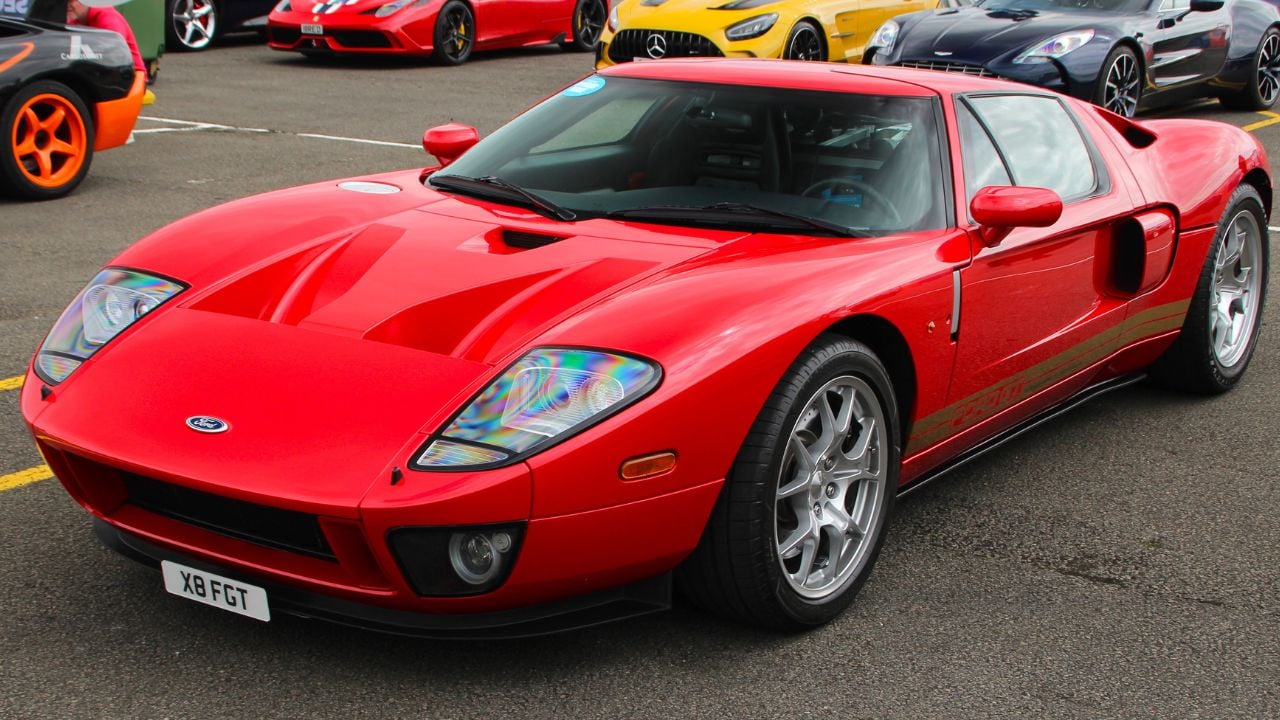
The 2005 to 2006 Ford GT turned the GT40 legend into a modern road car with real analog drama. Ford’s own period brochure described a mid-mounted, all-aluminum 5.4-liter supercharged V8 producing 550 hp and 500 lb-ft of torque.
That engine was paired with a purpose-built Ricardo 6-speed manual transaxle. The car also used a twin-disc clutch and a limited-slip differential, giving the drivetrain the kind of mechanical substance buyers expected from a true supercar.
The transmission choice gave the Ford GT much of its lasting appeal. It was fast enough to feel exotic, but physical enough to keep the driver involved.
The later second-generation Ford GT became a more technical machine with paddle shifting and racing-focused aerodynamics. The 2005 to 2006 car feels different because it still belongs to the old world of big engines, mechanical shifts, and direct involvement.
Dodge Viper

The Dodge Viper was never interested in being polite. From the early RT/10 through the final 2017 models, it built its identity around a huge V10, rear-wheel drive, and a manual transmission.
That consistency matters. Across its production life, the Viper stayed committed to the manual gearbox, which became part of the car’s reputation as much as the engine itself.
The Viper never softened itself with an automatic option to chase broader sales. It stayed physical, intimidating, and proudly old-school.
That made it harder to drive well, but also easier to respect. The manual was part of the Viper’s attitude, not an accessory.
Honda S2000

The Honda S2000 proved that a manual-only sports car did not need huge power to become legendary. Early AP1 cars used the 2.0-liter F20C, while later U.S.-market AP2 cars used the 2.2-liter F22C1.
Every S2000 kept the 6-speed manual at the center of the experience. The engine wanted revs, the gearbox felt precise, and the chassis rewarded commitment.
An automatic would have weakened the whole idea. The car needed a driver willing to shift, think, and stay involved.
That is why the S2000 still has such a powerful reputation. It turned every good road into a lesson in timing, patience, and trust.
Acura Integra Type R

The Acura Integra Type R, sold in the U.S. for 1997, 1998, 2000, and 2001, remains one of the greatest front-wheel-drive performance cars ever offered here.
Acura’s own powertrain materials said the Type R used a close-ratio 5-speed manual transmission and a limited-slip differential. Car and Driver’s 1997 test listed the U.S. car at 195 hp with a 5-speed manual.
The Type R worked because it was not only a quicker Integra. It was lighter, sharper, more focused, and built around high-rpm precision.
The manual transmission gave the B18C engine exactly what it needed: tight ratios and driver involvement. Few cars prove better that front-wheel drive can feel serious when the engineering is this honest.
2009 to 2013 Chevrolet Corvette C6 ZR1
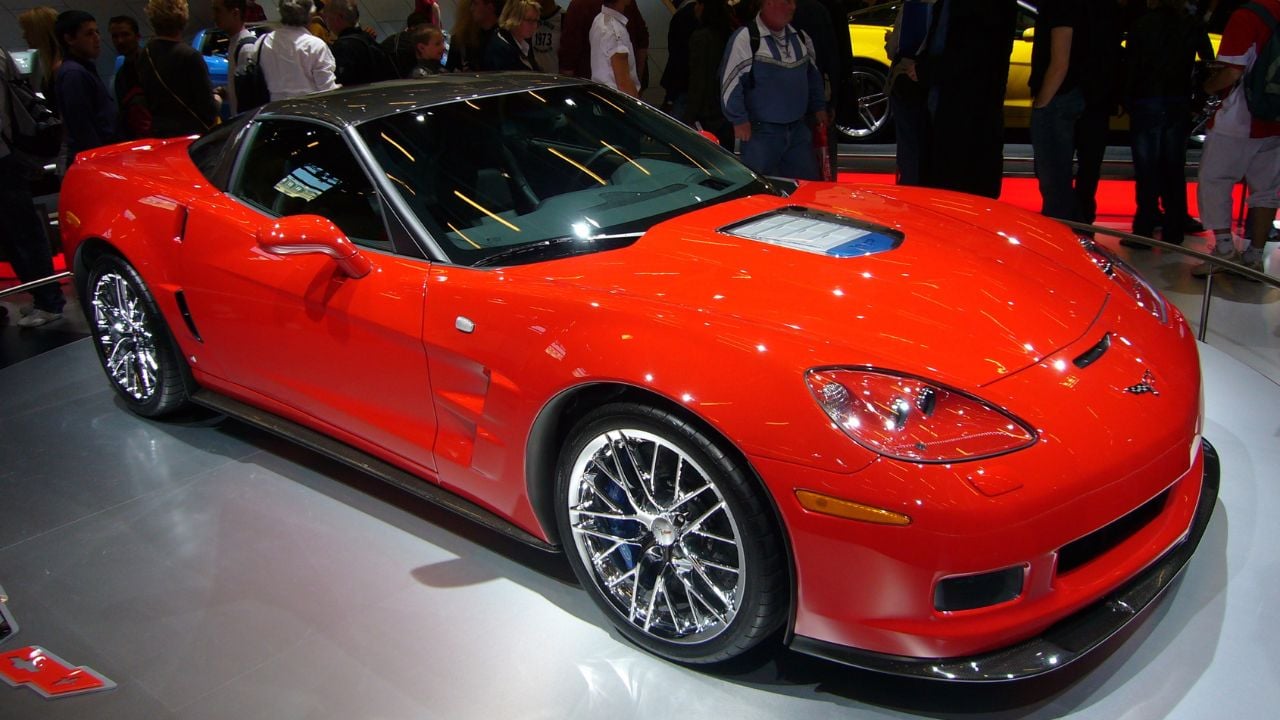
The 2009 to 2013 Chevrolet Corvette ZR1 was the moment the Corvette became a true 200-mph American supercar. Its supercharged 6.2-liter LS9 V8 was rated at 638 hp and 604 lb-ft of torque.
MotorWeek described the 2009 ZR1 with a close-ratio, 6-speed manual-only transmission. That detail gave the C6 ZR1 extra character because the driver had to manage one of the most powerful factory Corvette engines ever built.
The car had carbon-fiber body panels, serious tires, huge power, and acceleration that made it feel far beyond a normal Corvette.
Chevrolet could have made it easier with an automatic, but the ZR1 stayed committed to driver involvement. That helped make it one of the most respected Corvettes of the modern era.
2011 BMW 1 Series M Coupe

The 2011 BMW 1 Series M Coupe became a cult classic almost immediately because it felt like BMW had built it for old-school M loyalists. BMW M lists the car with a 3.0-liter turbocharged inline-six, 0 to 100 km/h in 4.9 seconds, and power sent through a 6-speed manual transmission.
BMW rated the 1M at 340 PS, about 335 hp, with overboost torque that helped give the small coupe its muscular character. The manual-only approach made the car feel even more intentional.
It was compact, rear-wheel drive, wide-shouldered, and slightly unruly in the best way. The short M shift lever also helped give the car the old-school feel that made enthusiasts connect with it so quickly.
The 1M did not need exotic materials or huge production numbers to become memorable. It had the right size, the right attitude, and the right gearbox.
Why These Manual-Only Legends Still Feel Different

A great manual car does not simply ask the driver to shift gears. It asks the driver to participate.
That is what separates these 10 cars from many fast machines that came later. The McLaren F1, Ferrari F40, Ferrari F50, Carrera GT, Ford GT, Viper, S2000, Integra Type R, C6 ZR1, and BMW 1M all used the manual gearbox as part of the car’s identity.
Each one tells a different story. A supercar can feel purer because of a clutch pedal. A roadster can become unforgettable because the engine and gearbox work together cleanly. A front-wheel-drive coupe can become a legend when the manual keeps the engine in its best range. An American V10 or supercharged V8 can feel even wilder when the driver has to manage it directly.
That is why these cars still matter. They remind us that performance is not only about getting somewhere faster. It is about the sound, timing, effort, and satisfaction that happen when the driver has a real mechanical role.