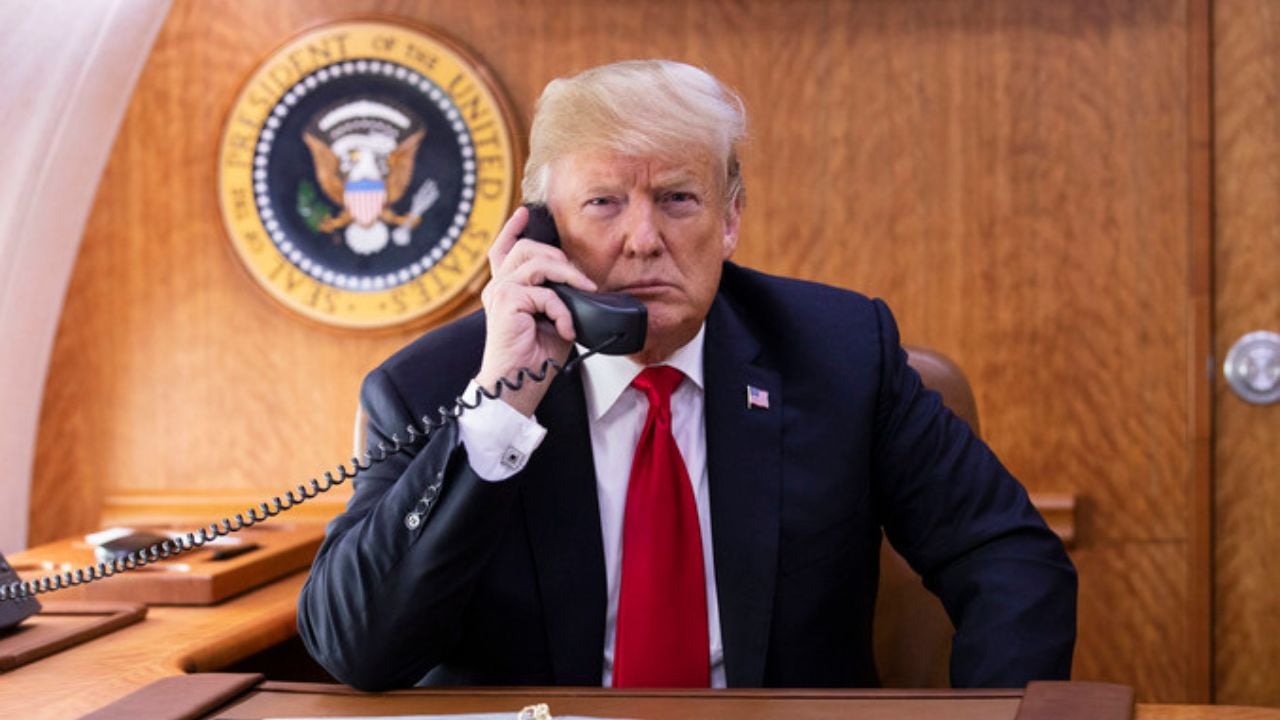

Tensions across the global energy market has surged to even new heights after Donald Trump delivered a booming warning to Iran, threatening to “entirely blow up” the country’s largest gas field if further attacks are carried out against Qatar’s liquefied natural gas infrastructure.
The comments came as a spiraling conflict in the Middle East began to hit critical energy assets that underpin global fuel supply.
A Spiral of Strikes and Retaliation
The latest escalation began when Iran expanded its military operations to target key energy installations across the region. Tehran’s retaliation followed a strike on its own South Pars gas field, widely recognized as the world’s largest natural gas reserve.
View this post on Instagram
In retaliation, Iranian forces launched attacks on Qatar’s Ras Laffan gas facilities, a cornerstone of the country’s LNG export network. Qatari officials reported significant damage, though a full assessment is still ongoing.
Doha reacted swiftly on the diplomatic front, declaring Iranian military and security officials at its embassy persona non grata. The decision marked a sharp deterioration in relations between the two energy heavyweights, both of which play pivotal roles in global gas supply chains.
The situation has been further complicated by the broader regional conflict involving Israel. Although Israel did not formally claim responsibility for the initial strike on South Pars, Israel Katz hinted at continued operations, promising additional “surprises” as part of a strategy aimed at weakening Iran’s leadership.
The killing of Iran’s intelligence minister, Esmail Khatib, in a prior airstrike intensified hostilities and set the stage for the current escalation.
Global Powers Draw Lines
Iranian President Masoud Pezeshkian condemned the attack on South Pars, warning that the consequences could spiral beyond control and potentially engulf the wider international community.
His remarks underscored growing fears that the conflict could disrupt not only regional stability but also the global energy market.
The United States has attempted to position itself as both a warning voice and a potential deterrent. Trump stated that Washington had no prior knowledge of the initial strike on Iran’s gas infrastructure and emphasized that Qatar was not involved in the attack. He also condemned Iran’s retaliation against Qatari energy facilities, describing it as unjustifiable.
However, the tone shifted dramatically when Trump outlined potential consequences. He warned that any further attacks on Qatar’s LNG assets would trigger a massive US response targeting the entirety of Iran’s South Pars gas field. The statement introduced a new level of risk to global energy markets, as any direct strike on such a critical facility could have long term implications for supply.
Markets Shudder as Conflict Deepens
Energy markets have already begun to react. Brent crude prices, which had been hovering near 100 dollars per barrel amid earlier tensions, surged to 108 dollars following the latest round of attacks.
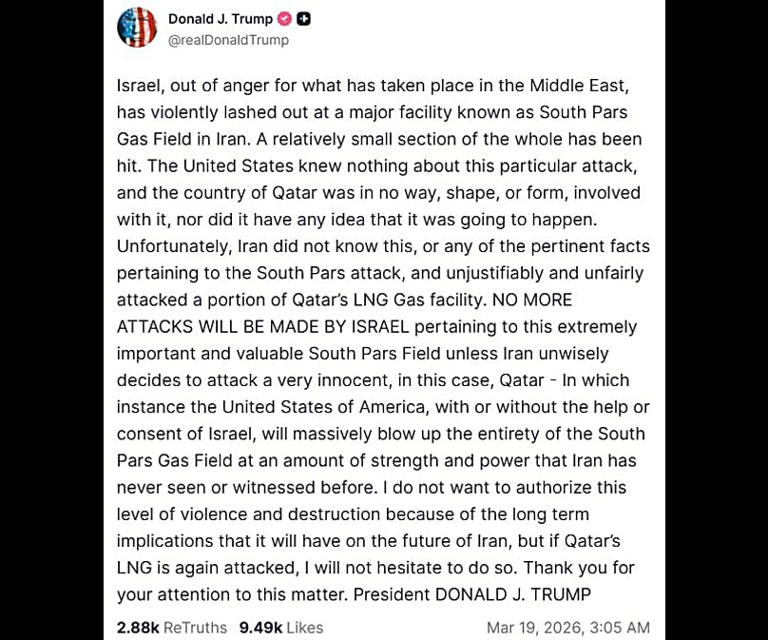
The increase reflects growing concern over supply disruptions, particularly as Iran continues to exert control over the Strait of Hormuz, a critical chokepoint through which roughly one fifth of the world’s energy flows.
Regional powers have also voiced alarm. Saudi Arabia, Qatar, and the United Arab Emirates all condemned Iran’s actions, warning that attacks on energy infrastructure risk drawing the Gulf states into direct confrontation.
Saudi Foreign Minister Faisal bin Farhan Al Saud noted that any remaining trust in diplomatic relations had been effectively shattered.
Meanwhile, the human toll continues to rise across multiple fronts. Iranian authorities report more than 1,400 deaths and over 18,000 injuries since the conflict began. In Israel, casualties have reached 17 dead with thousands more injured. Lebanon has also suffered heavily amid ongoing Israeli strikes targeting Hezbollah-linked positions.
With energy infrastructure now a central target, the conflict has moved beyond traditional military engagements into a battle with global economic consequences. For automotive markets around the world, the implications are immediate, as fuel prices and supply stability hang in the balance.