
Electric cars (EVs) have had a rough ride of late, especially those with a large “T” on the hood. Regardless of one’s views on Tesla, they have been a stalwart in America’s EV wars. That said, all competition is healthy in the free market. Thankfully, the United States is a land of plenty, and options are readily available.
What’s more, the market shows no signs of slowing down, which means competition for your hard-earned dollars can only make consumers the winners. It brings us to the question: Which EVs are the most frugal choices for new EV buyers in 2025?
Where We Looked

As ever, we have scoured the Internet landscape for the best-priced brand-new electric cars on the market, starting with their most basic builds. We have also looked for expert opinions on these EVs, consulting the manufacturer pages where necessary.
However, there are also some whimsical super-cheap EV selections here, just for kicks, buying one is at your severe discretion. Disclaimer: They all hail from China and are available online, so prices in the United States might invariably fluctuate.
Let’s be honest; all prices quoted here are on an “at-the-time-of-writing” basis, but we expect American-made EV prices to stay somewhat stable.
Nissan LEAF

Nissan’s contribution to the small hatchback EV market is the Nissan LEAF (an acronym for Leading Environmentally Friendly, Affordable family car). It first graced America’s shores in 2011, winning several accolades, including World Car of the Year. The new 2025, accessory-free Nissan LEAF Standard begins at $28,140, according to Nissan’s site. This price point makes the LEAF the cheapest (serious) EV on the US market.
Having a 149-mile range is a huge boon for budget buyers. In 2025, the LEAF uses J1772 for AC charging and CHAdeMO for DC fast charging (not a built-in NACS port). Because the 2025 LEAF does not have a built-in NACS port, it isn’t a straightforward ‘Tesla Supercharger’ car in stock form. Those looking for a longer range and more oomph can select the LEAF SV Plus, which ups the performance ante and with it, the price.
Tesla Model 3

Tesla’s Model 3 starts at $38,630 on Tesla’s site (before incentives/fees). The new Model 3 Standard is both better and cheaper than its predecessor, though it is missing all the bells and whistles of the next build.
While the Tesla Model 3 Standard doesn’t come with the features that really make Tesla stand out, there is a lot to love. You might not get to enjoy Dog Mode or Sentry Mode, but performance-wise, this is some car. Any EV offering 363 miles of range, a 125mph top speed, and 0-60mph in 4.9 seconds is no joke. WhatCar’s Will Nightingale gave it a five-star review.
Hyundai Kona Electric

According to Hyundai’s website, the MSRP on a 2025 Hyundai Kona Electric starts at $32,975, excluding freight and other fees. The lower price follows the company’s SE standard trim, with 118 combined MPGe and 133 hp. The car’s greatest selling point, however, must be its 260-mile range.
The Kona Electric will suit a family well. The new version has been upscaled to a small SUV that offers both Wireless Apple CarPlay and Android Auto. Moreover, blind-spot collision warning (BCW) and various forward collision avoidance technologies make it one of the safest EVs on the market. An EV Report article reveals that this model has won the J.D. Power 2025 Best-in-Class Residual Value Award.
Mini Cooper Hardtop SE Classic
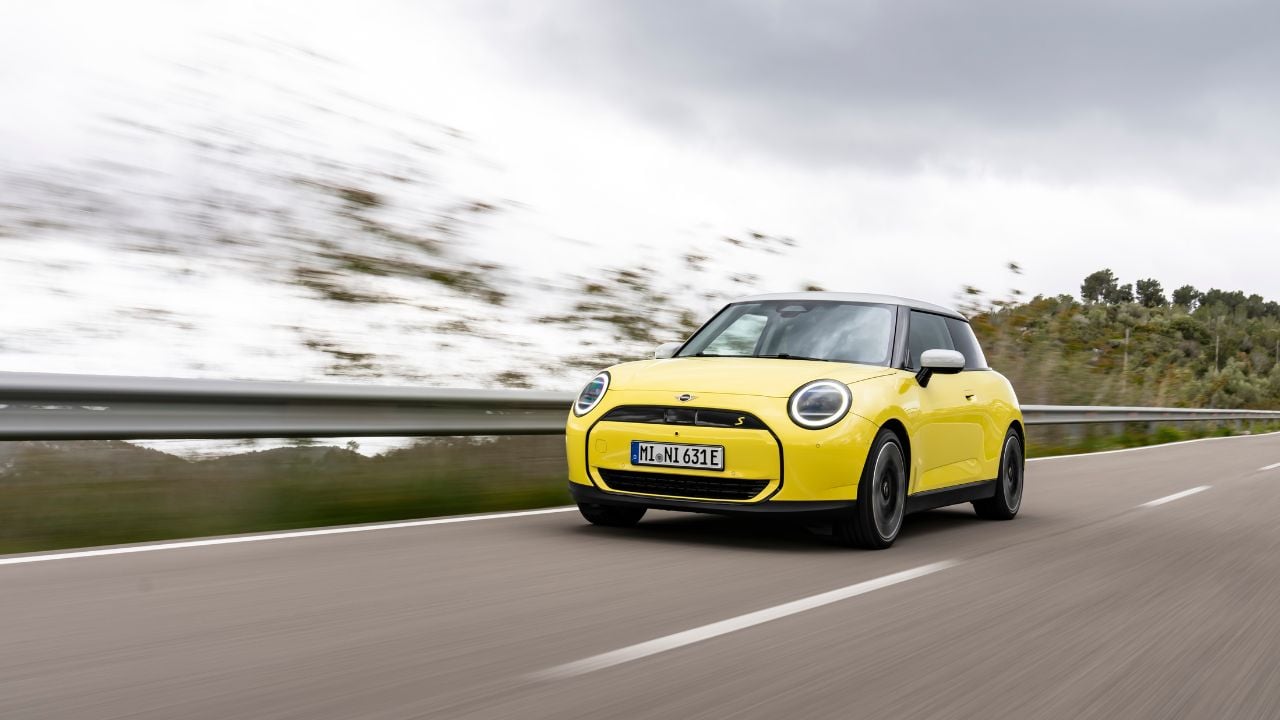
The MINI has a shot at the title for best city car with its timeless Mini Hardtop Cooper, namely, the SE Classic. Some might say this nifty little EV is the antidote to cramped, polluted metropolises. “Its compact size makes it perfect for urban environments, while its sporty handling adds excitement to every drive,” reads an AutosToday post.
MINI’s U.S. EV lineup currently centers on the all-electric MINI Countryman SE ALL4 (higher MSRP than the gas Cooper). The ~$28,950 figure corresponds to the gas MINI Cooper Hardtop, not an all-electric ‘Cooper SE Classic’ build. Of course, the more you add to the build, the more costs grow. Nonetheless, this car has a dizzying number of cool features, like heated seats, a telescopic steering wheel, and interactive “MINI Experience Modes.”
Mazda MX-30

Mazda’s MX-30 EV was sold in the U.S. in limited numbers and was discontinued after the 2023 model year. Auto TV’s YouTube review of this curious EV calls Mazda’s MX-30 an “unconventional take on electric mobility.” It’s a moniker stemming from Mazda’s decision to pack a smaller, hence lighter, battery in the engine. “The ride is wonderfully smooth, and it feels more agile than you’d expect from an electric crossover,” adds the review.
Some might see a downside in the smaller battery’s short lifespan of 124 miles, a shadow on some competitors. What’s more, the eco-heavy cork interior trim may be a little too spartan for others. The MX-30 EV was discontinued in the U.S. after MY2023 and was not ‘replaced’ by a renamed CX-30, starting at $26,615, according to Mazda’s official site.
Fiat 500e
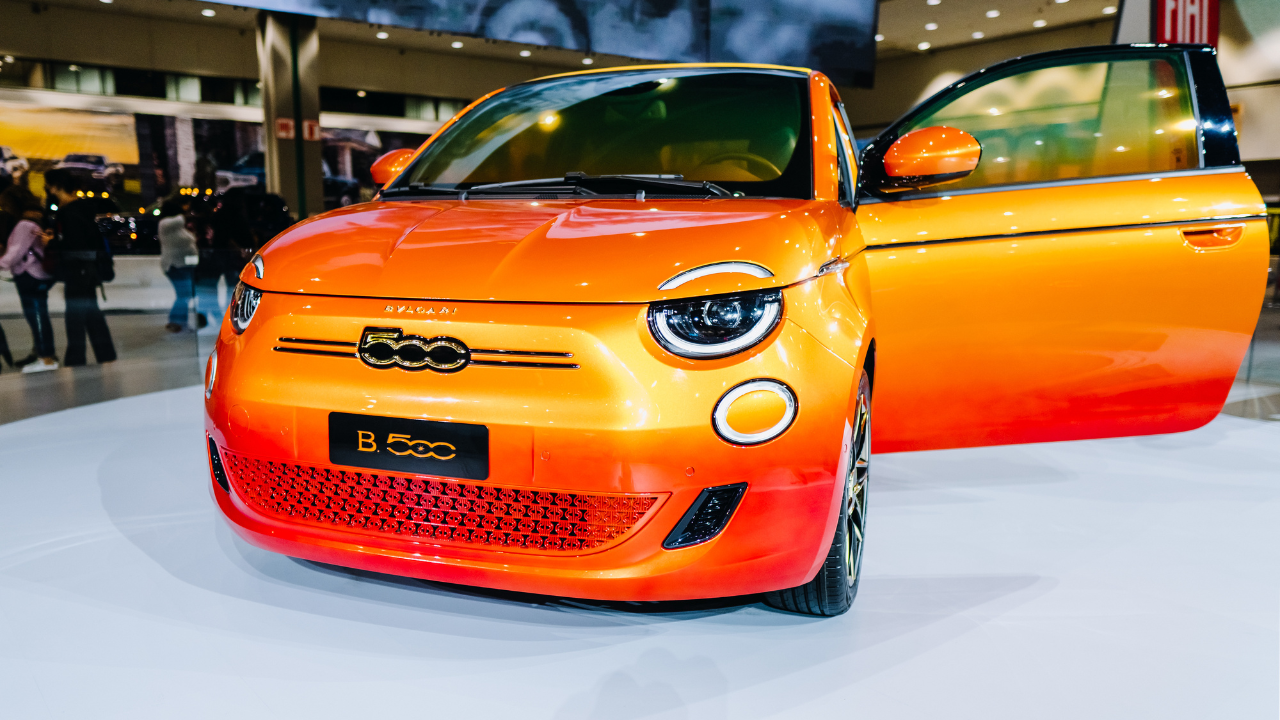
The FIAT 500e starts with a sticker price of $32,495. While tall families may want to give this EV a miss, it may suit those who prefer a lower overhead, literally. Singles, smaller families, and couples who wish to avoid lifestyle creep will love this cost-efficient car. Furthermore, 149 MPGe is decent enough for those who rarely escape their city limits. Add this to a sharp interior, built-in Alexa, and a 4G LTE Wi-Fi hotspot, and you have a great little city ripper.
“This Fiat is more than just a pretty face; we love its modern tech features, and its interior is as expressive as its exterior,” writes Eric Brandt of Kelley Blue Book. Fiat’s 500e is 4th overall in the platform’s cheapest EV rankings. “High MPGe ratings mean it uses electrons efficiently, yielding low fuel costs, even by EV standards.” Cities better watch out, especially for this year’s upgrade, an Armani-inspired build.
Chevrolet Equinox EV LT1
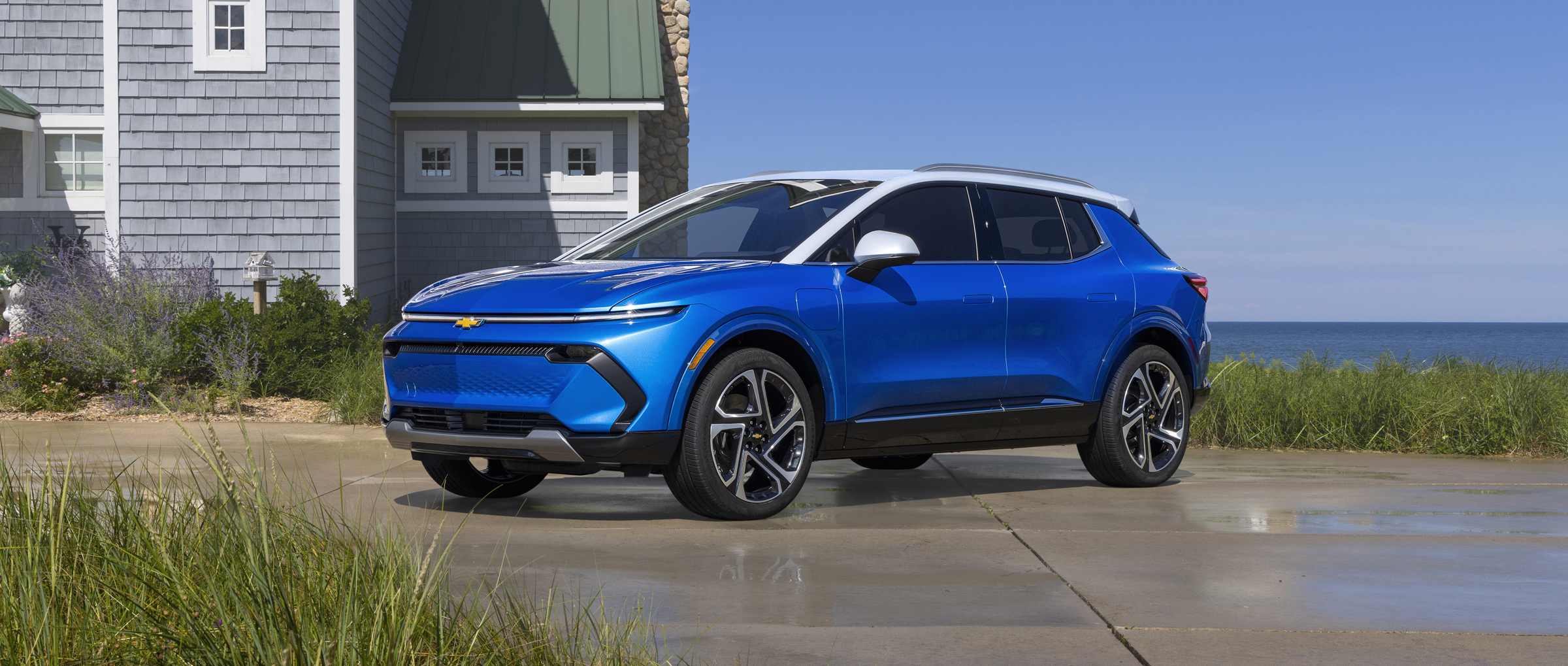
Marching into the fray once more is Team America, namely Chevrolet’s 2025 Equinox, boasting an incredible 319-mile range. This handsome EV ticks all the boxes for ecological motoring, with Chevrolet’s website promoting a sizable federal tax credit for certain models. The EV 1LT starts at $33,600 and comes with “Over 15 standard safety and driver assistance features.”
Joe Ready reviewed one recently on Raiti’s Rides‘ YouTube channel, and he praised the engine’s performance. “Great news is, for 2025, we have a little more horsepower and a little more torque with the electric motors that are powered by lithium-ion batteries,” he says. Ready adds that the Equinox looks much cooler than its Ioniq or Mustang Mach-E competitors.
Toyota bZ4X
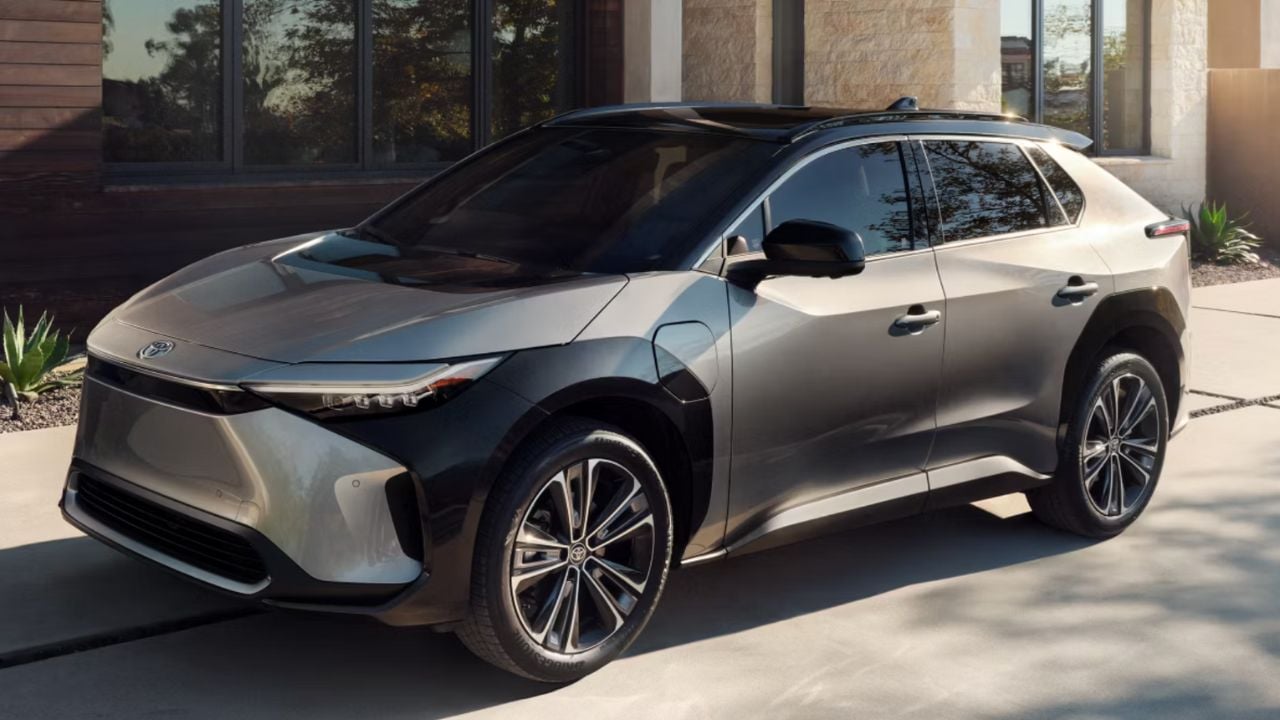
Japan’s next entry here is the Toyota bZ4x, an electric compact SUV that has come down in price from its prior model. Pricing is commonly listed as $37,070 (base MSRP) for an XLE FWD, and about $38,465 with destination depending on how the price is quoted. It means the 2025 Toyota bZ4X with this trim is almost $6,000 cheaper than the 2024 equivalent, according to Alex Leanse of MotorTrend.
Leanse isn’t enamored by this wagon, citing hitches about the MPGe not hitting the boasted 236-252-mile range, among other issues. Nonetheless, he still awards the bZ4X 7.9 out of 10 overall. Most notable on MotorTrend’s scoring rubric is a 9.0 total for value. It may not hit any performance high notes, but this car is a no-nonsense EV stalwart.
Hyundai Ioniq 6 EV
-

Image Credit: Hyundai. - We head to neighboring South Korea next, in the shape of Hyundai’s 2025 Ioniq 6, which differs slightly from its 2024 predecessor. The former model costs a few hundred less, though the SE Long Range RWD hits 361 miles compared to the 2025’s 342 miles. Power depends on drivetrain: the dual-motor AWD setup is rated around 320 hp, while the single-motor RWD version is lower.
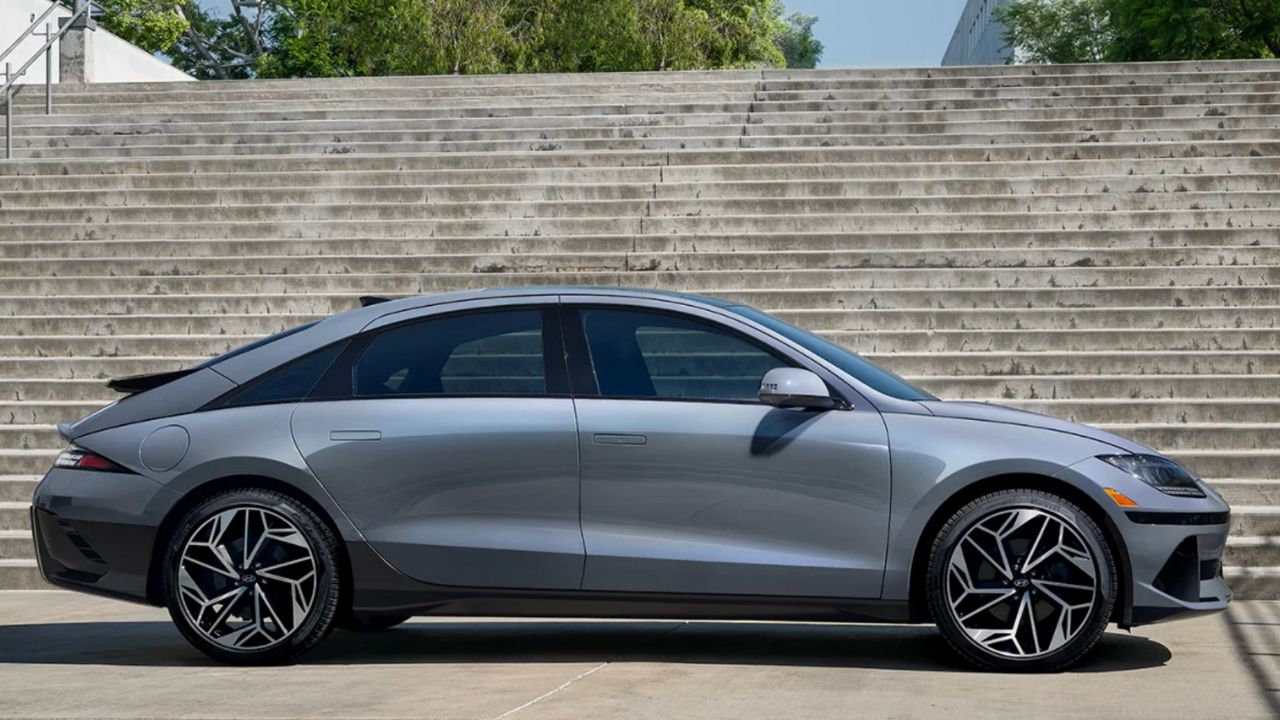
Other than that, this is a highly competitive car for its MSRP of $37,850. The Ioniq 6 won World Car, World Electric, and World Car Design of the Year in 2023, among other accolades across its various updates. This high-performance, modestly priced EV has also made it onto Car and Driver’s Editor’s Choice List.
Subaru Solterra
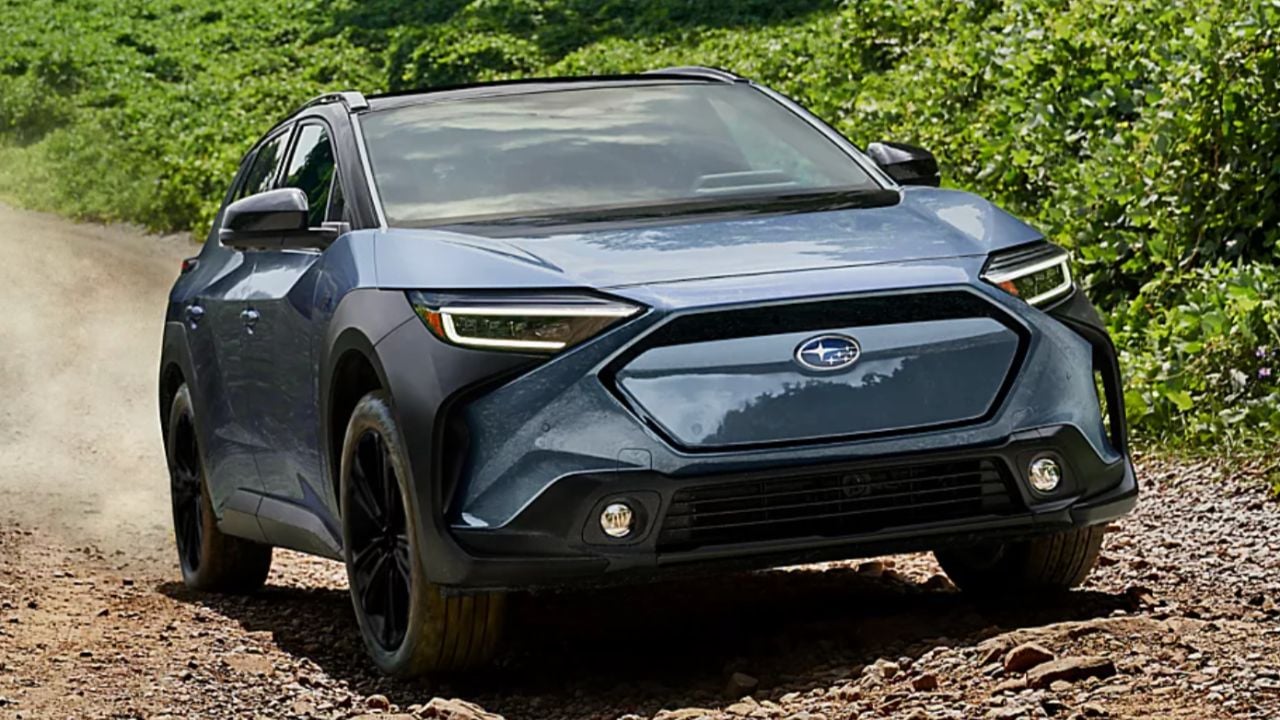
Back to Japan for Subaru’s current frontrunner in the moderately priced EV market, the 2025 Subaru Solterra. This car has to be up there as one of the coolest-looking vehicles, hitting the showroom at $38,495 for the Premium trim.
The Solterra scores a solid four-star review from MotorTrend, losing out mainly on its shortish range compared to other similar-priced small electric SUVs. That said, the features are plentiful: faster charging, hands-free driving up to 25 mph, and regenerative brake force. Overall, Subaru has done solid work here.
Kia Niro EV

Kia’s lowest-priced fully electric car, the Niro Wind, comes out of the factory at $39,600, according to Kia’s webpage. John Diether of CarsDirect believes the Korean giant’s Niro EV stands out from the crowd visually. “The Niro carries enough unique styling elements to give it real distinction for this class,” he says in his review. There are many other features to praise, however.
As for performance, the Wind offers drivers a solid 253 miles of range and a whole lot of interior delights. A 10.25-inch touchscreen display with navigation, Kia Connect, and satellite radio, along with a wireless phone charger, all add a modern twist. What’s not to love?
Ford Mustang Mach-E

Ford enters the ring next, blowing its own Mustang-tuned trumpet for the rather cool 2025 Mach-E, arguably the hottest EV alive. “The spirit of a Mustang in an electric SUV,” reads its Mach-E webpage where Ford lists the 2025 Mustang Mach-E starting at $37,995 (before incentives/fees).
Even the lowest price will still bring some features to feel good about, including BlueCruise Hands-Free Highway Driving, smartphone key access, and other mod-cons. Not many EVs can reach 60 mph in 4.1 seconds, nor can they reach 300 miles on one charge. Disclaimer: Hard acceleration will reduce its massive range potential.
SGMW BaoJun Kiwi EV

The SGMW Baojun Kiwi EV is next up. If you enter this car into a search engine, you will find something that resembles a toy car someone drew on a math book grid paper. Range is often quoted around 190 miles (about 305 km) on China’s NEDC-style figures, which typically overstate range vs U.S. EPA ratings. The E300 Kiwi even has adaptive cruise control and automatic brakes. It comes as no surprise, then, that General Motors has a hand in this design.
Describing the Kiwi is the hardest part. There is something Star Wars-esque about this EV, almost as if it were modeled on a Biker Scout helmet. However, even if the Force isn’t so obvious in this one, the gas mileage savings should be. This EV is listed on Made in China at between $9,000 and $11,000, shipping not included.
Wuling Hongguang Mini EV Cabrio 2025
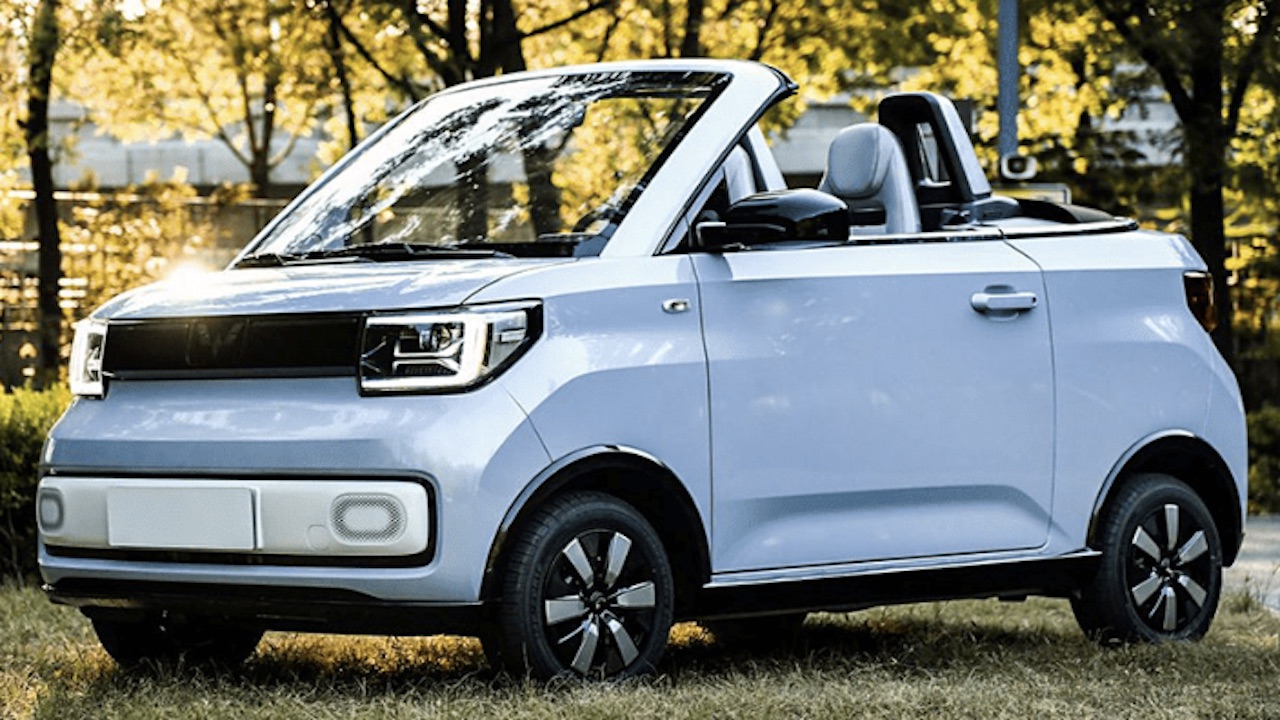
The self-professed “leader” of EV manufacturing in China, Wuling, has several small vehicles on offer. This company clearly understands the power of variety, with all kinds of cars on the market, including family minivans and delivery trucks. Perhaps the pick of the bunch is its cute little Hongguang Mini EV convertible. According to Wired, this GM collaboration “outsells Tesla’s Model 3 in China and costs less than adding (Apple) CarPlay to a Ferrari.”
Wuling’s Hunguang Mini EV comes with a retractable soft top, a full-color LCD instrument display, and a stylish design. The Mini EV Cabrio launched in China around RMB 99,900 (roughly ~$14,000 USD at the time); prices vary by market, taxes, and importer. “It caters to young consumers who value fashion and fun for daily commuting, as well as small families for urban travel and daily errands,” reads the retailer description.
Wuxi Ruiou New Energy EV Pickup Truck
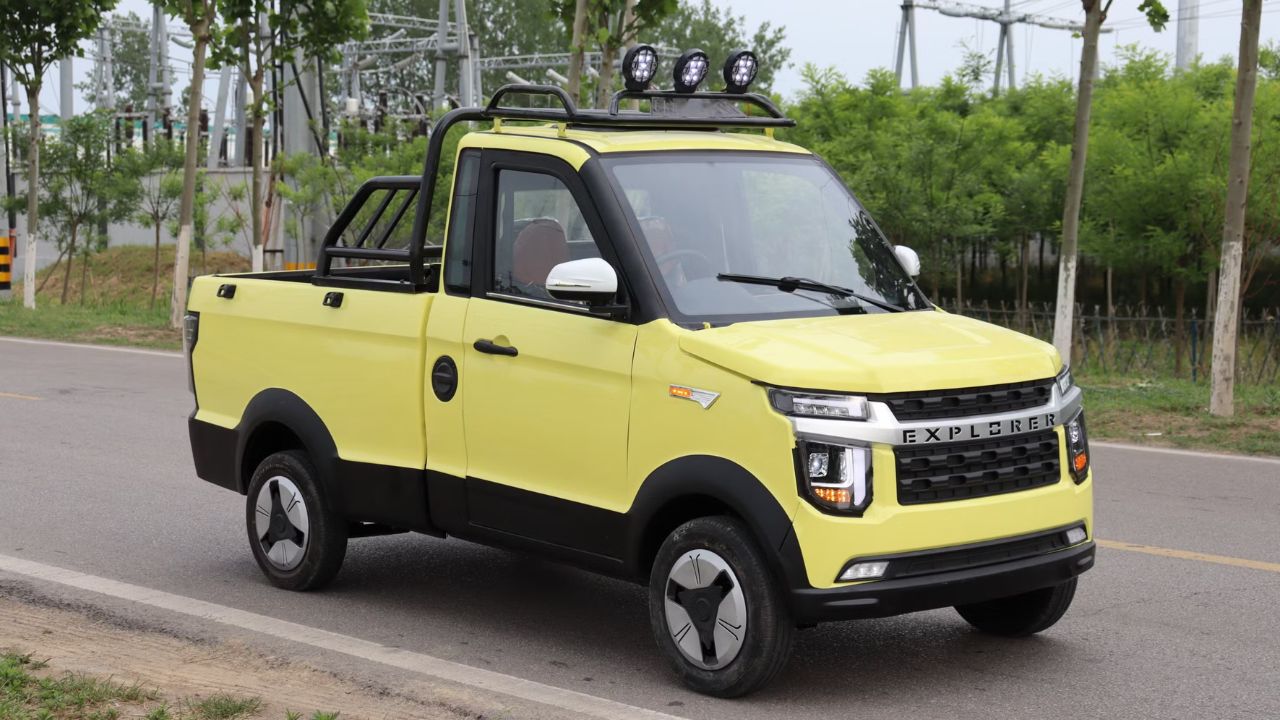
Coming from Jiangsu, China, the next entry here is a scaled-down pickup made for family road trips. The Wuxi Ruiou New Energy Vehicle Company is behind this EV, which has potential as the Jeep Wrangler of the Chinese mini EV market. Of course, this would be an overstatement, the vehicle is listed at $2,950 on Made in China.
“Sorry to disappoint,” says YouTube channel EBike School’s presenter when addressing fans’ comments about the pickup falling apart. “Literally nothing has broken on it.” While this may be true, the 30 mph top speed might suggest why wear and tear is so limited. Disclaimer: This pickup will only be picking up people.
On Reflection

Okay, the last few selections might be considered a joke to some drivers, but to others, they may present an opportunity for becoming mobile. Not all people can afford even a low-priced EV, so it would be rude to discount this growing market gap. What’s more, an EV might present headaches to the new owner, such as finding charging stations.
Going green isn’t just about saving gas money; therefore, those who make this sacrifice in the name of cleaner air must accept our utmost respect.